Blood protein ratio linked to large bright spots on brain scans
The median ratio was 0.702 in participants with large white matter abnormalities, versus 0.514 in those without them.

Our read
Biomarkers- Studied:
- Cross-sectional study of 287 participants with completed brain magnetic resonance imaging
- What changed:
- Odds of large white matter hyperintensities were higher with an increased VWF-to-ADAMTS13 ratio (odds ratio, 1.93 [95% CI, 1.21-3.07])
- The catch:
- Included participants were more likely to have large white matter hyperintensities than nonincluded ones
Editor of record: Boris Djordjevic · AgingResearch.News
In this observational analysis, 287 adults from families affected by heart artery disease before age 60 had blood tests and magnetic resonance imaging (MRI) brain scans. Their median age at enrollment was 50, and 60.6% were female. Researchers compared von Willebrand factor, a blood-clotting protein, with the activity of ADAMTS13, an enzyme that cuts large forms of that protein.
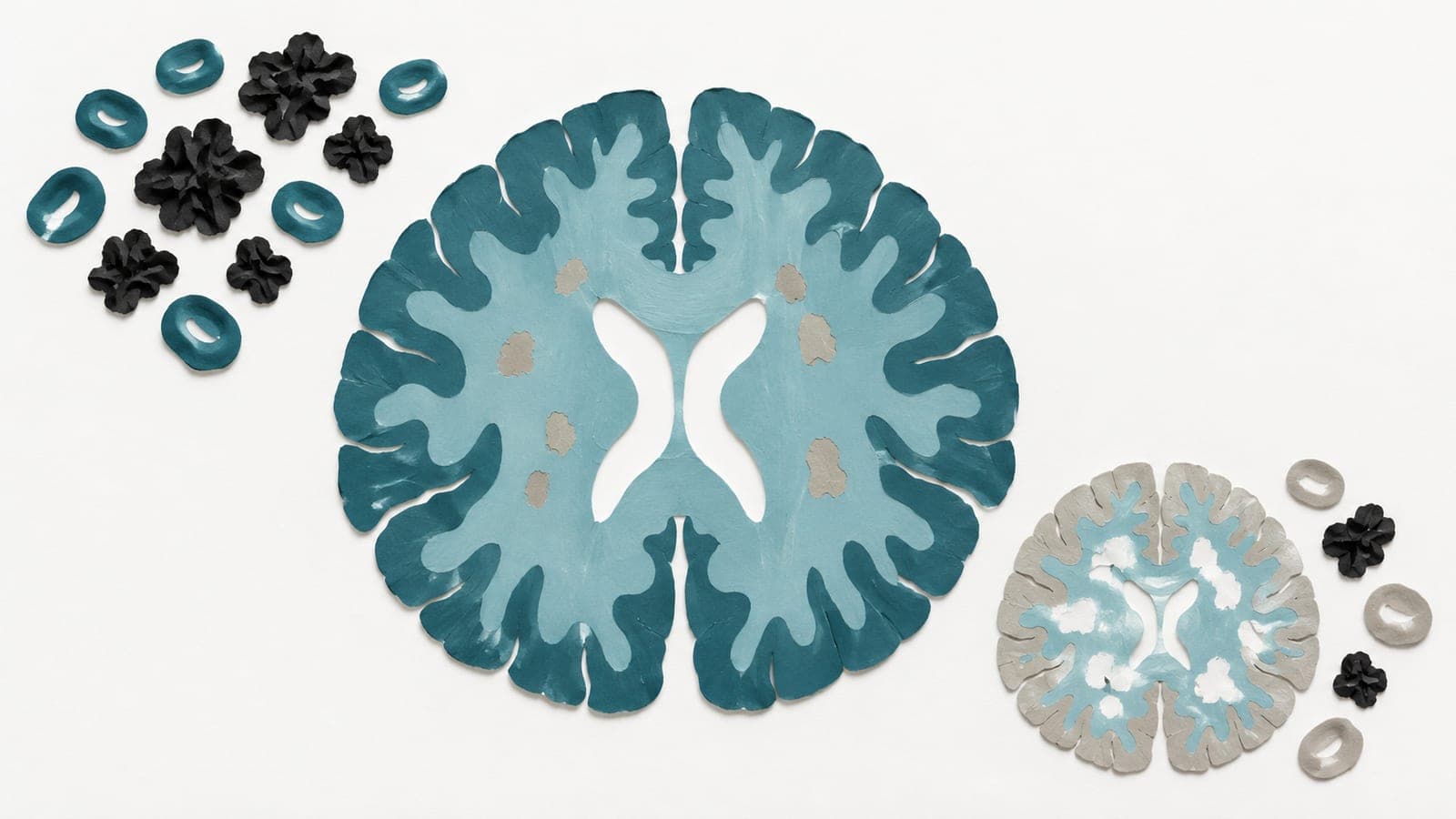
They examined white matter hyperintensities—bright areas on MRI in the brain’s white matter, which carries signals between brain regions. Large areas, defined as at least 3 millimeters in any dimension, appeared in 91 participants. The ratio remained associated with large areas after accounting for age, other vascular risk factors and family relationships. The association with any such area, regardless of size, was no longer statistically clear after adjustment.
Why it matters
Disease of the brain’s small blood vessels is linked to cognitive impairment and stroke. The authors suggest that this protein balance may play a role in the disease and its complications.
Caveats
This observational analysis cannot show cause and effect. The findings concern a selected, higher-risk family cohort screened to exclude people with prior stroke or serious chronic illnesses.
From the paper
- Participants
A total of 287 participants met the inclusion criteria including availability of VWF measurement, ADAMTS13 activity results, and completed brain MRI.
- Result
On multivariable adjusted analysis, the strength of the association of log of the VWF-to-ADAMTS13 ratio with WMH was attenuated and no longer statistically significant (OR, 1.49; 95% confidence interval [CI], 0.95-2.35; P =.082).
Quoted word for word from the full text on PubMed Central.
The paper
Increased VWF-to-ADAMTS13 ratio is associated with large cerebral white matter hyperintensities
Johns Hopkins University
Blood Vessels, Thrombosis & Hemostasis, Jul 1, 2026, Open access


Comments
Be the first to comment.