From frailty-driven to frailty-informed care in the age of wearable AI
Abstract
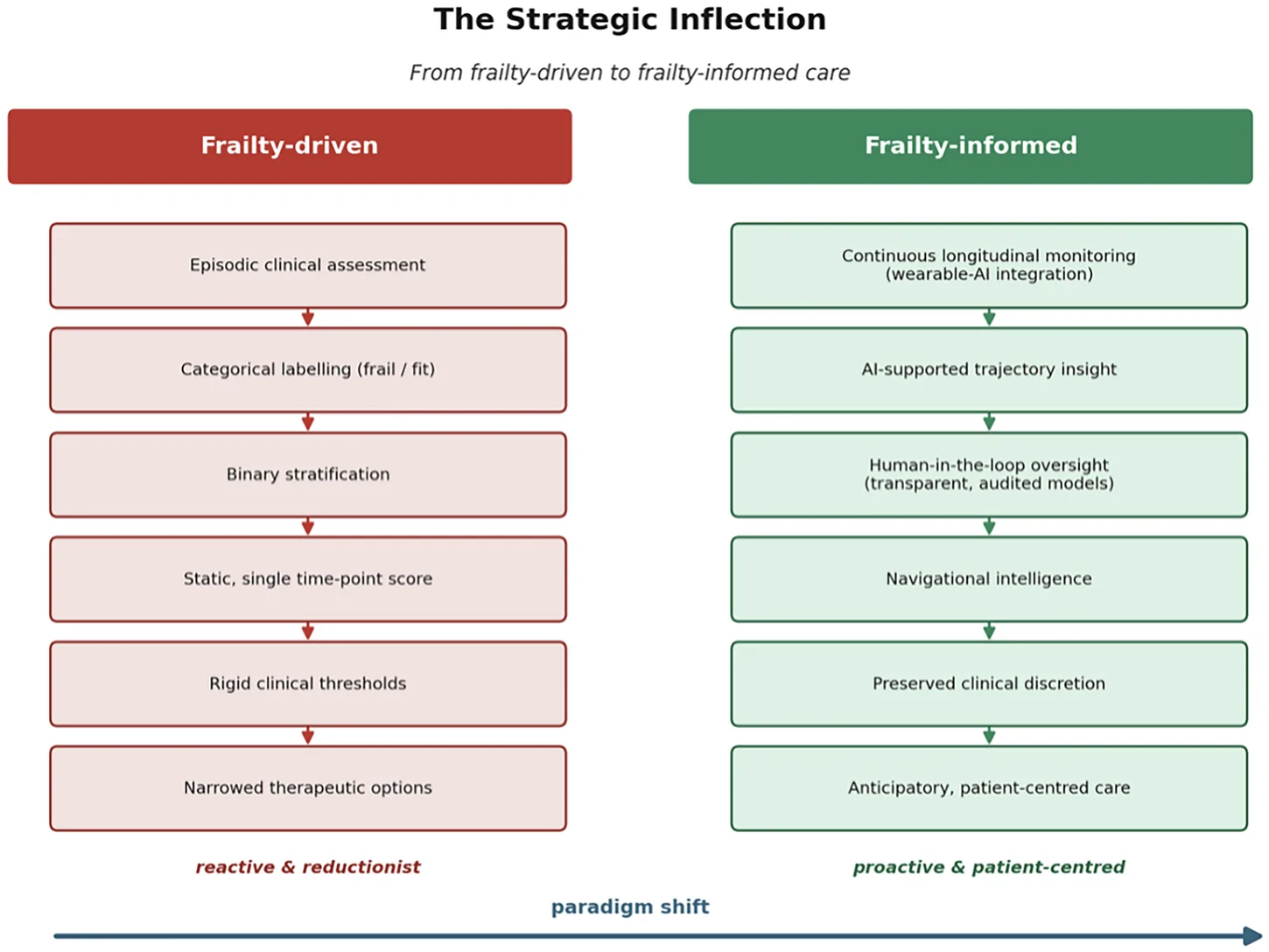
As populations age, frailty is increasingly monitored through wearable technologies capable of continuously capturing behavioral and physiological change. While these systems enable earlier detection of vulnerability, they also risk transforming probabilistic signals into rigid clinical thresholds. We propose a frailty-informed framework in which artificial intelligence (AI) augments, rather than replaces, clinical judgment. By integrating longitudinal digital monitoring with multidimensional geriatric assessment and bedside evaluation, this approach supports anticipatory, patient-centered care. Proportional design, transparency and clinical oversight are essential to ensure that predictive systems guide care without narrowing therapeutic options.
The paper
University of Parma
Communications Medicine, 21 Aug 2026