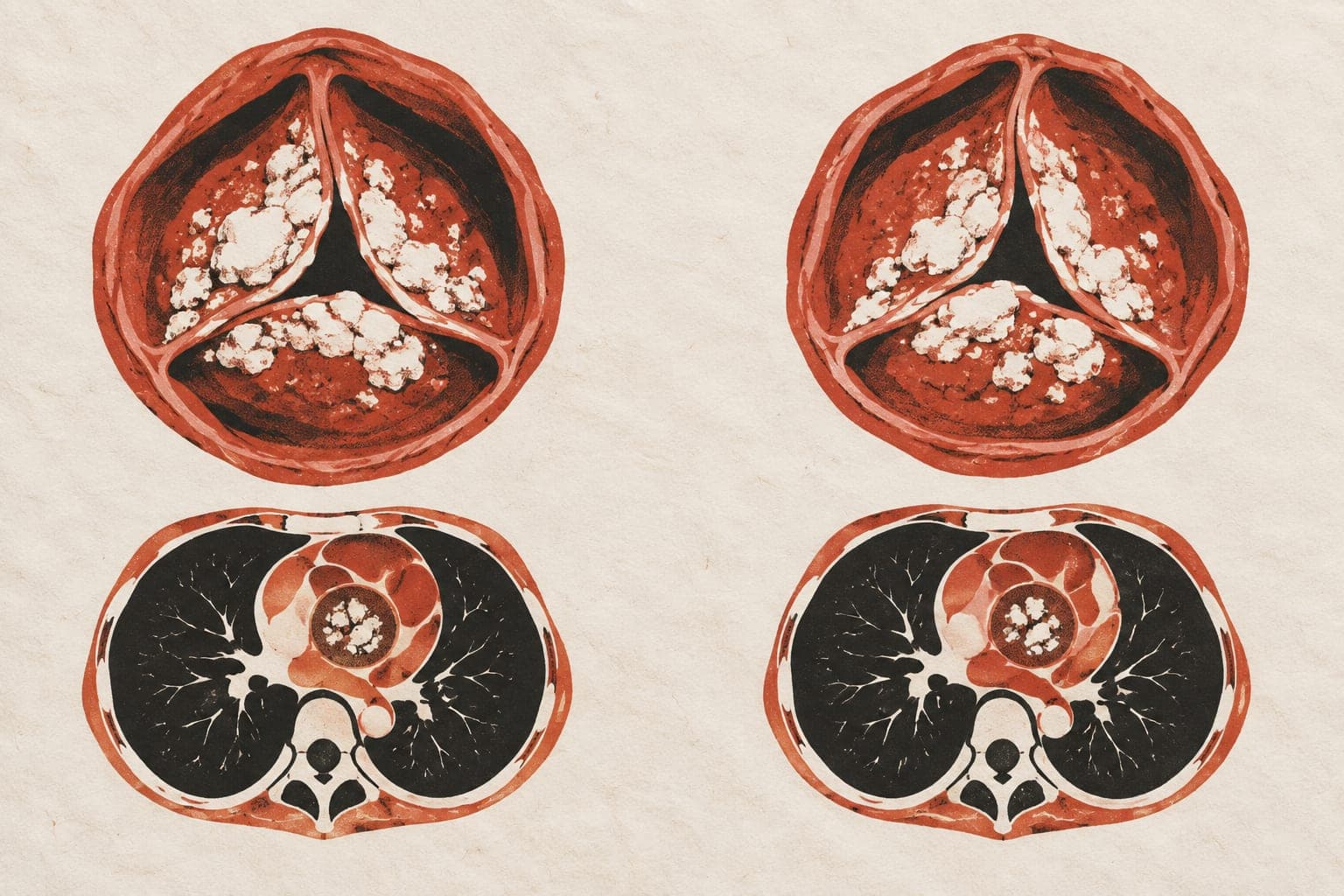
Lipomatous hypertrophy of the interatrial septum: Risk factors, correlation with thoracic fat composition and clinical impact
Abstract
INTRODUCTION: Lipomatous Hypertrophy of the interatrial septum (LHIS) is a benign, non-encapsulated fat deposition in the septum secundum and is typically reported at a minimum thickness of 1-2 cm. A large-scale volumetric analysis of LHIS has not yet been conducted. Moreover, the roles of risk factors, thoracic fat composition, and clinical significance are still unclear. METHODS: 473 adults with interatrial septal thickness ≥ 1 cm on thoracic CT (March 2021-March 2022) were included. Segmentation was performed with a custom Python pipeline and 3D nnU-Net algorithm to quantify septal volume and thoracic fat compartments. Correlations with demographics, metabolic disorders, comorbidities, noxes, and steroid use were analyzed. RESULTS: LHIS volume strongly correlated with diameter. Age (p = 0.009) and maximum LHIS diameter (p = 0.025) were positively associated with AF (Atrial Fibrillation). Steroid (p = 0.018) use and epicardial fat volume (p < 0.001) significantly influenced LHIS size. Epicardial (EFT) and mediastinal fat (MFT) correlated with female sex, age, BMI (Body Mass Index) and steroid use (p < 0.001, respectively). When grouping patients according to LHIS severity, higher-grade LHIS was linked to BMI, EFT, MFT, smoking, tumor, AF, and steroid use. DISCUSSION/CONCLUSION: The study results suggest that a non-anatomical, strictly axial measurement of the extent of the interatrial septum is a reliable surrogate marker for its volume. The presence and the severity of LHIS are predictive of atrial fibrillation. There are various distinct factors influencing the extent of maximum LHIS diameter and volume, as well as epicardial and mediastinal fat tissue.
The paper
University Hospital Regensburg
European Journal of Radiology Open, 28 Jul 2026