Blood proteins linked diabetes and other conditions to complications
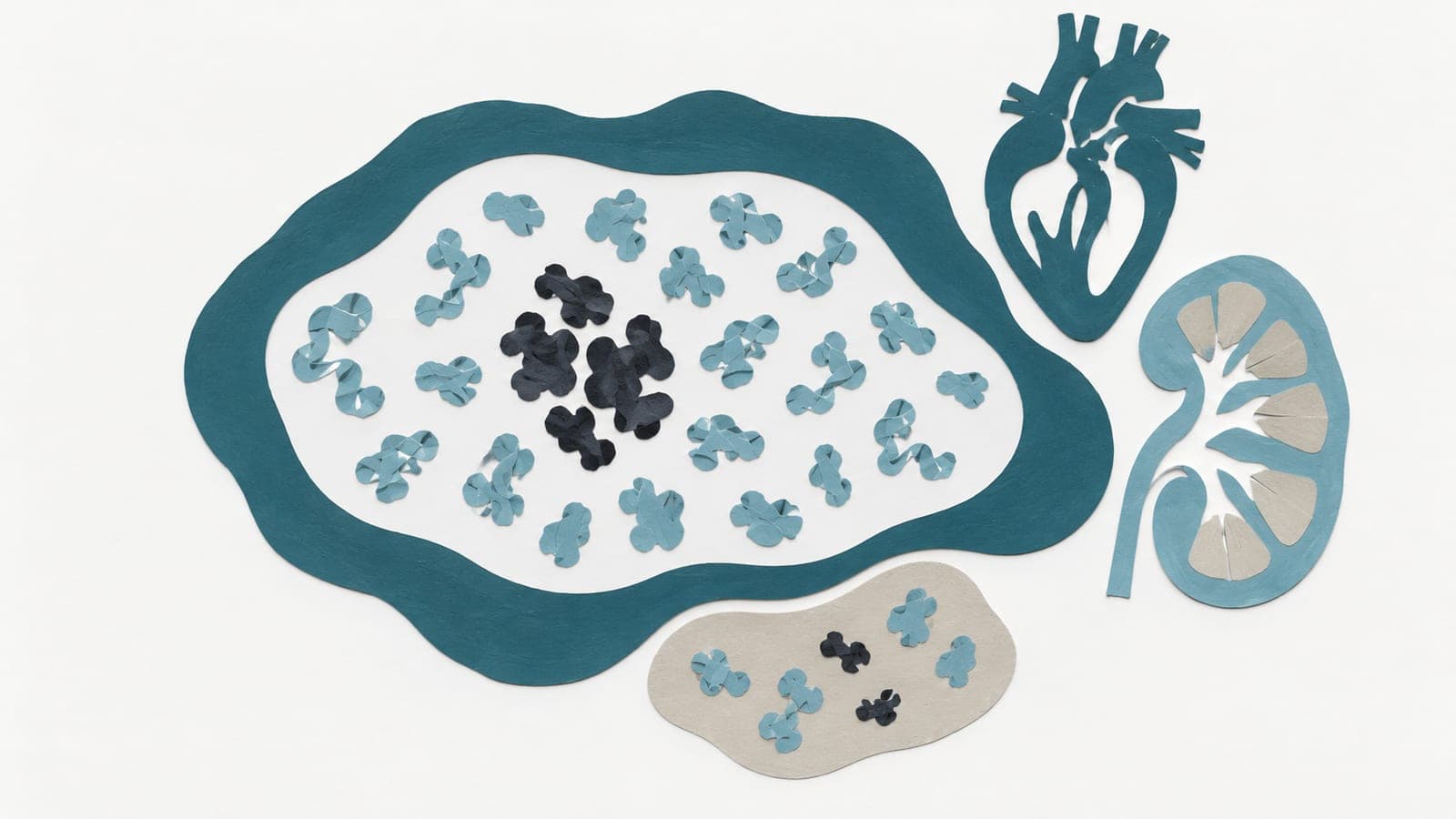
An observational analysis identified 998 pathways involving 337 blood proteins that potentially linked diabetes, high blood pressure and abnormal blood fats to later diseases.
Our read
Mechanisms- Studied:
- Cohort study of 53,030 UK Biobank participants
- What changed:
- Blood proteins linked cardiometabolic diseases to later complications through 998 pathways
- The catch:
- The analysis did not measure whether targeting these proteins prevents complications
- In the record:
- The 3rd paper on ACE2 with results in people; 24 on record in all.
Editor of record: Boris Djordjevic · AgingResearch.News
In an observational study, researchers analyzed blood-protein data from 53,030 UK Biobank participants followed over time. They examined links between diabetes, high blood pressure or abnormal blood fat levels and 18 secondary disease outcomes. They used mediation analysis, a statistical method for examining possible intermediaries in these associations.
The analysis identified 998 statistically significant pathways involving 337 proteins. These included links between diabetes and cardiovascular diseases, and between poorly controlled diabetes and nerve disorders. The authors interpreted a separate analysis using genetic differences as supporting potential causal roles for 44 proteins. Adding the identified proteins to machine-learning models improved predictions of secondary disease risk beyond traditional clinical factors and other blood proteins.
Why it matters
Complications of diabetes and high blood pressure matter for health in later life. The authors propose the proteins as candidates for assessing risk and developing targeted interventions.
Caveats
The observational analysis could not establish that the proteins caused complications or that targeting them would prevent disease. The abstract does not quantify the improvement in risk prediction.
- Diabetes mellitus
- Cardiovascular disease
- Poorly controlled diabetes
- Secondary disease risk
- Cardiometabolic disease
- Humans
The paper
University of Michigan
Med, Aug 4, 2026, Open access, accepted manuscript
Comments
Be the first to comment.