Blood vessel disease linked to Parkinson’s risk in women
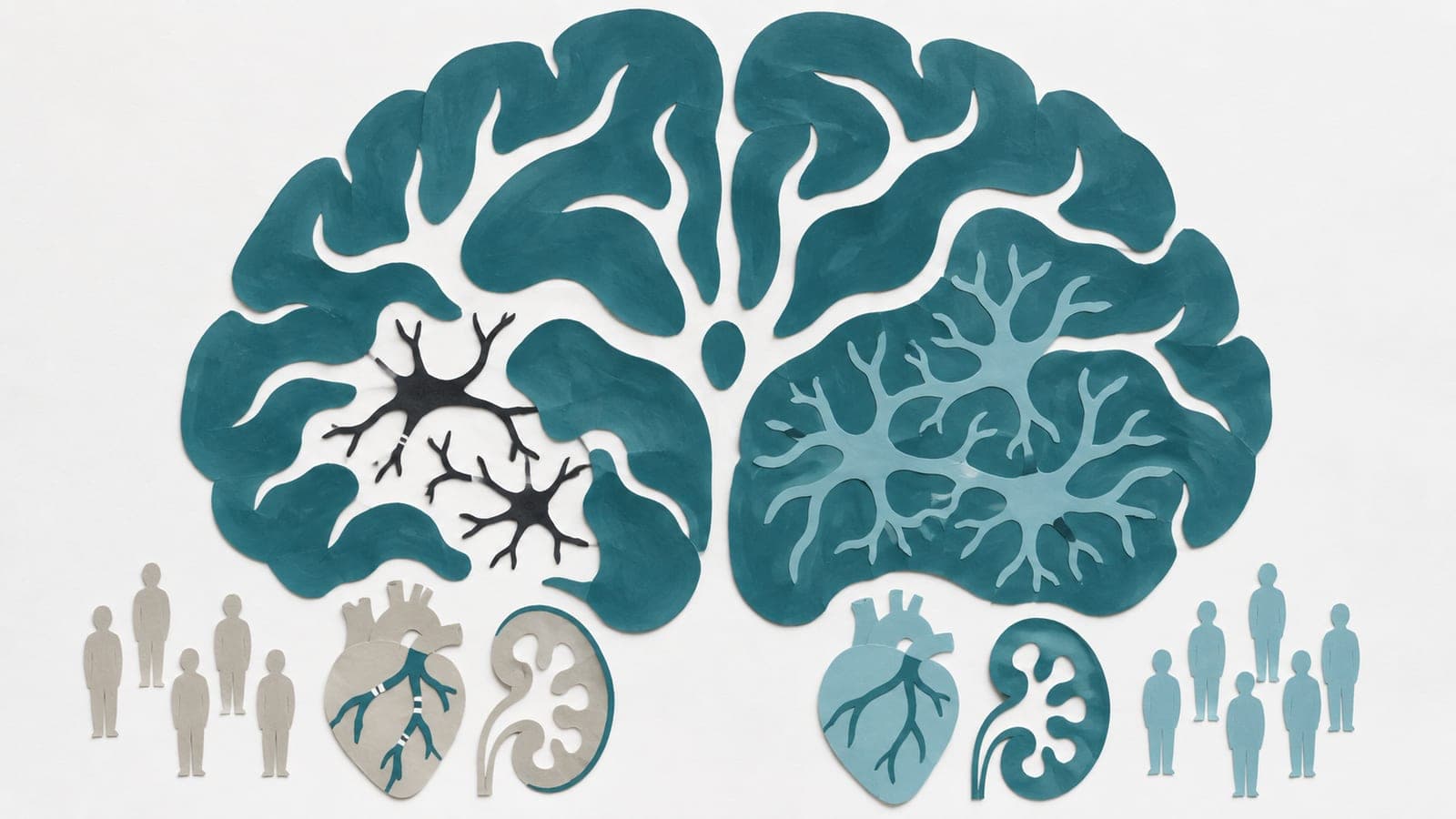
Relative rates of Parkinson’s, measured as hazard ratios, were 1.45 with heart disease and 1.51 with brain blood vessel disease versus women without each condition.
Our read
Populations- Studied:
- Cohort study of 819,575 women, 18 years, against women without prior vascular disease
- What changed:
- Parkinson's disease risk was higher in women with prior ischemic heart disease (hazard ratio 1.45) and cerebrovascular disease (1.51)
- The catch:
- Vascular disease can be an early manifestation of Parkinson's disease before motor symptoms appear
- In the record:
- The 142nd paper on aspirin with results in people; 329 on record in all.
Editor of record: Boris Djordjevic · AgingResearch.News
Among 819,575 UK women without a previous Parkinson’s diagnosis, a prospective observational study linked prior heart and brain blood vessel disease to later Parkinson’s. Follow-up averaged 18 years, with 10,364 cases recorded through hospital admissions and death records.
Women with ischemic heart disease—reduced blood supply to the heart—or cerebrovascular disease, affecting blood vessels in the brain, had higher rates than women without the respective condition. Both links remained pronounced 10 or more years after follow-up began. The authors concluded that early, undiagnosed Parkinson’s was unlikely to account for the links entirely. After accounting for vascular disease, regular aspirin use had little association with Parkinson’s risk, and ibuprofen use had none. Regular use meant taking the drug for most of the preceding four weeks.
Why it matters
For Parkinson’s, an age-related disease, a key question is whether vascular problems precede the disease or reflect its early stages.
Caveats
Parkinson’s cases came from hospital and death records, while medication use was self-reported only at baseline. The findings concern UK women, and differences in smoking, exercise or other health factors may still have contributed to the links despite statistical adjustment.
From the paper
- Participants
After exclusions (1119 women had PD or secondary parkinsonism diagnosed before baseline, 45,741 women had missing information on medication use and 100 women emigrated prior to baseline), our analyses included 819,575 women.
- Follow-up
Over a mean of 18.2 (SD 4.3) years of follow‐up, there was a first mention of PD in hospital admission data or on a death certificate in 10,364 (1.3%) women: 10,234 as a hospital record and 130 on the death certificate.
- Result
Women with prior ischaemic heart disease had an increased risk of PD (HR 1.45, 95% CI 1.34–1.54).
Quoted word for word from the full text on PubMed Central.
Aspirin is part of David Sinclair's daily regimen in Lifespan
The paper
Vascular Disease, Non-Steroidal Anti-Inflammatory Drugs and Risk of Parkinson's Disease
University of Oxford
Annals of Clinical and Translational Neurology, Jul 24, 2026, Open access
Comments
Be the first to comment.