Method improves estimates of cell paths in aging simulations
In tests using simulated cells sampled at 25 ages, global StationaryOT reconstructed developmental paths more accurately than methods that analyzed each age separately.
Our read
AI & data- Studied:
- Computational study of simulated developing cells, against methods analyzing each age separately
- What changed:
- Global StationaryOT estimated simulated cells’ developmental paths more accurately than methods analyzing each age separately
- The catch:
- Human-data accuracy was judged against computational estimates, not observed cell paths
Editor of record: Boris Djordjevic · AgingResearch.News
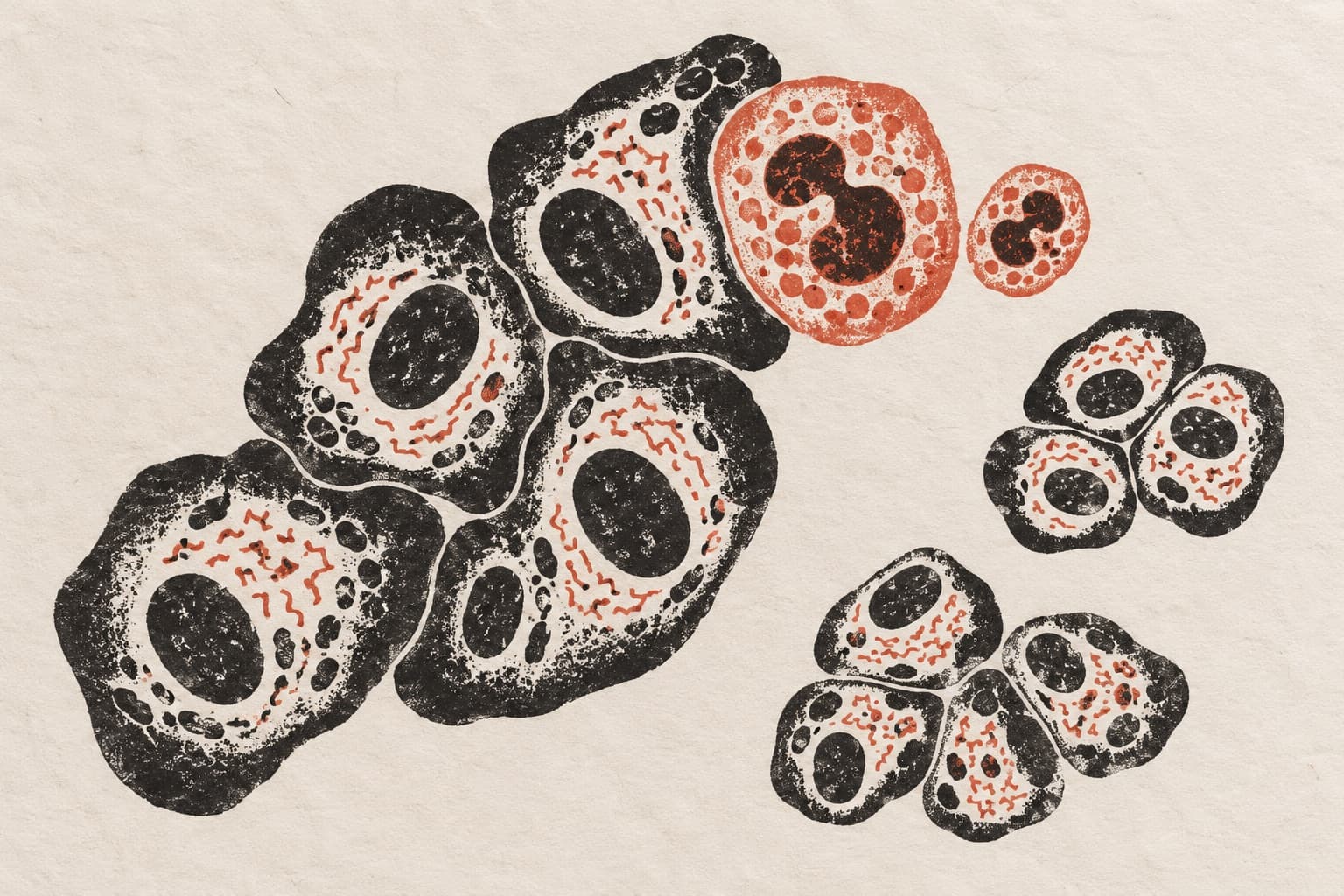
Researchers tested a computational method using simulations of developing cells and data from human blood-forming stem and progenitor cells—immature cells that produce blood cells. Their method, global StationaryOT, used snapshots of individual cells from several ages together, rather than analyzing each age separately.
In one simulation, they sampled 10 cells at each of 25 ages. The method estimated developmental paths and cells’ eventual types more accurately than two comparison methods. The human data covered 22 time points, including prenatal samples from 10 to 23 weeks after conception, cord blood, and donors aged 2 to 77. The researchers reduced the number of cells analyzed to test performance with sparse data. The method’s estimates of cell paths and eventual types were closer to estimates from full samples than those of the comparison methods.
Why it matters
Networks of genes control cell development, and their regulation can change with age. Reconstructing developmental paths may help researchers investigate those changes using snapshots of individual cells.
Caveats
The method assumes aging changes the system slowly compared with cell development. In the human data, performance was judged against computational estimates from full samples, not observed cell paths.
The paper
Global StationaryOT: trajectory inference for aging time courses of single-cell snapshots
University of British Columbia
Bioinformatics, Jul 23, 2026, Open access

Comments
Be the first to comment.