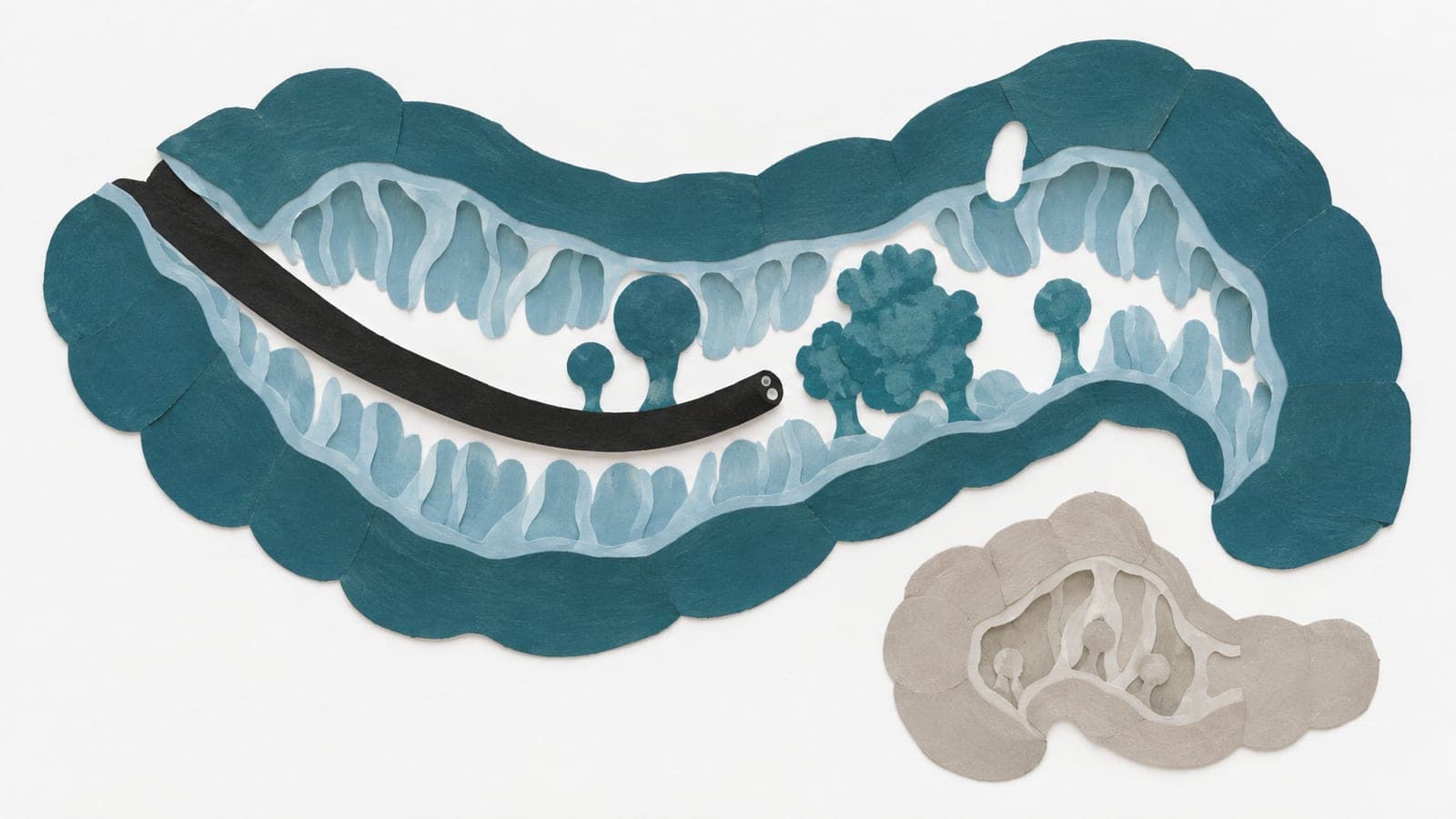
Trembling Technique for Improving Colonic Adenoma Detection Rate by Enhancing Mucosal Exposure during Withdrawal: A Prospective, Non-Randomized Single-Center Study
2 years
Abstract
INTRODUCTION: Exposure of the hidden colon mucosa is essential for improving the adenoma detection rate (ADR). For enlarging the visual field, we innovated a unique trembling technique (trembling colonoscopy [TC]) by shaking the operating hand slightly during colonoscope withdrawal, and compared the ADR of TC with that of a standard colonoscopy (SC). METHODS: This prospective study was performed between October 2017 and October 2019 by four experienced endoscopists. A total of 426 patients who had not undergone colonoscopy within the previous 3 years were enrolled (TC = 225, SC = 201). RESULTS: No differences were observed in age, sex, or indications between TC and SC. The bowel preparation scores were higher in the TC group than in the SC group. Mean withdrawal time of TC (18.5 ± 6.3 min) was over two-fold longer than that of SC (8.5 ± 3.3 min) (p < 0.001). The TC group showed a significantly higher ADR and polyp detection rate than the SC group (TC 65.3% vs. SC 47.8%; p < 0.001:TC 78.7% vs. SC 65.7%; p = 0.003). TC also showed higher APC (adenomas per colonoscopy) than SC (p < 0.001). In multivariate analysis, the factors associated with ADR were male sex (p = 0.020), age (p < 0.001), and TC (p = 0.043). Hyperplastic polyps (HPs) were more frequently detected in the TC group than in the SC group (p = 0.001). CONCLUSION: TC was associated with higher ADR and APC than SC, mainly through increased detection of diminutive adenomas and HPs, whereas sessile serrated lesion detection and clinically significant serrated polyp detection rate were not significantly improved.
The paper
The Catholic University of Korea Uijeongbu St. Mary's Hospital
Digestive Diseases, Jul 7, 2026