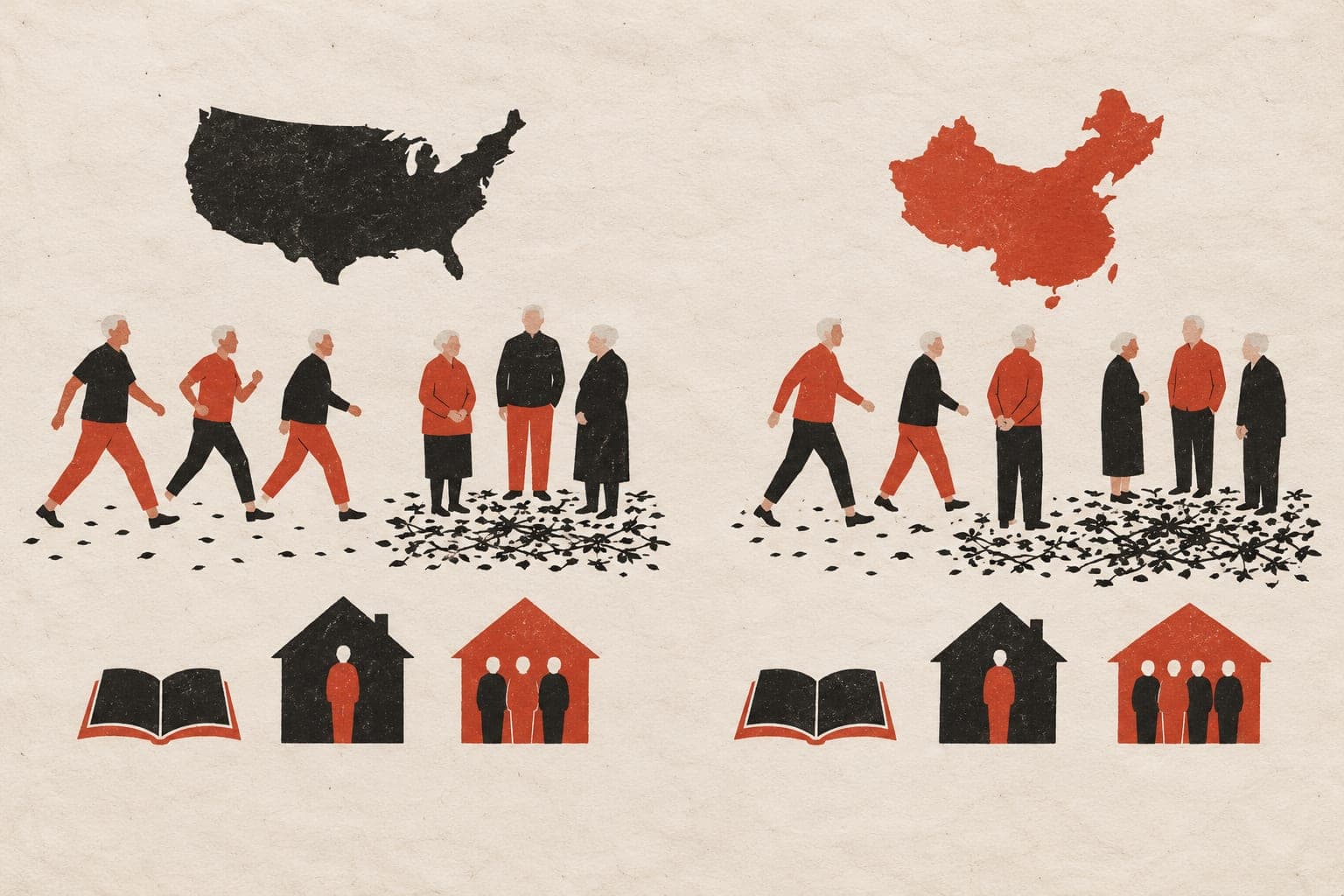
Outdoor activities and social support on anxiety in Chinese older adults: a cross-sectional study
Abstract
OBJECTIVE: This study examined the associations between different types of outdoor activity and anxiety in older Chinese adults, and assessed whether social support was related to these associations as a potential mediator. METHODS: Data were obtained from 8,813 adults aged 60 years and older who participated in the 2018 wave of the Chinese Longitudinal Healthy Longevity Survey. Outdoor activity was classified as Tai Chi, square dancing, neighborhood walking, other outdoor activities, and overall outdoor activity frequency. Anxiety symptoms were measured using the Generalized Anxiety Disorder-7 scale. Social support was assessed using a composite indicator covering family, caregiving, financial, and community-based support resources. Mediation analyses were conducted with 5,000 bootstrap resamples after adjustment for demographic, behavioral, residential, relational, and socioeconomic covariates. RESULTS: Anxiety was identified in 11.57% of participants. Social support was consistently associated with lower anxiety scores. Overall outdoor activity, neighborhood walking, and other outdoor activities were associated with lower anxiety, and small indirect effects through social support were observed for these activity types. No significant mediation through social support was found for Tai Chi or square dancing. The observed correlations and regression coefficients were modest in magnitude. CONCLUSION: Routine outdoor activities, particularly neighborhood walking, were associated with lower anxiety levels in older adults, with social support accounting for part of these associations. Although the effect sizes were small and causal inferences cannot be drawn from the cross-sectional design, the findings suggest that accessible outdoor activities and supportive social environments may be relevant to healthy aging and later-life mental wellbeing.
The paper
Chengdu University
Frontiers in Public Health, May 18, 2026, Open access