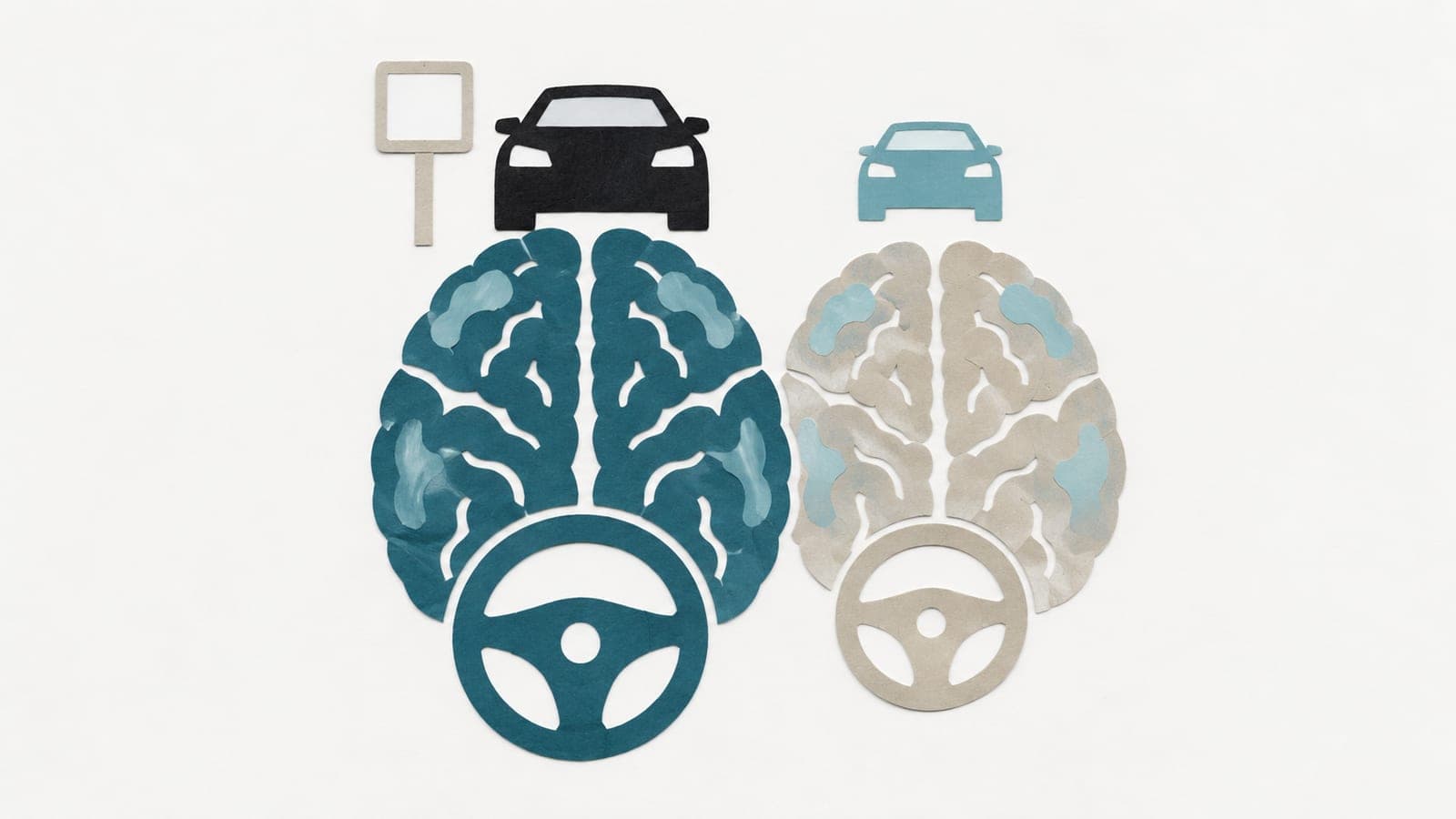
Midlife modulation of task switching brain activity reveals age specific neural adaptation
By Wu MT, Goh JO, Chou TL et al.
Abstract
Task-switching ability, a core component of cognitive flexibility, begins to decline in midlife, yet the underlying neural adaptations during this stage remain unclear. This study investigated task-switching-related brain activation throughout adulthood, focusing on middle-aged adults, using functional magnetic resonance imaging (fMRI). Ninety healthy adults─30 each in young (YA), middle-aged (MA), and older (OA) groups─performed a modified Stroop task during fMRI. Behavioral outcomes included reaction time, error rate (ER), and ER switch cost. Whole-brain and region-of-interest analyses assessed frontoparietal modulation across age groups. The MA group exhibited lower ER switch cost than OA (p = 0.036), suggesting better task-switching accuracy. While parietal activity upregulation from non-switch to switch conditions was greater in MA than OA (pcorr. = 0.010–0.017), it was not significantly performance-related. Notably, within MA, greater left inferior prefrontal upregulation from non-switch to switch conditions was associated with lower ER in switch trials (r = − 0.569, puncorr. = 0.002, pcorr. = 0.020). A marginal association was found for the left middle prefrontal region. These findings suggest that middle-aged adults engage prefrontal upregulation to support task accuracy. Midlife may represent a critical window for neural adaptation, emphasizing its relevance in cognitive aging research and intervention strategies.
The paper
Wu MT, Goh JO, Chou TL et al.
Scientific Reports, 18 Feb 2026