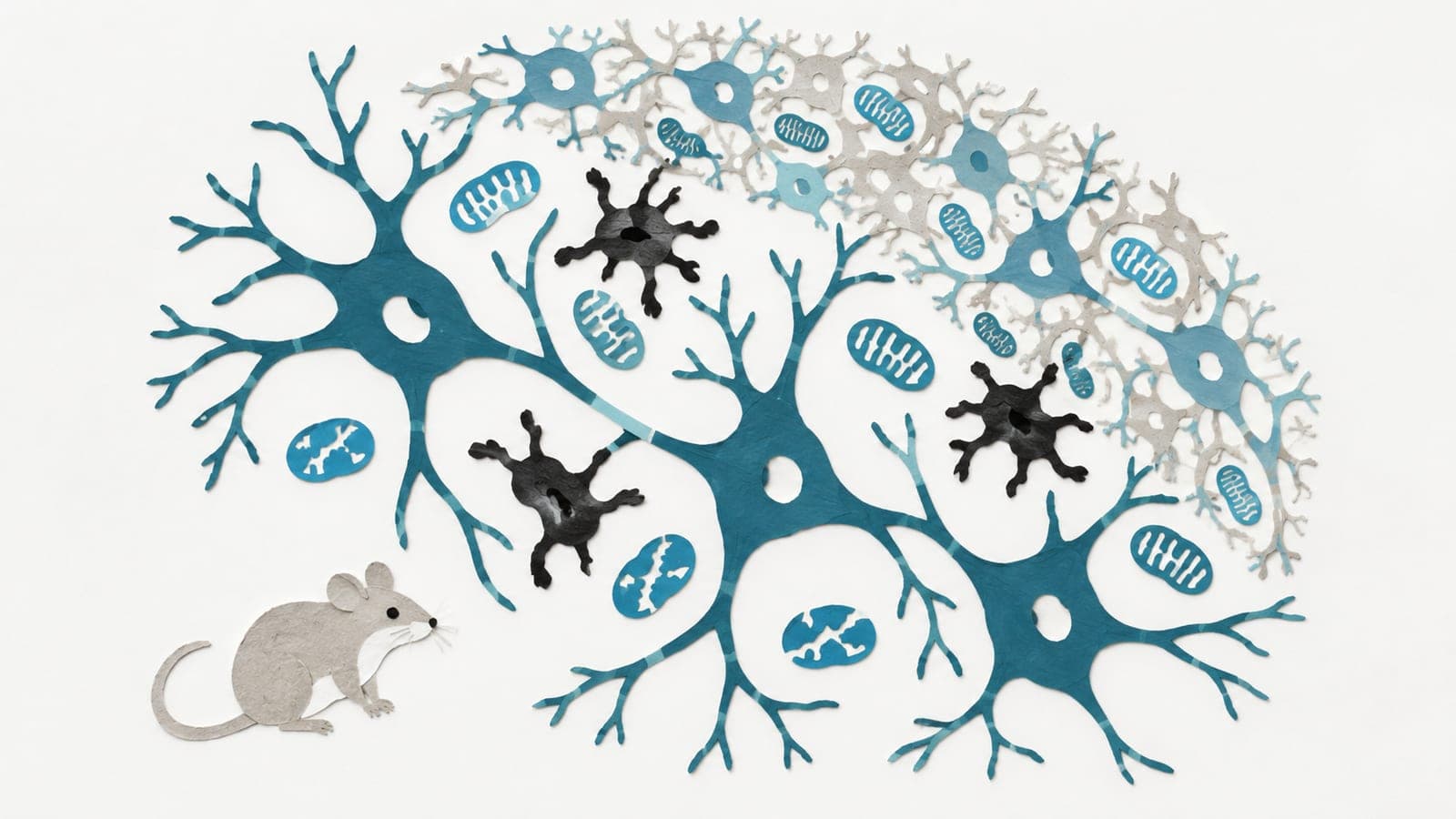
Mitochondrial transplantation improves anxiety- and depression-like behaviors in aged stress-exposed rats
Abstract
Impaired mitochondrial function and abnormalities in the tryptophan (Trp)-kynurenine (Kyn) pathway are linked to age-related mood disorders. This study investigated the effect of intracerebroventricular (ICV) injection of the mitochondria isolated from young rat brain on depression-like behaviors of aged rats subjected to chronic mild stress (CMS). Aged (22 months old) male rats were randomly assigned into four groups: Aged, Aged + Mit, Aged + CMS, and Aged + CMS + Mit. Anxiety- and depression-like behaviors were assessed using elevated plus maze (EPM), open field test (OFT), forced swimming test (FST), and sucrose preference test (SPT). Mitochondrial membrane potential (MMP), ATP levels, indoleamine 2, 3-dioxygenase (IDO) levels, and Kyn metabolites were measured in the prefrontal cortex (PFC). Golgi Cox staining was used to investigate the neuronal morphology. Mitotherapy decreased immobility time and anhedonia in the FST; increased open arm time and entries in the EPM; decreased grooming and increased rearing, center time, and the entrance in the OFT. Mitotherapy also reduced IDO and Kyn metabolites, restored MMP and ATP production, and enhanced dendritic length and spine density in the PFC. Overall, mitotherapy improved anxiety-and depression-like behaviors in aged rats and it could be considered as a new therapeutic strategy for age-related depressive disorders.
The paper
Tabriz University of Medical Sciences
Mechanisms of Ageing and Development, Jan 20, 2022