Changes in daily abilities linked to sex and education in Chile
An observational study tracked 2,681 adults aged 46–65 at the start over 17 years, finding varied patterns of stability, decline and partial recovery.
Our read
Populations- Studied:
- Cohort study of 2,681 Chilean adults aged 46–65 at baseline, against the oldest baseline age group
- What changed:
- Women’s share among those with fluctuating daily-ability decline exceeded their share of the oldest age group by 18.4 percentage points
- The catch:
- Income, occupation, and healthcare access could explain the sex and education differences
- In the record:
- The 650th paper on education with results in people; 1,378 on record in all.
- Why it’s aging research:
- It measures an outcome that worsens with age.
Editor of record: Boris Djordjevic · AgingResearch.News
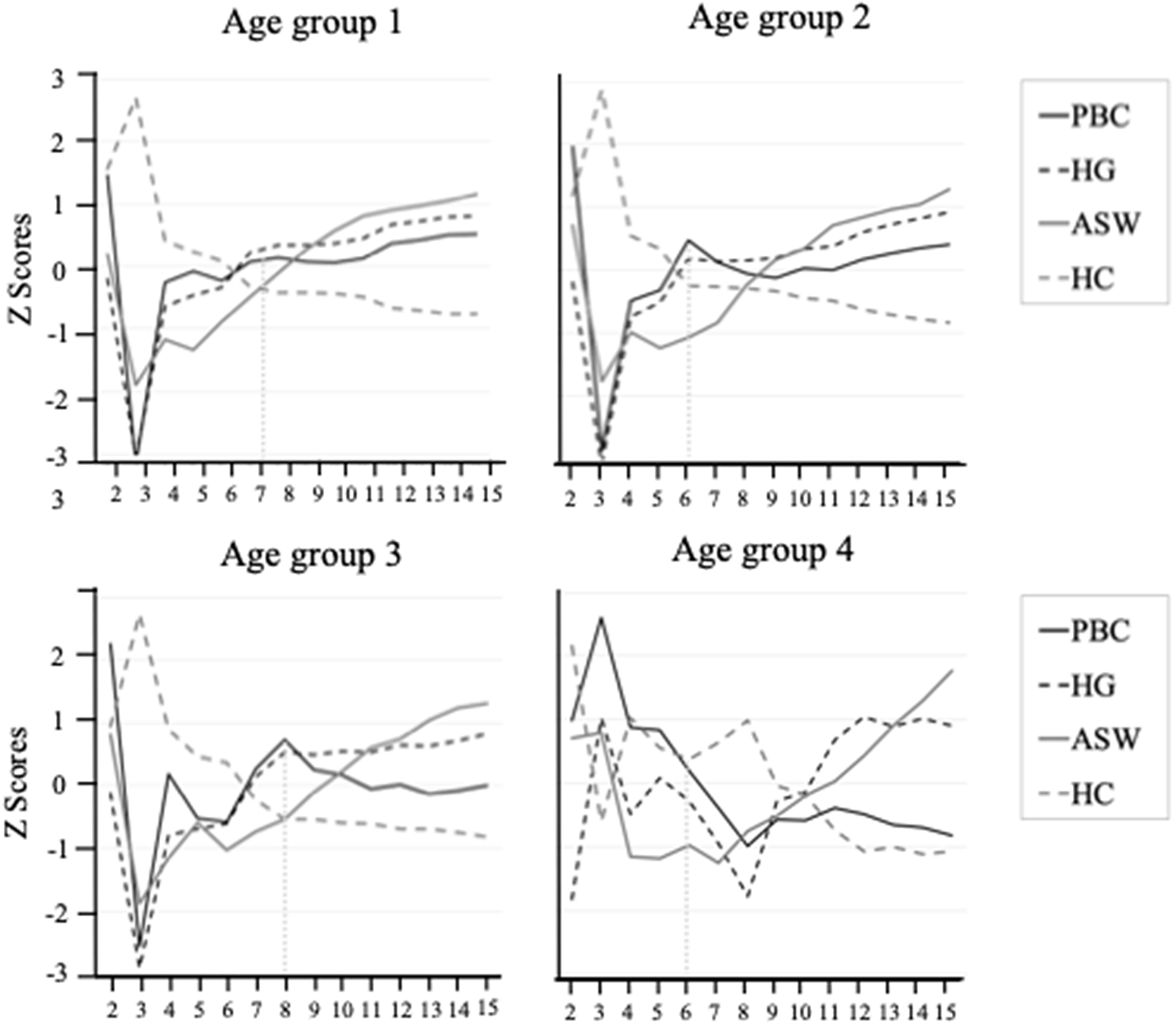
Chilean adults aged 46–65 at the start—2,681 people—were followed in an observational study using six survey rounds from 2004 to 2020. They reported difficulties with activities including walking, bathing and dressing. Researchers grouped their 17-year patterns within four starting-age groups before comparing sex and education.
Patterns included mostly preserved ability, progressive decline and uneven decline, sometimes with partial recovery. The mostly preserved category included people who maintained their abilities before death. Women generally made up a larger share of uneven paths than of their age groups overall, especially among those initially aged 61–65. People with primary education or less showed the same pattern in the three younger age groups. Progressive decline was especially prominent among those initially aged 56–60 and remained substantial among those aged 61–65.
Why it matters
Following daily abilities from midlife into older age helps address how functional aging unfolds across socially unequal groups in Chile.
Caveats
Daily limitations were self-reported. The analysis did not use survey weights, so the proportions following each pattern should not be treated as national estimates.
Where the evidence stands
Education
- 352 independent labs in 63 countries
- 61 findings against
- Funders: National Institute on Aging and others
- 37 of 764 findings with company ties
From the paper
- Participants
The analytic sample included 2,681 individuals aged 46–65 at baseline, contributing 16,086 person-wave observations.
- Limitation
More frequent observations would allow for a more detailed understanding of the timing, duration, and reversibility of functional changes [24].
Quoted word for word from the full text on journals.plos.org.
The paper
Pontificia Universidad Católica de Chile
PLOS One, Nov 3, 2026, Open access, CC BY


Comments
Be the first to comment.