Accumulated frailty linked to new depression in adults
Greater accumulated frailty was linked to higher odds of developing depression across four cohorts, with odds ratios ranging from 3.46 to 6.09.
Our read
Populations- Studied:
- Study in people
Editor of record: Boris Djordjevic · AgingResearch.News
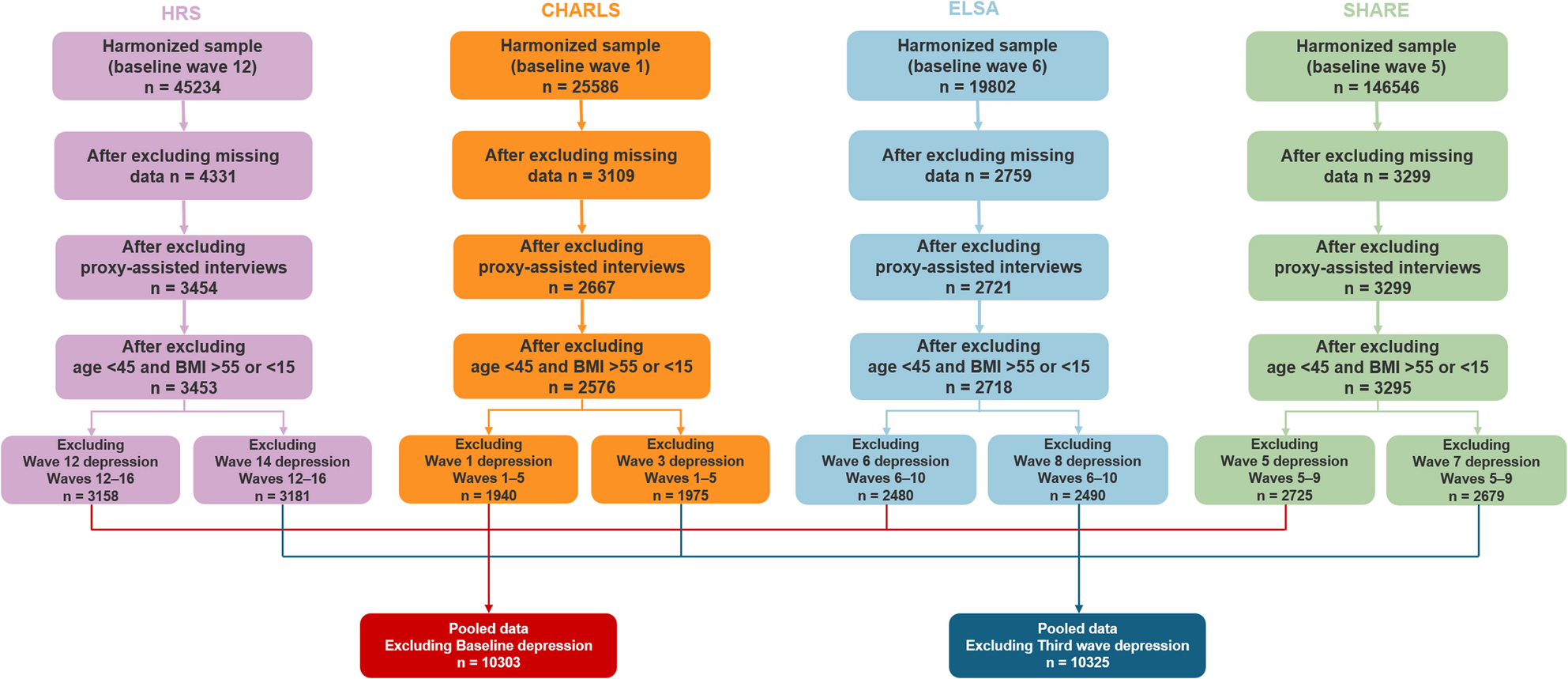
Adults aged 45 and older—12,042 in total—were included in a prospective analysis of four aging cohorts. Researchers measured accumulated frailty using a 29-item score across the first three assessments. Separate analyses excluded people with depression at the first or third assessment. Each cohort classified depression using validated symptom scales.
Greater accumulated frailty was associated with new depression in all four cohorts. The main models suggested a small indirect link through cognitive function—memory and other thinking skills. This estimated component accounted for 2.05%–5.97% of the modeled association. However, support for this possible indirect link did not hold consistently in additional analyses.
Why it matters
For late-life depression, the authors suggest that frailty assessment may help identify people at higher risk.
Caveats
Depression classifications relied on symptom scales, and stable differences between people may partly explain the association. The findings do not address adults younger than 45.
The paper
Frailty accumulation predicts depression across cultures: evidence from four aging cohorts
BMC Public Health, Nov 13, 2026, CC BY-NC-ND



Comments
Be the first to comment.