Independence and survival differed by illness in older adults
After statistical adjustment, expected time independent in daily activities ranged from 33.3 to 38.3 months over five years across condition groups.
Our read
Populations- Studied:
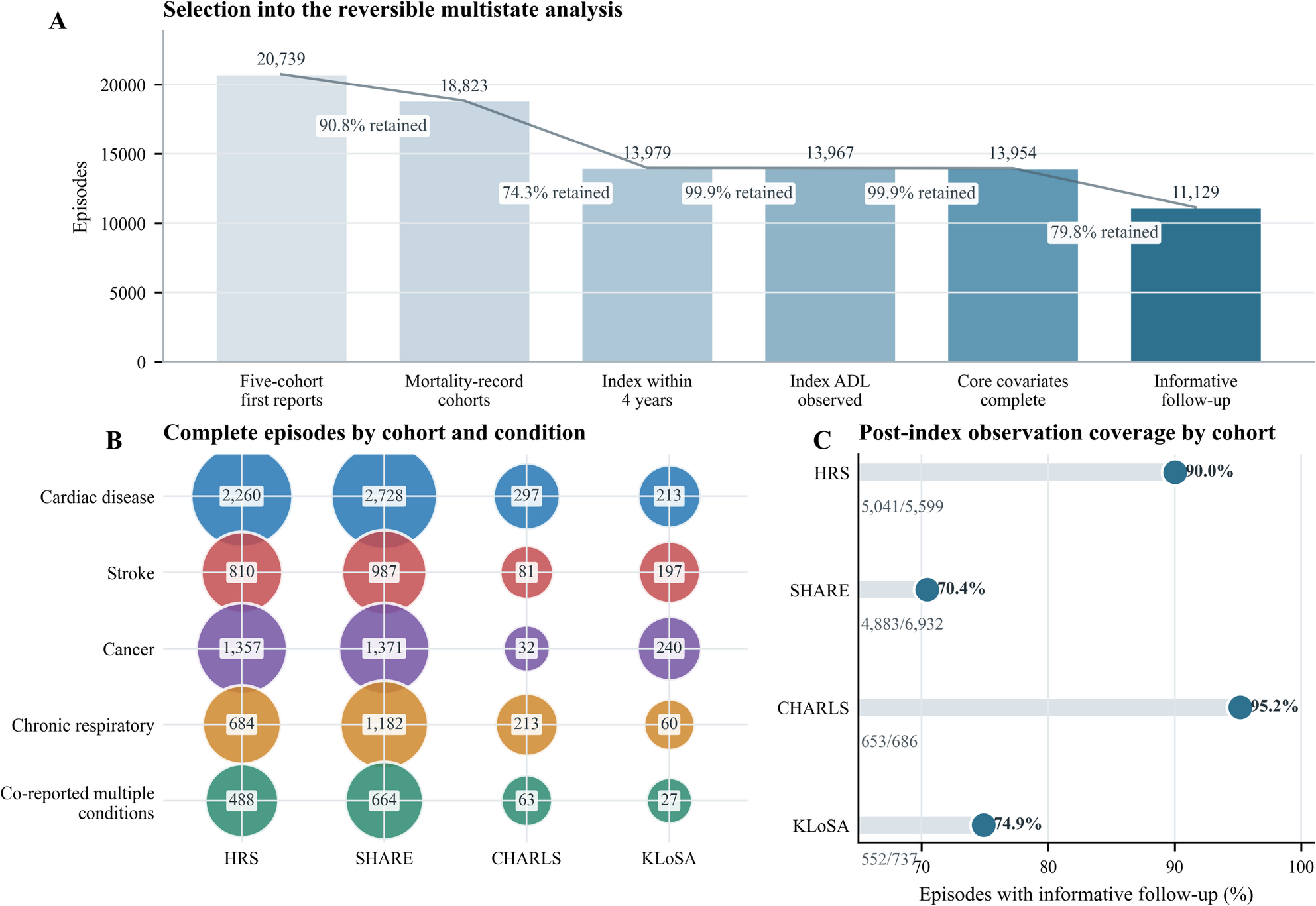
- Cohort study of 13,954 people (5 years)
- In the record:
- The 1,747th paper on stroke with results in people; 7,158 on record in all.
Editor of record: Boris Djordjevic · AgingResearch.News
Adults aged 65 or older with a first observed survey report of a major condition were compared in a harmonized multicohort study. It combined comparable data from four aging surveys. The analysis included 13,954 eligible survey-report episodes involving heart disease, stroke, cancer, long-term respiratory disease or multiple conditions reported together. Of these, 11,129 contributed informative follow-up observations.
A model estimated five-year time independent in daily activities, living with limitations, or not alive. The estimates accounted for differences in age, sex, survey membership and daily functioning before and at the report. In a post hoc comparison, stroke was associated with 6.13 more months with daily-activity limitations and 4.03 fewer months not alive than cancer.
Why it matters
Healthy aging involves both survival and independence in daily activities. Separating time lived with limitations from time not alive helps distinguish these dimensions of later life.
Caveats
The starting point was survey recognition, not clinical onset or diagnosis. These population-average estimates for adults aged 65 or older do not provide an individual’s prognosis.


Comments
Be the first to comment.