Greener areas linked to lower risk of high blood pressure
For one greenness measure, the relative risk of developing high blood pressure was lower in the greenest versus least green quarter of neighborhoods (hazard ratio 0.871).
Our read
Populations- Studied:
- Cohort study of 5,484,119 adults in northwestern China, against least green quarter of neighborhoods
- What changed:
- High blood pressure risk was lower in the greenest versus least green quarter of neighborhoods (hazard ratio 0.871)
- The catch:
- Other health-related advantages in greener neighborhoods may explain the lower hypertension risk
- In the record:
- One of 7 papers on greenspace exposure on record: 7 with results in people.
Editor of record: Boris Djordjevic · AgingResearch.News
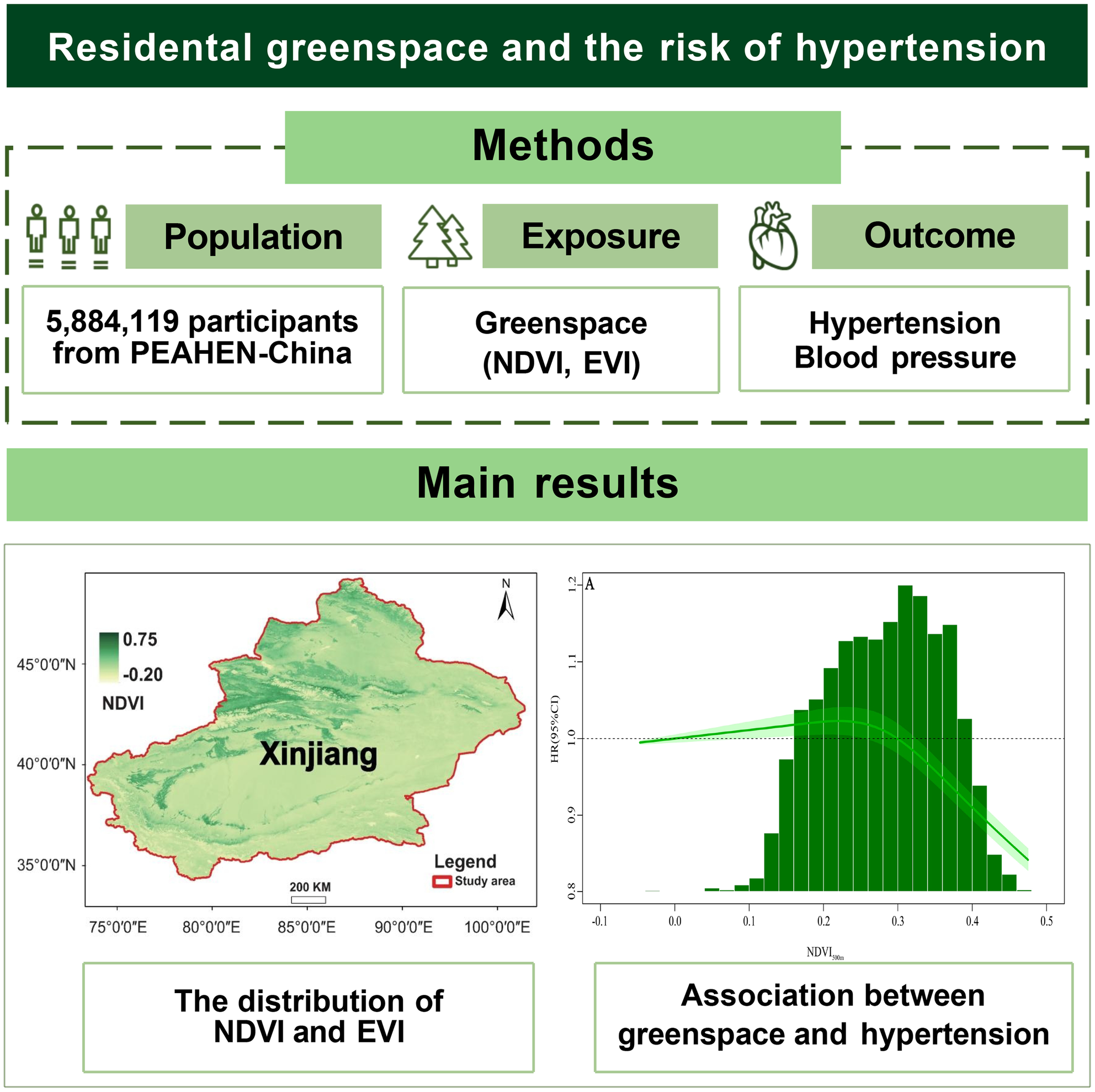
Among 5,484,119 adults in northwestern China, a prospective cohort study linked greener neighborhoods to fewer new cases of hypertension, or high blood pressure. Participants joined in 2017 and were followed through 2021.
During a median follow-up of 3.21 years, 1,290,003 new cases occurred. Researchers assessed neighborhood greenness using two vegetation measures within a 500-meter radius. After adjustment, the greenest quarter had hypertension hazard ratios of 0.871 and 0.896 compared with the least green quarter, depending on the measure. These ratios compared the rate at which new cases occurred during follow-up. Greener areas were also linked to lower blood pressure. Associations were stronger in younger adults, men, rural residents and less educated participants than in their counterparts.
Why it matters
High blood pressure is a health concern as people age. The authors suggested that neighborhood greenspace policies may help reduce its burden.
Caveats
People in greener neighborhoods may have had other health-related advantages that the adjustments did not fully capture. The findings concern adults in northwestern China.
Where the evidence stands
Greenspace exposure
- 7 independent labs in 4 countries
- Funders: National Natural Science Foundation of China and others
The paper
Southern Medical University
Journal of the American Heart Association, Nov 12, 2026


Comments
Be the first to comment.