Four patterns of stage 2 heart-kidney-metabolic syndrome in US adults
Relative death rates were highest in the high-blood-sugar and kidney-risk group, with a hazard ratio of 2.59 versus adults at stages zero or one.

Our read
Populations- Studied:
- Cohort study of 8,761 US adults with stage 2 cardiovascular-kidney-metabolic syndrome
- What changed:
- Adults with stage 2 heart-kidney-metabolic syndrome fell into four distinct risk patterns
- The catch:
- Deaths prevented by tailoring care to these risk patterns were not measured
Editor of record: Boris Djordjevic · AgingResearch.News
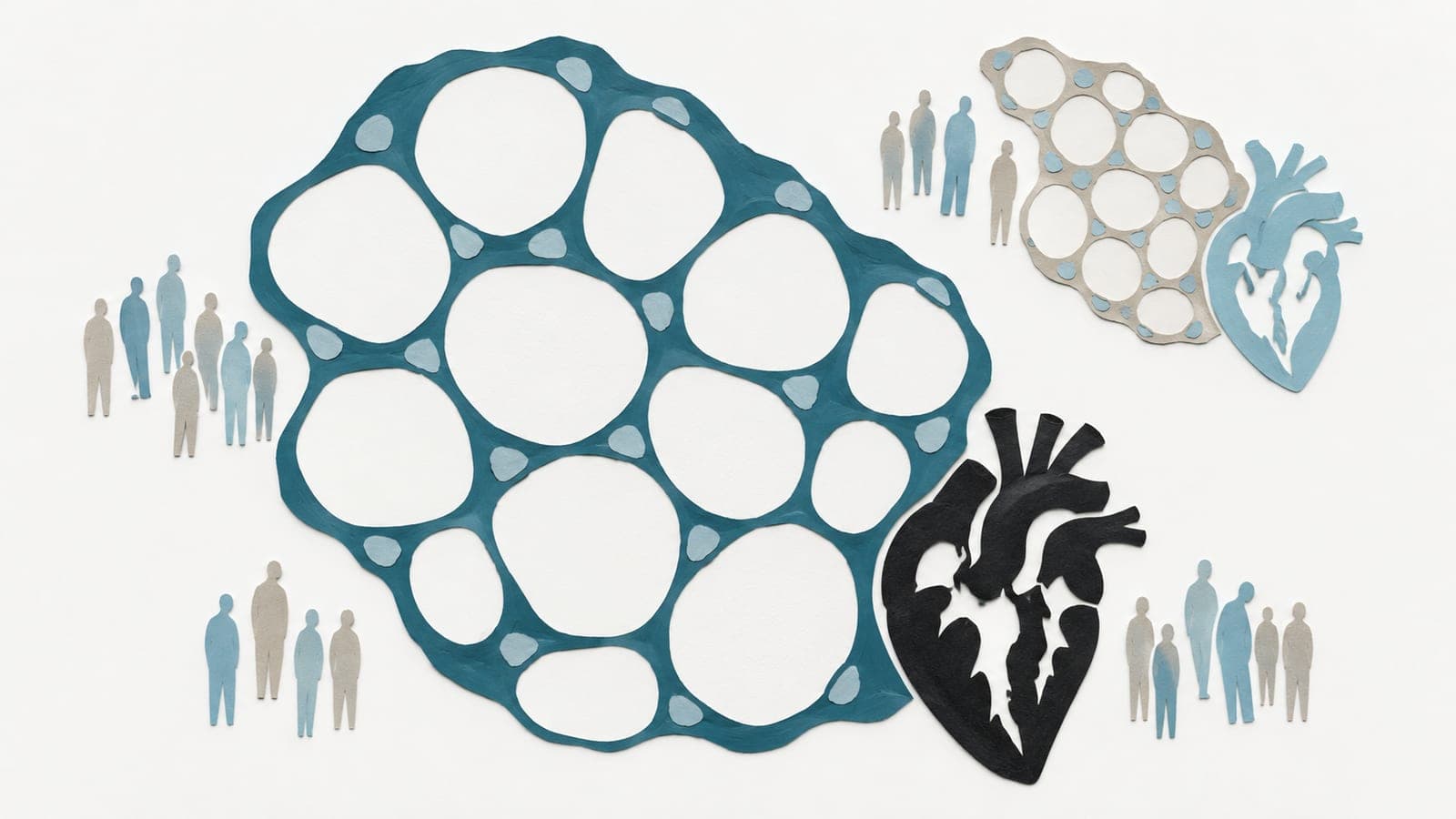
Among 8,761 US adults with stage 2 cardiovascular-kidney-metabolic syndrome, an observational study identified four distinct risk patterns. The syndrome links heart, kidney and metabolic risk factors. Researchers analyzed national survey data from 1999 through 2018. They grouped participants using nine measures covering body size, blood pressure, blood sugar, blood fats and kidney function.
The group characterized by high blood sugar and kidney risk had the highest death risks over a median follow-up of 10 years. Compared with adults at stages 0 or 1, its hazard ratios—measures comparing death rates—were 2.59 for death from any cause and 4.49 for cardiovascular death. This group's prevalence rose from 6.0% to 12.1% between 1999 and 2018. It was more common among non-Hispanic Black adults and people with lower income or education levels.
Why it matters
Preventing cardiovascular disease matters for health in later life. The authors highlighted the high-blood-sugar and kidney-risk group as a priority for targeted prevention.
Caveats
The mortality comparisons did not test whether targeting these risk patterns would reduce deaths. The findings were reported in a conference abstract, which does not specify which other health or social differences the mortality models accounted for.
The paper
University of California, Irvine
AHA Scientific Sessions 2026 Abstract, Nov 2, 2026
Presented at AHA Scientific Sessions 2026, abstract 9935

Comments
Be the first to comment.