One antibody speeds atherosclerosis in mouse experiments
In mice, transferring an antibody targeting histone 2B or vaccinating against the protein accelerated atherosclerosis.
Limit: Atherosclerosis was measured in mice; cardiovascular events and death were not measured
Edited by Boris Djordjevic · AgingResearch.News
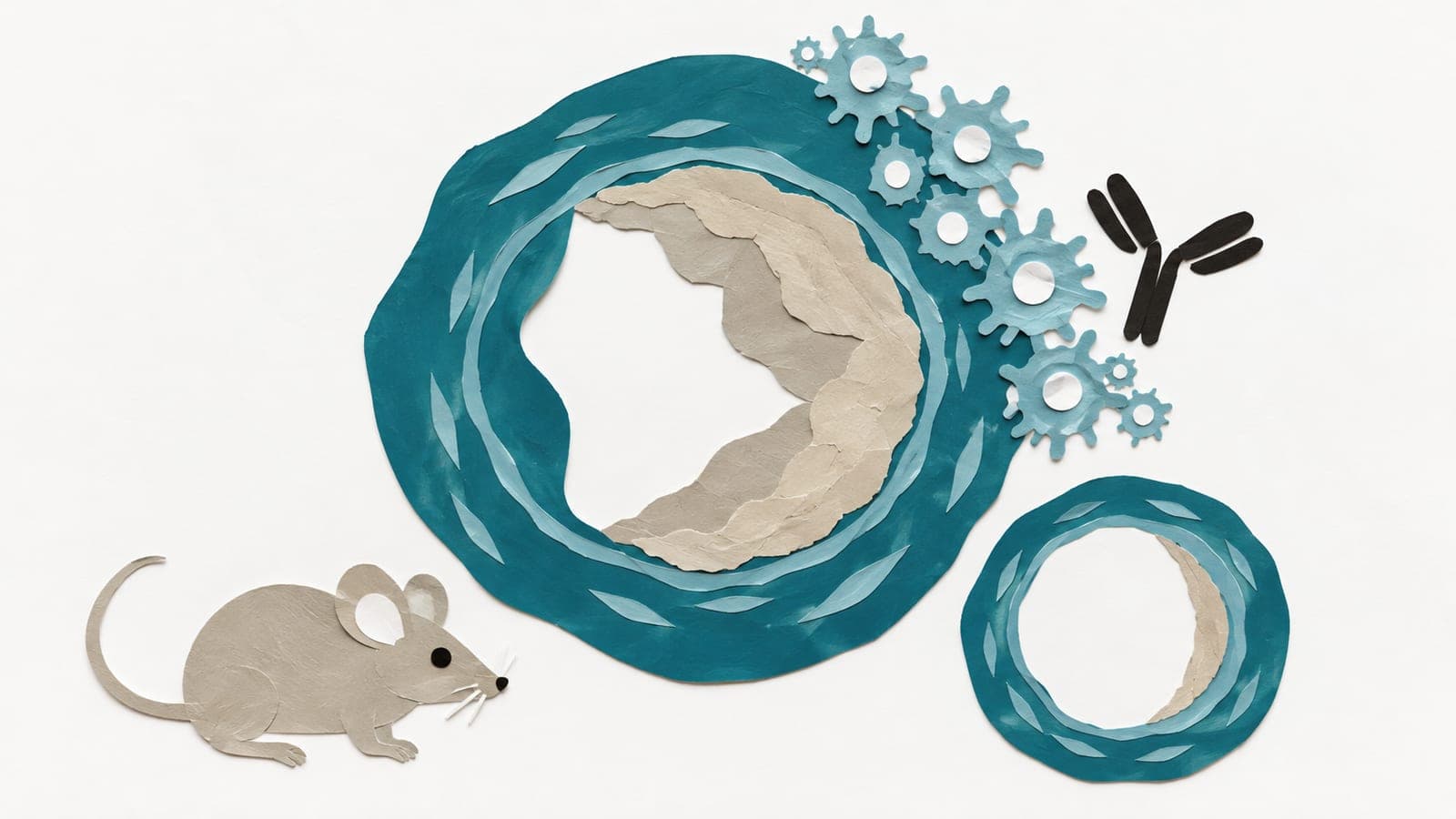
In an experiment in aged wild-type mice and mice lacking the Apoe gene, researchers examined artery tertiary lymphoid organs, immune clusters that form in artery walls. They compared immune cells from these clusters with cells from lymph nodes and cloned 60 autoantibodies, antibodies that target the body's own proteins. One antibody bound tightly to histone 2B, a structural protein. In mouse experiments, transferring this antibody or vaccinating with histone 2B accelerated atherosclerosis, an inflammatory artery disease. These results suggested that artery clusters can produce a self-reactive antibody that worsens the condition.
In an observational study of a human cohort, circulating antibody levels against histone 2B were associated with calcification in the aorta and coronary arteries, independent of traditional cardiovascular risk factors.
Why it matters
Atherosclerosis involves chronic inflammation and an autoimmune component. Studying immune tolerance in aged mice may help clarify how self-reactive antibodies contribute to this artery disease.
Caveats
The causal experiments were conducted in mice, while the human cohort data show only an observational association. The findings were reported in a conference abstract.
The paper
First Affiliated Hospital of Sun Yat-sen University; Institute for Cardiovascular Prevention (IPEK-LMU)
ESC Congress 2026 Abstract, Oct 26, 2026
Presented at ESC Congress 2026
