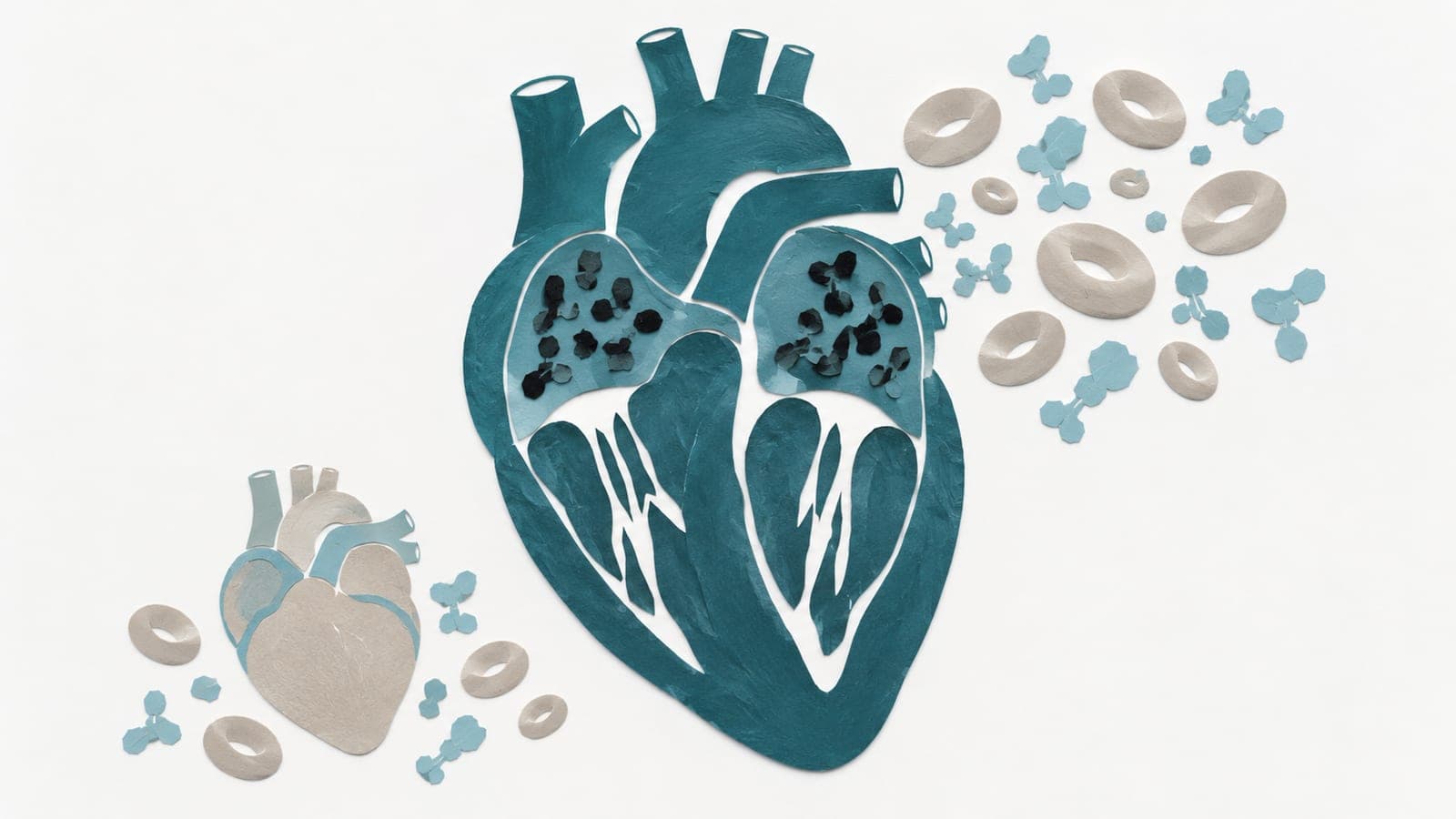
A sensitive heart test better predicts death and cardiac events
In 14,361 adults followed for 4.4 years, a next-generation test for a heart-damage protein predicted deaths and cardiovascular events better than an established test.
Edited by Boris Djordjevic · AgingResearch.News
In an observational cohort study, researchers analyzed blood samples from 14,361 people aged 45 to 79 (median age 60 years, 48.9% female) from the general population. They measured high-sensitivity cardiac troponin T, a protein that signals early heart damage, using a next-generation test and compared it with an established test for cardiac troponin I. Over a median follow-up of 4.4 years, 322 participants died and 730 experienced a major cardiovascular event.
The new test detected troponin T in 98.9% of participants, compared with 81.6% for the established test. Both markers were independent predictors of death and cardiovascular events after adjusting for age, sex, and traditional risk factors. The new troponin T test demonstrated superior risk discrimination for mortality and cardiovascular events up to five years, with a one-year mortality discrimination score of 0.795 compared with 0.719 for troponin I.
Why it matters
Cardiovascular disease is a leading cause of illness and death as people grow older. Detecting subtle, subclinical heart injury early through sensitive blood markers may improve cardiovascular risk prediction and help guide preventive care in aging populations.
Caveats
The observational design shows statistical associations rather than direct cause, and residual confounding remains possible. In addition, the findings come from adults aged 45 to 79 and may not apply to younger people.
The paper
University Heart and Vascular Centre Hamburg (UHZ)
ESC Congress 2026 Abstract, Oct 26, 2026
Presented at ESC Congress 2026