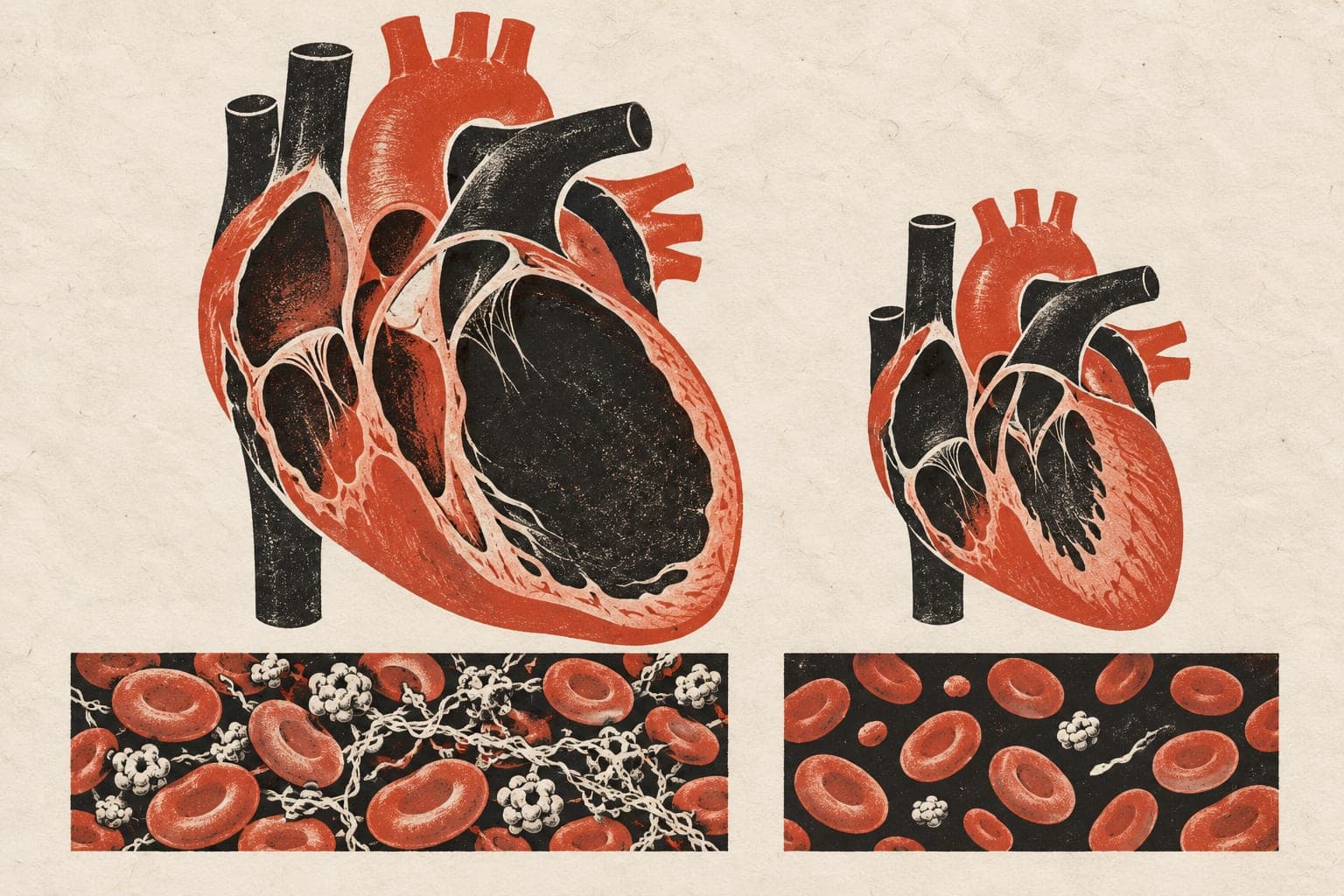
Chronic inflammation linked to heart changes and cardiovascular risk
Participants in the highest fifth for an inflammation marker had a 43% higher relative risk of major cardiovascular events than those in the lowest fifth.
Limit: The abstract did not report the analyzed subsets' sizes, ages, or follow-up duration
Edited by Boris Djordjevic · AgingResearch.News
Researchers conducted an observational study using subsets of 488,079 UK Biobank participants with blood profiling, heart scans and follow-up data. They measured chronic inflammation using glycoprotein acetyls, a blood marker.
Higher levels were associated with lower measures of blood volume in the heart’s main pumping chamber before contraction and blood pumped per beat. Heart rate was higher. Smoking, trunk fat mass, psychological distress and lower social and economic status were among the strongest factors associated with inflammation. Links between environmental exposures, inflammation and major cardiovascular events varied with genetic risk scores, which summarize inherited susceptibility.
Why it matters
Cardiovascular disease is an age-related health concern. Understanding differences in inflammatory responses may help frame questions for ongoing trials of therapies that modify inflammation.
Caveats
This observational analysis cannot establish that inflammation caused the heart changes or cardiovascular events. The ESC Congress 2026 abstract did not report the analyzed subsets’ sizes or ages, or the follow-up duration.
The paper
Gene-exposure interactions regulate cytokine-mediated chronic inflammation and cardiac remodeling