Stopping statins met a preset trial limit in older adults
Over two years, average time free of major cardiovascular events or death was 2.0 weeks shorter after stopping statins than continuing them.
Our read
Interventions- Studied:
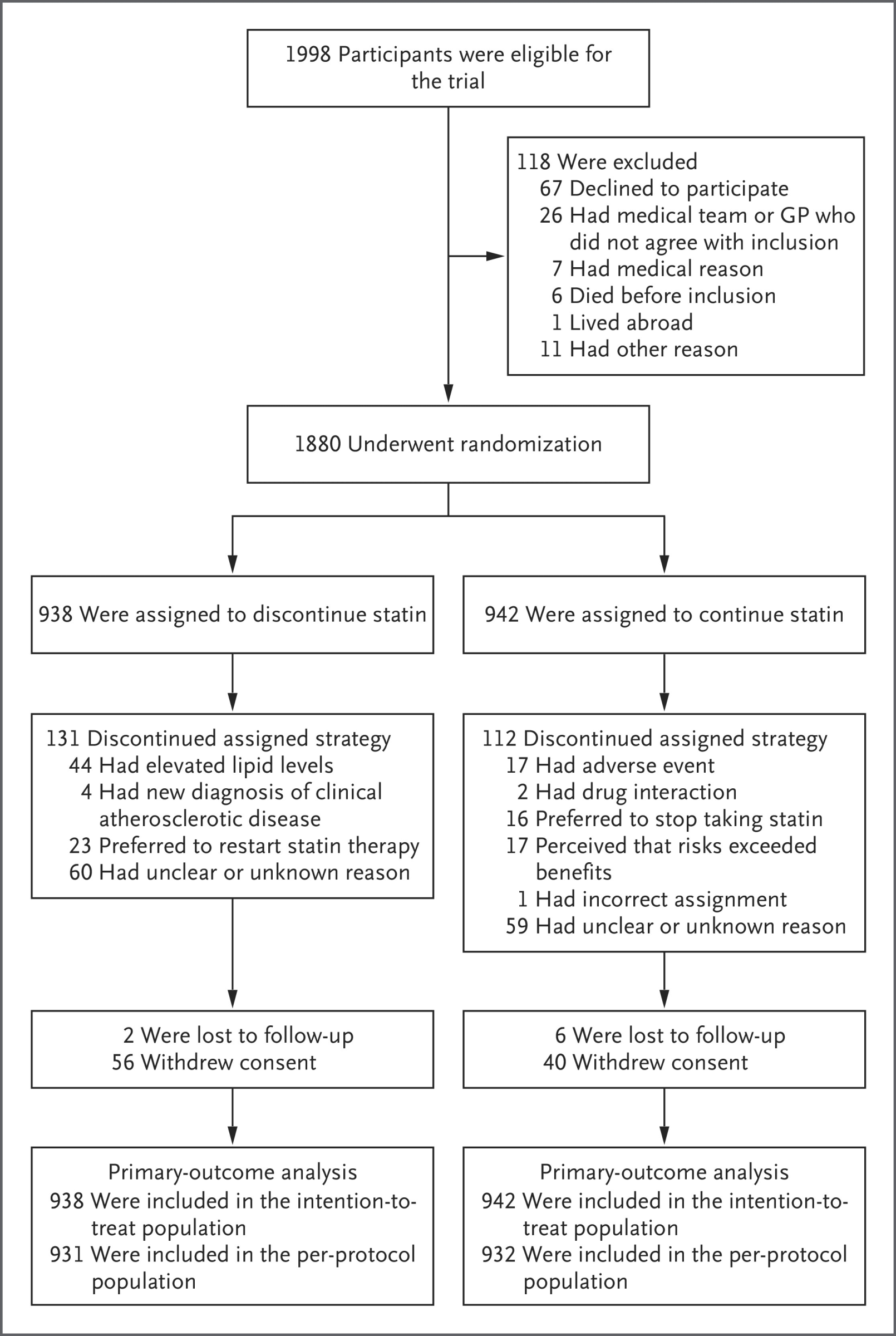
- Randomized trial in 1,880 older adults without known cardiovascular disease, median 103 weeks (Registered NCT05178420)
- What changed:
- Stopping statins met the preset limit despite 2.0 weeks less time free of heart attack, stroke, or death
- The catch:
- Participants and clinicians knew assignments, potentially influencing cardiovascular-event reporting
- In the record:
- The 10th paper on statin discontinuation with results in people; 11 on record in all.
- Why it’s aging research:
- It studies an intervention with evidence of extending healthy life.
Editor of record: Boris Djordjevic · AgingResearch.News
Adults aged 70 or older with at least two chronic conditions and no known cardiovascular disease joined an international randomized trial of stopping or continuing statins and other cholesterol-lowering medicines. The 1,880 participants averaged 77.5 years; 46.9% were women.
The trial tested whether stopping fell within a preset limit: no more than 5.2 fewer weeks alive and free of heart attack or stroke over two years. Stopping met that limit, although average event-free time was 2.0 weeks shorter than with continuation. Over a median 103 weeks, a nonfatal heart attack, nonfatal stroke caused by a blocked blood vessel, or death occurred in 12.7% of the stopping group and 9.2% of the continuation group. At least one serious adverse event occurred in 43.0% and 39.8%, respectively.
Why it matters
For older adults with several chronic conditions, the findings inform decisions about continuing statins to prevent a first cardiovascular event.
Caveats
Participants and clinicians knew the assignments; meeting the preset limit did not mean identical outcomes. The results do not address adults under 70 or people with known cardiovascular disease.



Comments
Be the first to comment.