More urban greenery linked to lower death risk across 22 countries
A vegetation score 0.1 units higher was associated with a relative risk of death of 0.89 compared with the lower score.
Our read
Populations- Studied:
- Study of urban populations across multiple countries, 2001–2020 (Dose-response, multicenter)
- What changed:
- Death from any cause was lower with greater urban greenery (relative risk 0.89 per 0.1-unit increase)
- The catch:
- Population age differences could influence results because mortality rates were not age-standardized
- Why it’s aging research:
- A leading disease of aging, its risks or menopause.
Editor of record: Boris Djordjevic · AgingResearch.News
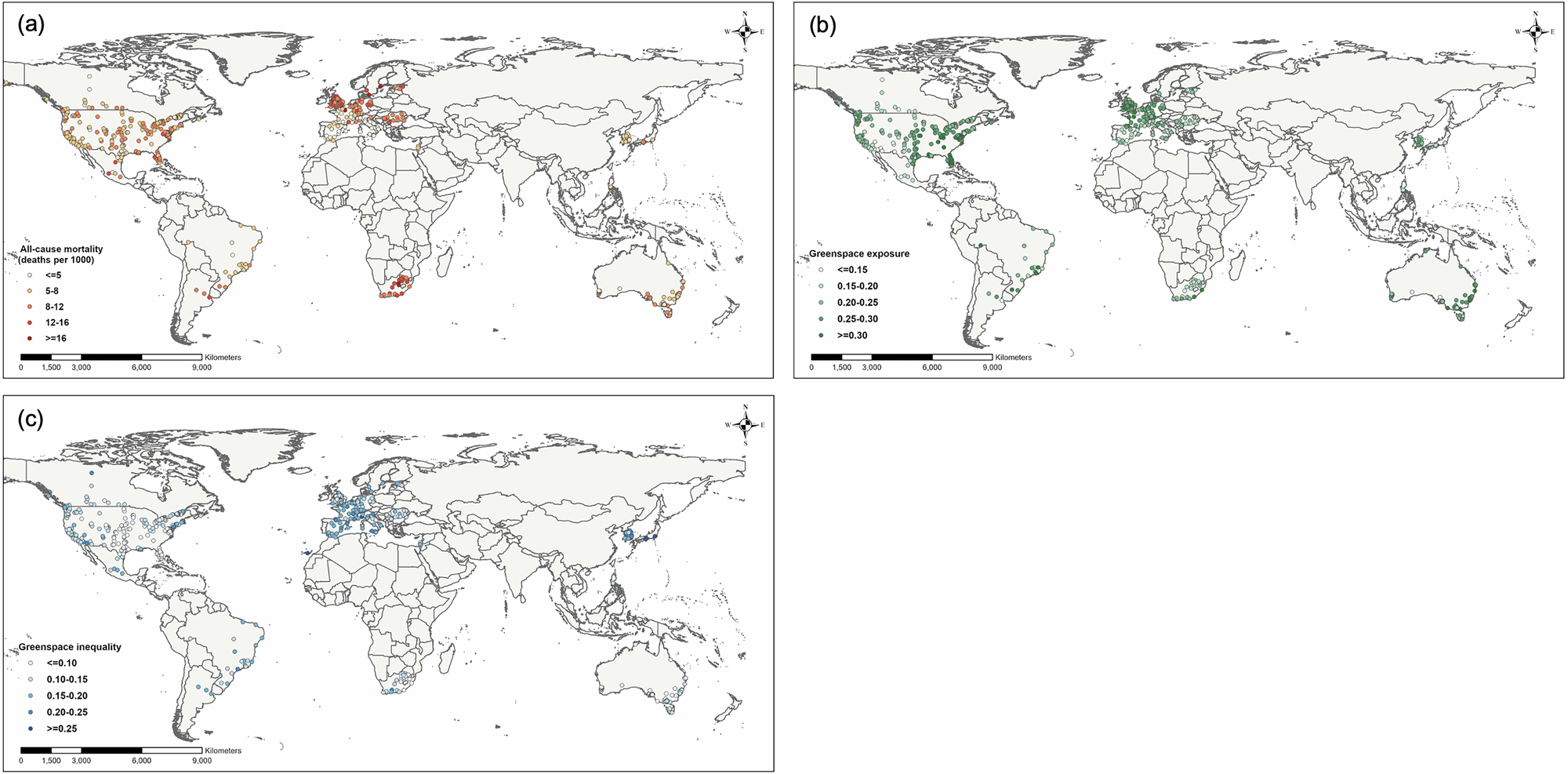
Urban populations in 624 locations across 22 countries were the focus of an observational analysis of annual death records and satellite vegetation data from 2001–2020. The analysis covered about 56 million deaths. Researchers measured vegetation where people lived and how unevenly it was distributed within each location.
Greener locations had lower overall mortality. A 0.1-unit increase in the inequality score was linked to a relative risk of death of 1.14, but the range of likely values included no difference. Links between greenery and deaths from heart and blood vessel disease or respiratory disease also had ranges that included no difference. The associations varied across countries, income levels, climate zones and regions.
Why it matters
Urban planning shapes the environments in which people grow older. The authors called for strategies that prioritize both greening and equitable access.
Caveats
The analysis linked location-level vegetation and deaths, not individuals’ exposure and outcomes. Death rates were not standardized for age, and all locations had more than half their population living in urban areas.
From the paper
- Result
A 0.1-unit increase in greenspace exposure was associated with lower risks of all-cause mortality (RR = 0.89, 95% CI = 0.83–0.95), cardiovascular mortality (0.92, 0.82–1.00), and respiratory mortality (0.89, 0.78–1.01).
- Limitation
First, although the MCC Collaborative Research Network provides one of the largest multi-location mortality datasets and enables standardized analyses across countries, it is based on a collaborative data-sharing framework rather than a globally representative sampling design.
Quoted word for word from the full text on nature.com.
- Urban greenspace exposure
- Urban greenspace inequality
- Gini-based greenspace inequality metric
- Population-weighted Enhanced Vegetation Index
- Humans
The paper
Communications Health, Nov 4, 2026, Open access, CC BY
Comments
Be the first to comment.