Blood protein analysis points to possible fat-loss drug targets
Genetically predicted levels of 21 proteins were linked to fat mass; seven had no clear link to the body's nonfat components.
Our read
Mechanisms- Studied:
- Mendelian randomization in people
- In the record:
- The 3rd paper on ADM with results in people; 28 on record in all.
Editor of record: Boris Djordjevic · AgingResearch.News
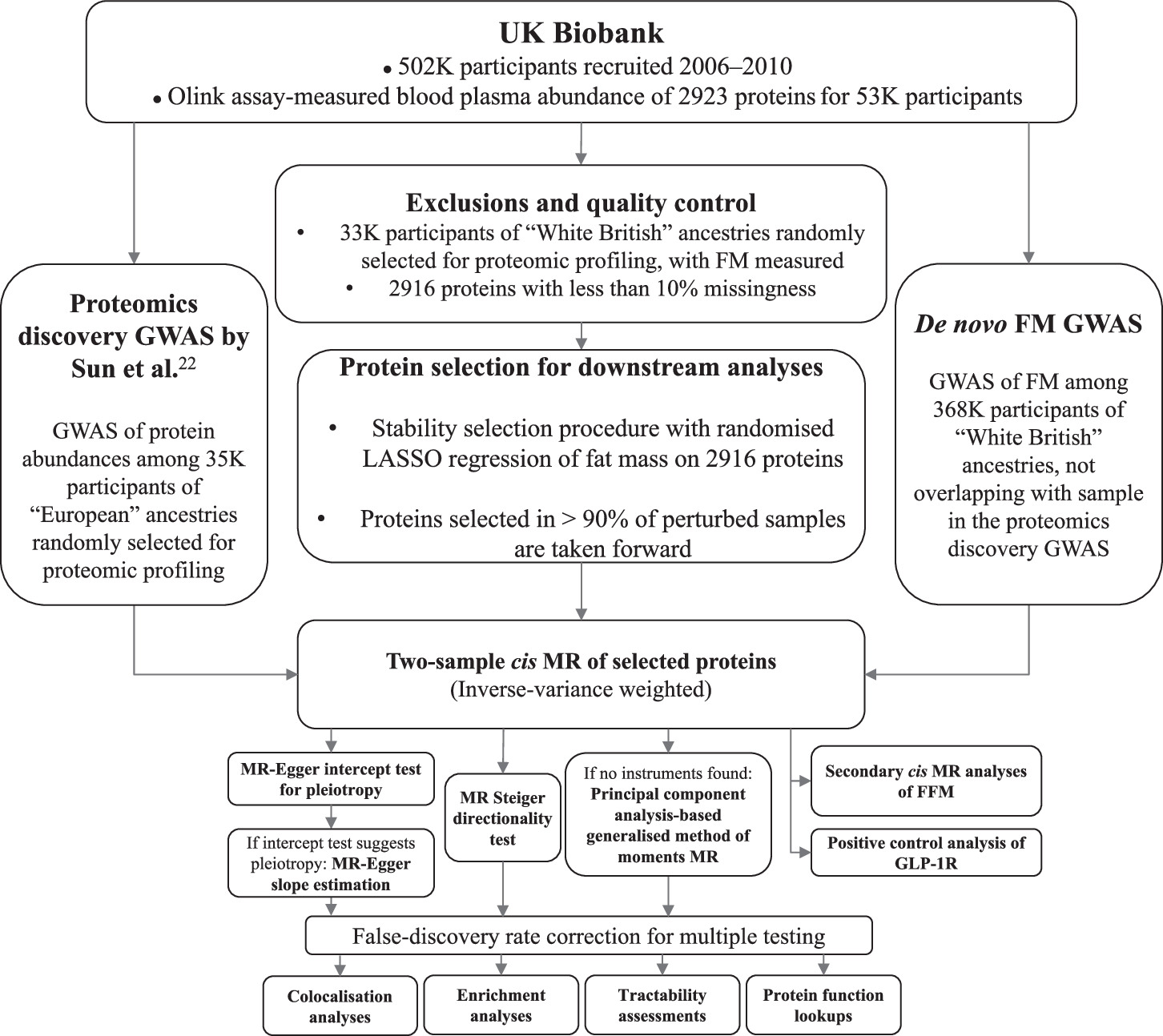
UK Biobank participants contributed blood protein data for 35,000 people and body composition data for 368,000 people to a Mendelian randomization analysis. This method used genetic differences to estimate associations between protein levels and body composition.
Machine learning selected proteins for further analysis. Genetically predicted levels of 21 proteins were associated with fat mass. For five, additional analyses supported shared genetic variants underlying protein levels and fat mass. Seven of the 21 had no clear association with fat-free mass—the body's nonfat components, including muscle. Another protein had an association with fat-free mass opposite in direction to its association with fat mass. The authors suggested that changing these proteins may be less likely to also lower fat-free mass.
Why it matters
Excess fat mass is linked to multiple diseases, while existing therapies can also reduce fat-free mass. The findings support further research on possible drug targets that might help separate these effects.
Caveats
Genetically predicted protein levels cannot show whether changing those proteins with a drug would reduce fat while preserving fat-free mass.
The paper
Analyses of plasma protein levels in relation to body composition in the UK Biobank
Communications Medicine, Nov 13, 2026, CC BY


Comments
Be the first to comment.