Rare gene variants linked to less weight loss with semaglutide
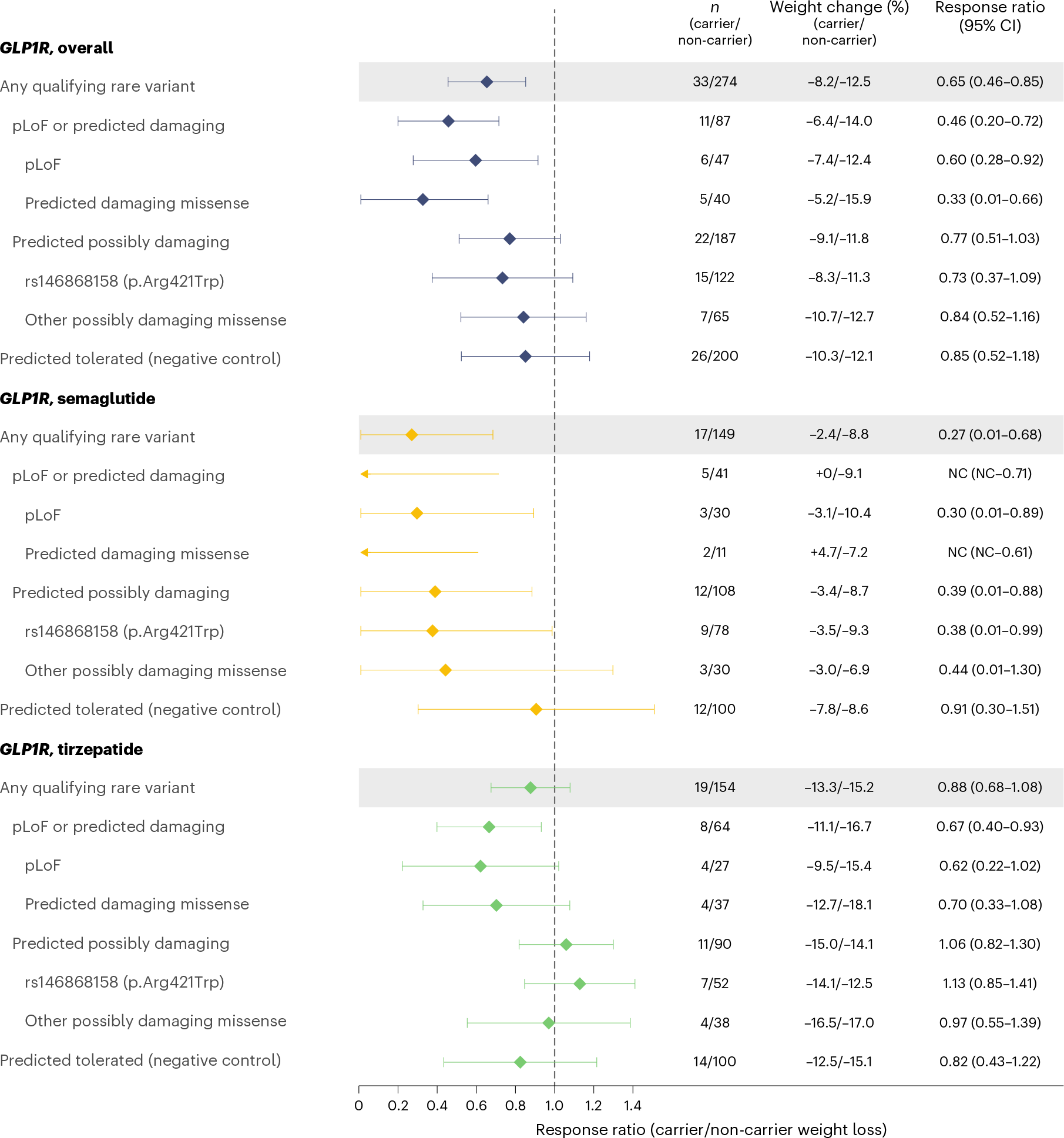
An observational analysis of 13,725 treated adults linked the variants to lower weight loss with semaglutide, but a near-normal response to tirzepatide.
Our read
Interventions- Studied:
- Genetic association study of 13,725 GLP-1RA-treated adults, against matched non-carriers
- What changed:
- Carriers of rare damaging GLP1R variants lost less weight with semaglutide than matched non-carriers
- The catch:
- Matching may leave weight-loss-related differences between carriers and non-carriers unaccounted for
- In the record:
- The 25th paper on GLP1R with results in people; 2,529 on record in all.
Editor of record: Boris Djordjevic · AgingResearch.News
The 13,725 adults in an observational study had received drugs that included semaglutide and tirzepatide. Researchers combined genetic data with electronic health records from 351,818 people in the Helix Research Network.
Among treated adults, carriers of rare, damaging variants in GLP1R lost less weight with semaglutide than matched non-carriers. GLP1R is the gene for a protein targeted by both drugs. With tirzepatide, carriers had a near-normal weight-loss response. The researchers also examined rare variants in GIPR, the gene for tirzepatide’s second target protein. People carrying those variants had normal weight-loss responses.
Why it matters
Weight management across adulthood, including later life, involves understanding why responses to medicines vary. These findings raise questions about how inherited differences might inform drug choice.
Caveats
Matching carriers with non-carriers may not have accounted for every difference relevant to weight loss. The analysis covered treated adults, not children.




Comments
Be the first to comment.