Efinopegdutide helped resolve inflammatory liver disease
At 52 weeks, resolution without worsening liver scarring occurred in 56%, 63% and 61% at three efinopegdutide doses, versus 13% with placebo.
Our read
Interventions- Studied:
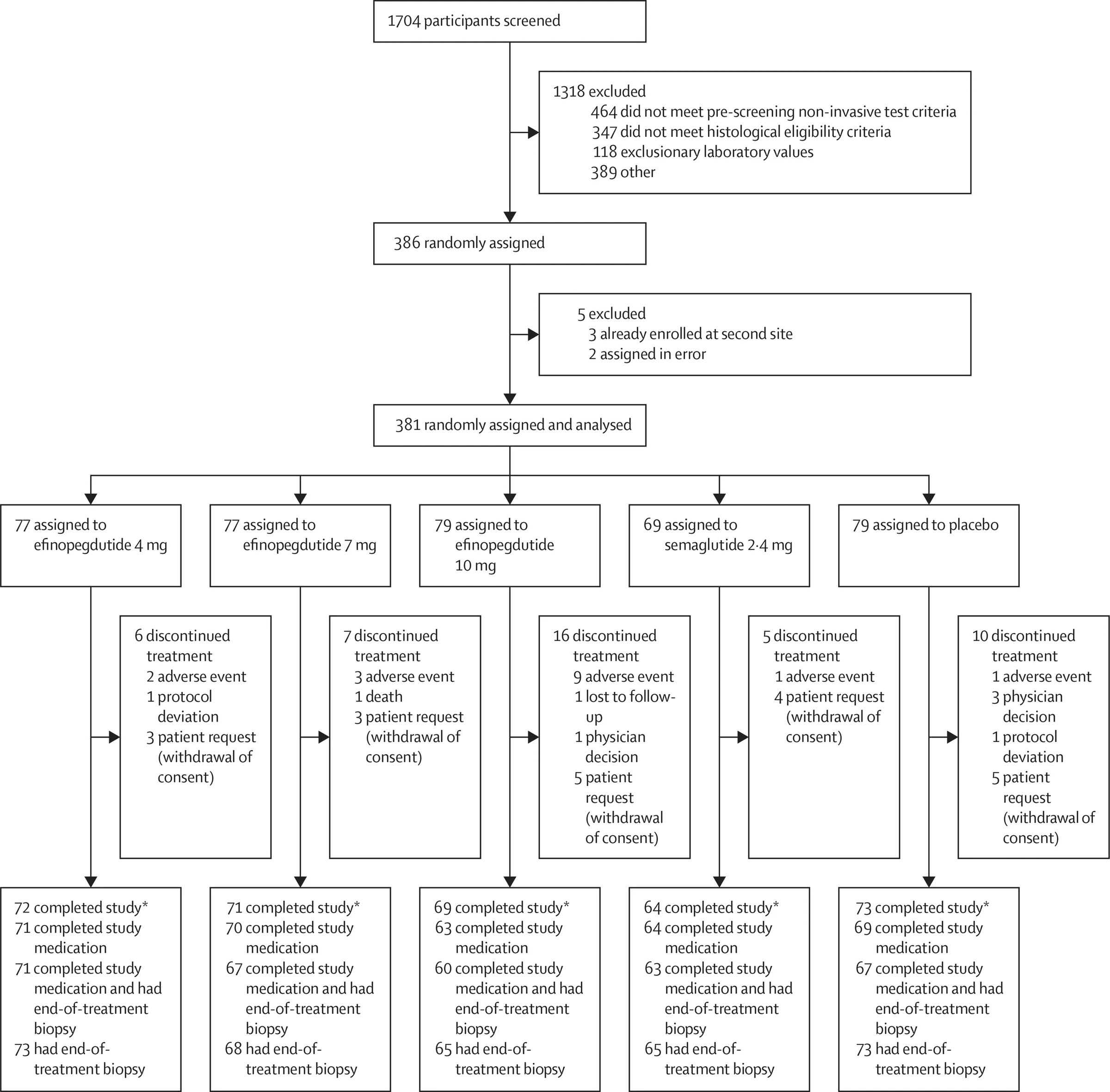
- Randomized trial in 381 people (52 weeks, double-blind, placebo-controlled, multicenter, registered NCT05877547)
- In the record:
- One of 5 papers on efinopegdutide on record: 1 with results in people.
Editor of record: Boris Djordjevic · AgingResearch.News
The 386 adults in a randomized trial had biopsy-confirmed metabolic dysfunction-associated steatohepatitis (MASH), a liver disease involving fat buildup and inflammation, and stage 2 or 3 liver scarring. The analysis included 381 participants, averaging 53 years old: 194 women and 187 men. They received weekly injections of efinopegdutide at 4, 7 or 10 mg, placebo, or semaglutide at 2.4 mg for 52 weeks.
All three efinopegdutide doses increased MASH resolution without worsening scarring compared with placebo. At 7 mg, scarring improved by at least one stage without worsening MASH in 52%, versus 21% with placebo. Digestive problems were the most frequent adverse events. Adverse events caused 11% to stop 10 mg efinopegdutide, compared with 3–4% at lower doses and 1% with placebo. The authors judged 7 mg to have the most favorable balance of benefits and risks.
Why it matters
For adults with MASH in midlife, the trial addressed treating liver disease while limiting worsening scarring. The authors see efinopegdutide as a potential once-weekly option.
Caveats
The outcomes were biopsy findings at 52 weeks, not longer-term liver complications or survival. Participants had stage 2 or 3 scarring, not cirrhosis, the most advanced stage of liver scarring.

Comments
Be the first to comment.