Eye diseases linked to brain changes and cognitive decline
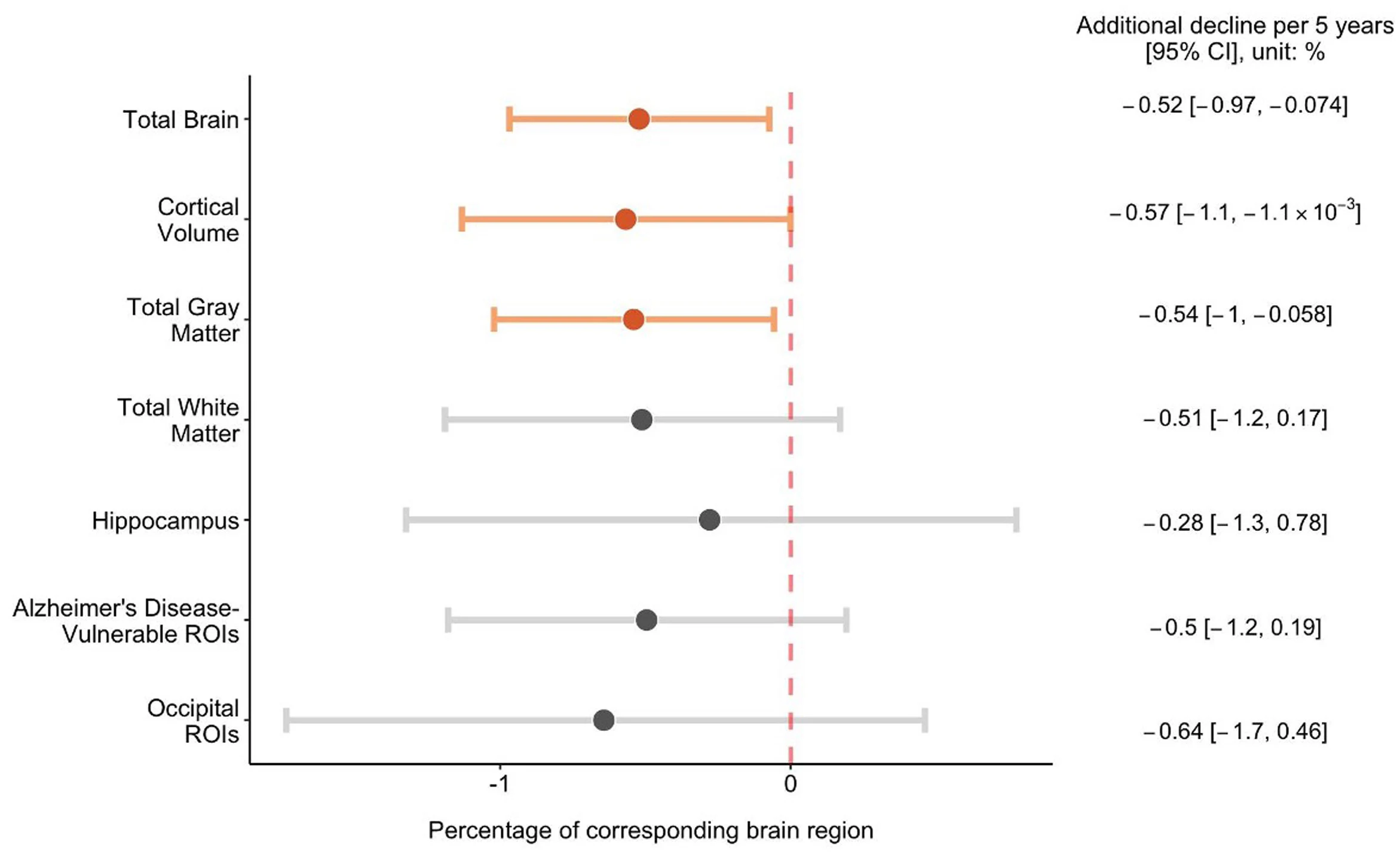
Across participants, brain-volume differences per five years of age were 1.27 times greater with diabetic eye disease than without it.
Our read
Populations- Studied:
- Cohort study of 1,124 dementia-free older adults, against participants without diabetic retinopathy
- What changed:
- Brain-volume differences per 5 years of age were 1.27 times greater with diabetic retinopathy than without it
- The catch:
- Brain volumes came mainly from clinical scans, risking inconsistent measurement across participants
- In the record:
- The 208th paper on cataract with results in people; 726 on record in all.
Editor of record: Boris Djordjevic · AgingResearch.News
Among 1,124 dementia-free adults aged 56 or older, a prospective community-based cohort study linked several eye diseases to brain and thinking changes. Researchers identified eye diseases from health records, assessed thinking skills over time and analyzed magnetic resonance imaging scans, mainly obtained during clinical care.
Diabetic retinopathy, diabetes-related damage to the eye’s light-sensitive tissue, was associated with smaller brain volumes. It was not linked to faster brain shrinkage in exploratory analyses of 258 participants with repeated scans. Those analyses linked cataracts, clouding of the eye’s lens, to faster brain shrinkage. Longer duration of diabetic retinopathy, age-related macular degeneration—an eye disease affecting central vision—and cataracts was associated with additional cognitive decline beyond normal aging. Within-person analyses supported the cognitive links for diabetic retinopathy and macular degeneration.
Why it matters
The results bear on whether different eye diseases have distinct relationships with changes in brain structure and thinking skills during aging.
Caveats
The brain-volume link with diabetic eye disease came from comparisons between people, which can reflect differences other than aging within a person. Participants were dementia-free and aged 56 or older.
Comments
Be the first to comment.