Omega-3s did not significantly cut major cardiovascular events
Major cardiovascular events had a hazard ratio of 0.92 versus placebo, with 1 meaning no difference; heart attacks were less frequent.
Our read
Interventions- Studied:
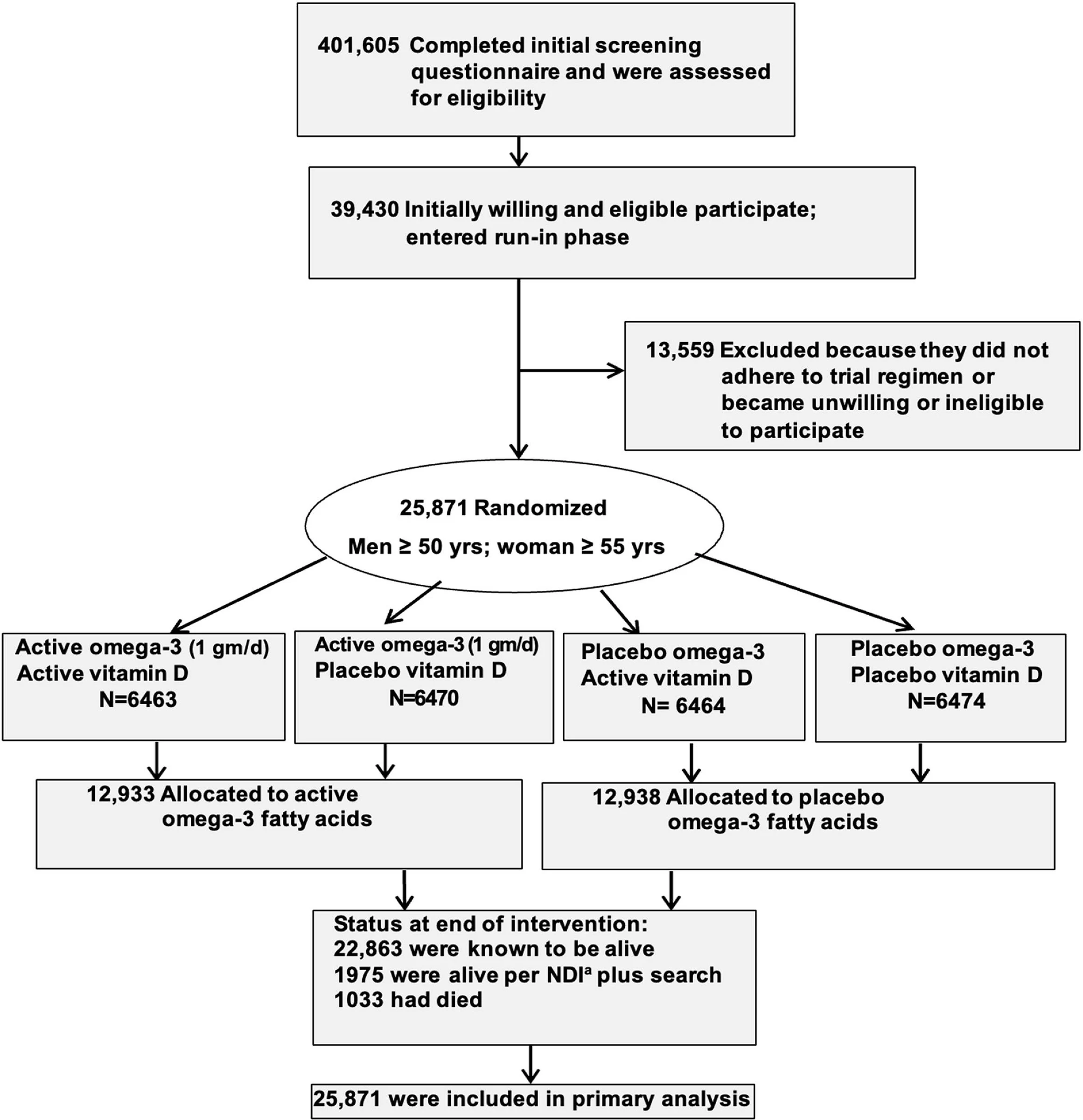
- Randomized trial in 25,871 older U.S. men and women, median 5.3 years, against placebo (Placebo-controlled)
- What changed:
- Major cardiovascular events did not differ with omega-3 supplements versus placebo (hazard ratio 0.92)
- The catch:
- Only 1 gram daily was evaluated; higher-dose effects were not measured
- In the record:
- The 276th paper on Omega-3 fatty acids with results in people; 722 on record in all. Its result on myocardial infarction agrees with 8 of 11 other findings on record; 3 found no change.
Editor of record: Boris Djordjevic · AgingResearch.News
Among 25,871 US men aged 50 or older and women aged 55 or older, VITAL tested omega-3 supplements in a randomized, placebo-controlled trial. Participants took 1 gram of marine omega-3 fatty acids daily or placebo for a median of 5.3 years.
The supplements did not significantly reduce major cardiovascular events—heart and blood vessel events—or total cancer incidence. They reduced heart attacks and repeat hospitalizations for heart failure. They were also associated with fewer confirmed or probable cases of autoimmune disease, in which the immune system attacks the body. The supplements did not reduce deaths from any cause. They were not associated with atrial fibrillation, an irregular heartbeat. For several outcomes, benefits were greater in Black participants and those with lower fish intake or cardiovascular risk factors.
Why it matters
For chronic disease prevention as people age, the authors did not support routine omega-3 supplementation in healthy adults. They said targeted supplementation for people with low fish intake and other select groups warranted consideration.
Caveats
The trial tested prevention in a general population not selected for elevated cardiovascular or cancer risk. Its findings do not cover men under 50 or women under 55.
Omega-3 fatty acids is part of Bryan Johnson's Blueprint and Rhonda Patrick's supplement routineMore supplements



Comments
Be the first to comment.