Arsenic metabolism linked to muscle size and fat in adults
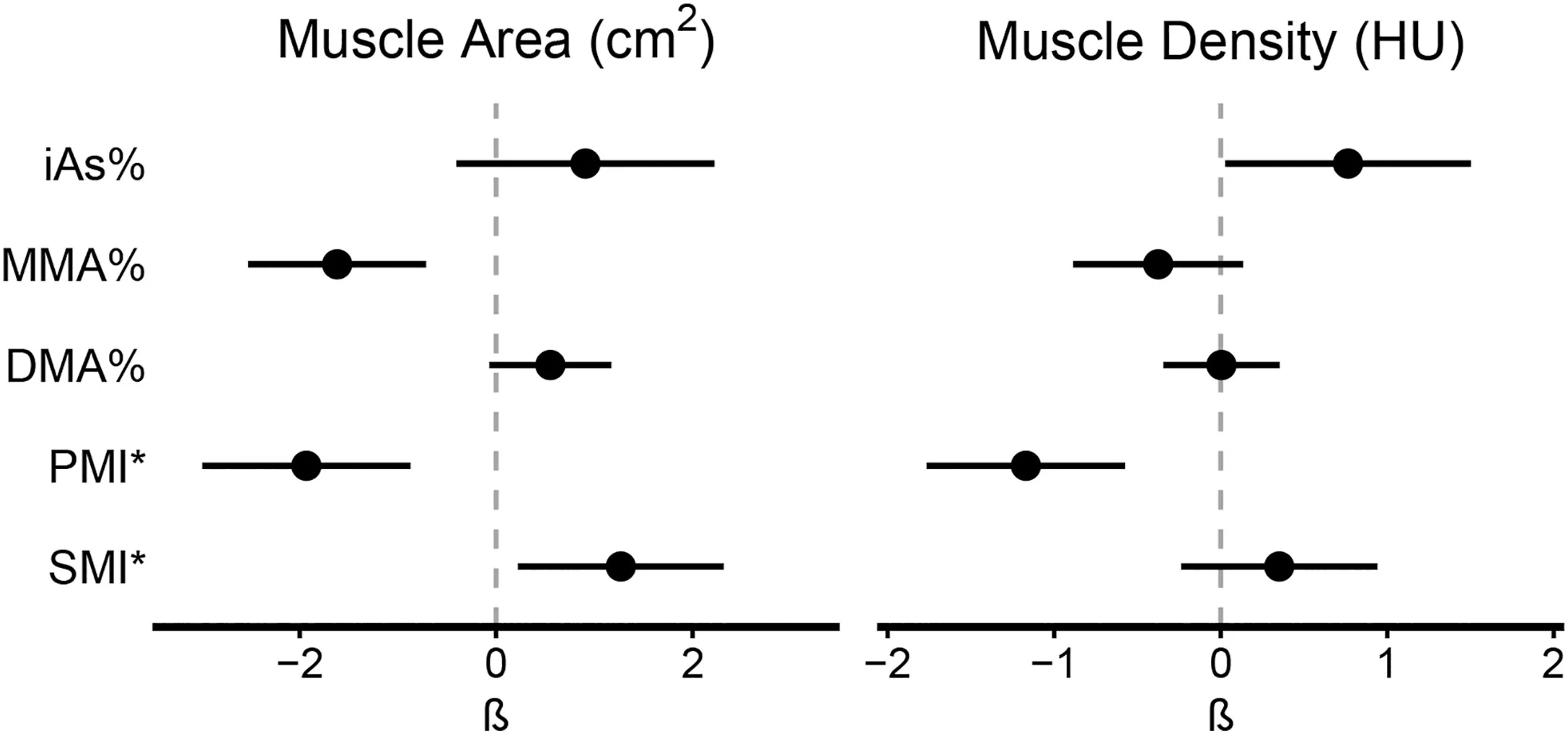
A 5% increase in the urinary share of one substance formed from arsenic was linked to 1.62 square centimeters less abdominal muscle area.
Our read
Populations- Studied:
- Cross-sectional study of 1,597 middle-aged and older US adults
- What changed:
- Abdominal muscle area was lower in adults with a higher urinary share of monomethylarsonate, an arsenic metabolite
- The catch:
- Muscle fat was inferred from muscle density, a proxy rather than a direct measurement
Editor of record: Boris Djordjevic · AgingResearch.News
In 1,597 US adults aged 44–84, an observational analysis linked how the body processed arsenic to abdominal muscle size and fat content. Participants belonged to the Multi-Ethnic Study of Atherosclerosis; 49% were female and 60% were non-white. Researchers compared urinary forms of arsenic with abdominal computed tomography scans, which measured muscle area and density. Lower density indicated more fat within muscle.
A higher urinary share of monomethylarsonate, a substance formed as the body processes arsenic, was associated with less muscle area after adjustment for other factors. A doubling of an index indicating incomplete arsenic metabolism was associated with 1.95 square centimeters less muscle area and lower muscle density. The monomethylarsonate share remained associated with lower muscle area and density regardless of which other arsenic metabolite the models included.
Why it matters
Arsenic exposure contributes to cardiometabolic disease. The authors emphasized considering how the body processes arsenic when studying its effects in middle-aged and older adults.
Caveats
Other differences between participants could have contributed to both arsenic metabolism and muscle measurements despite statistical adjustment. The results concern adults aged 44–84 with low-to-moderate arsenic exposure, rather than people with high exposure.
Where the evidence stands
Arsenic
- 33 independent labs in 12 countries
- 5 findings against
- 6 trials, 1 with no results posted
- Funders: National Natural Science Foundation of China and others
- 5 of 85 findings with company ties
Comments
Be the first to comment.