Brain DNA marks pointed to faster aging in structural epilepsy
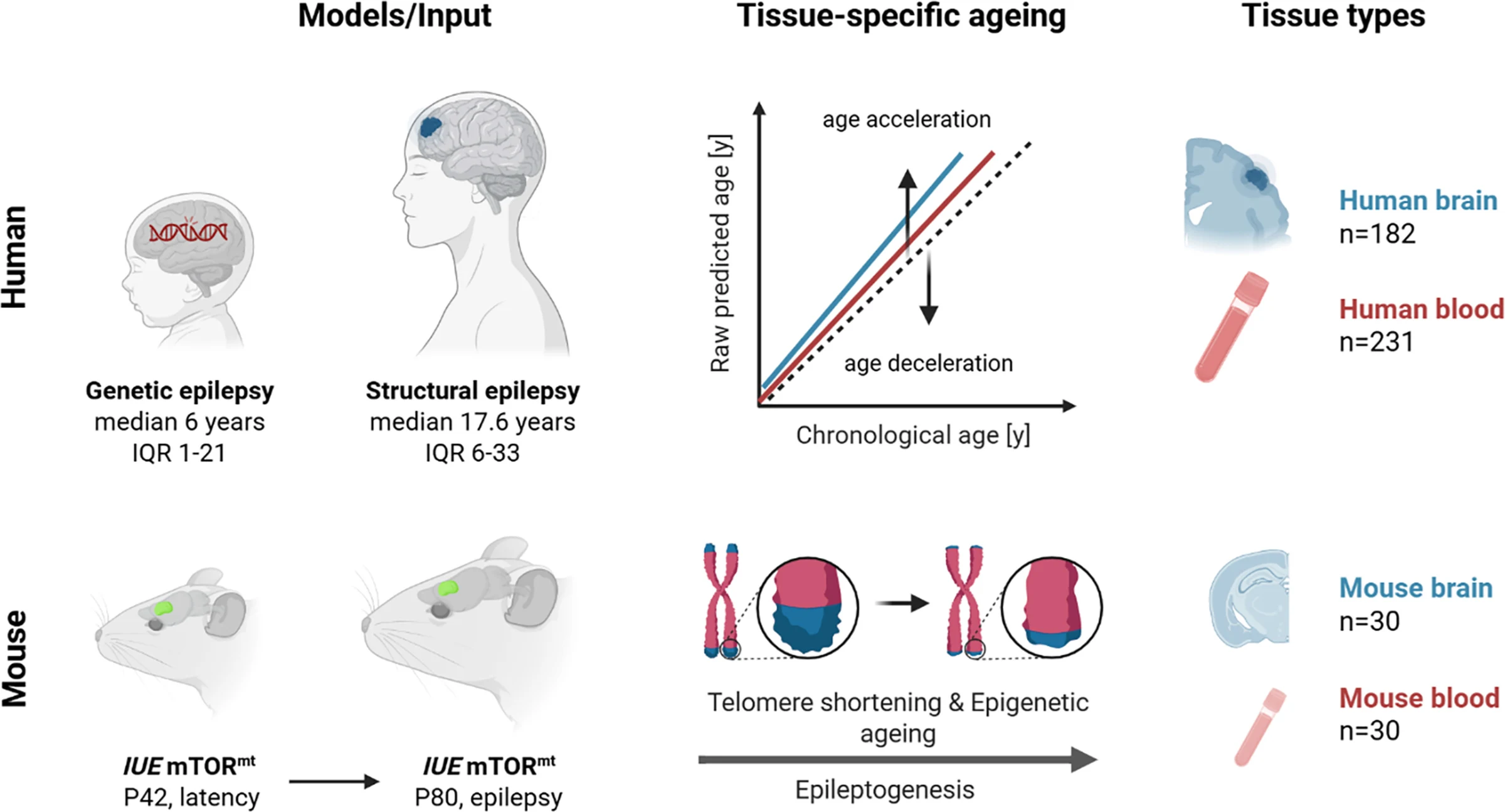
In people with structural epilepsy, DNA-based age acceleration was greater in brain than blood, with median values of 7.3 versus 1.4 years.
Our read
Biomarkers- Studied:
- Study in people
Editor of record: Boris Djordjevic · AgingResearch.News
Brain and blood samples from 324 people with structural or genetic epilepsy and 65 people without epilepsy were analyzed in a retrospective cross-sectional study. The researchers used epigenetic clocks, which estimate biological age from chemical marks on DNA. Brain aging estimates were accelerated across structural epilepsy types. Blood showed no significant acceleration overall after accounting for cell composition, age and sex, except in people with focal cortical dysplasia, an abnormality of brain development.
In a separate experiment, mice altered to model focal cortical dysplasia showed accelerated brain aging estimates but not blood aging estimates. Aging signatures appeared in their brains before seizures began.
Why it matters
People with epilepsy have shorter life expectancy and more age-related illnesses. The authors proposed accelerated epigenetic aging as a possible target for changing the course of drug-resistant structural epilepsy.
Caveats
The human results were cross-sectional comparisons of DNA-based age estimates, not measurements of aging rates over time. Applicability beyond drug-resistant structural epilepsies, and the contribution of aging elsewhere in the body, remain unresolved.
Comments
Be the first to comment.