Diabetes drug class not linked to higher kidney injury risk
After statistical adjustment, kidney injury rates were 10.5 versus 15.6 per 100,000 days of patient follow-up for two diabetes drug classes over 90 days.
Our read
Interventions- Studied:
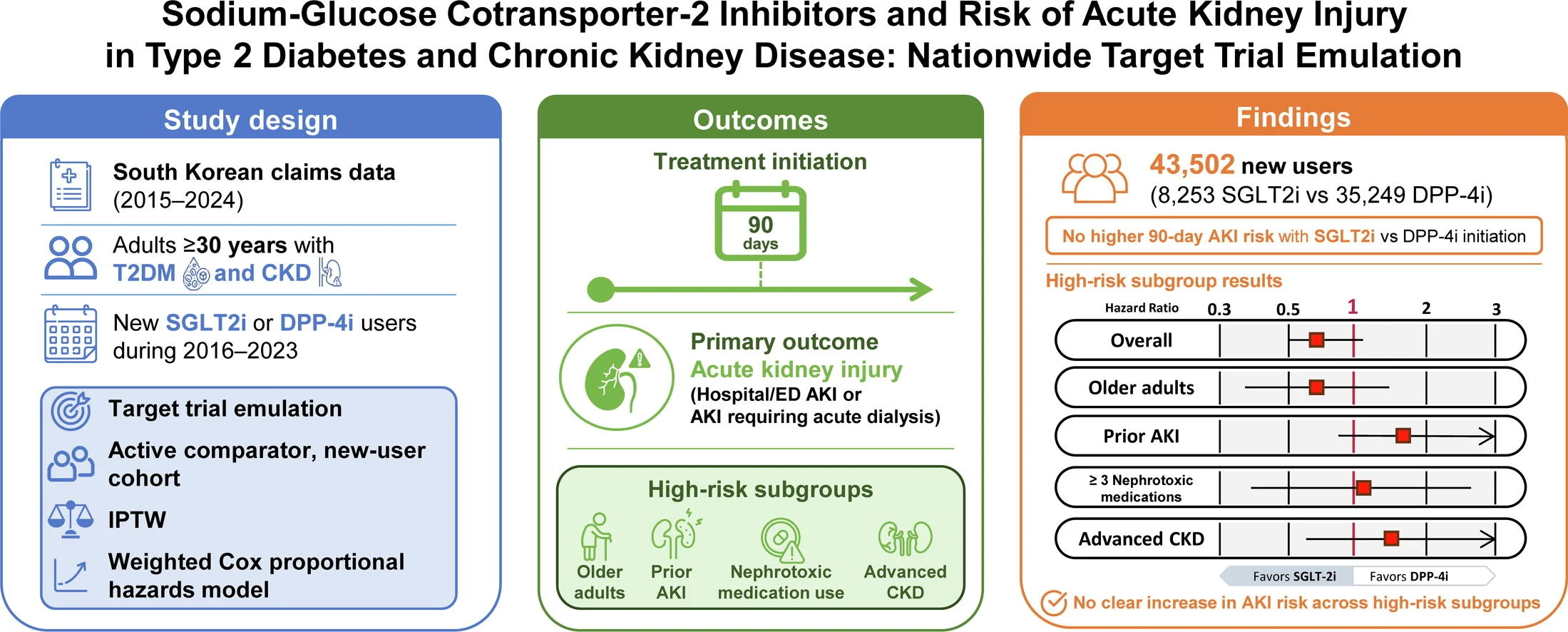
- Cohort study of 43,502 adults with type 2 diabetes and CKD, 90 days, against people starting DPP-4i
- What changed:
- Kidney injury risk was not higher with SGLT2i than DPP-4i (adjusted hazard ratio 0.74)
- The catch:
- Health differences missing from claims data could influence both drug choice and kidney injury risk
- In the record:
- The 947th paper on SGLT2 inhibitors with results in people; 2,699 on record in all.
Editor of record: Boris Djordjevic · AgingResearch.News
South Korean adults aged 30 or older with type 2 diabetes and chronic kidney disease were studied in a nationwide target trial emulation using health insurance claims. It used existing records to mimic a trial without randomly assigning drugs. The analysis compared 8,253 people starting sodium-glucose cotransporter-2 inhibitors, a diabetes drug class, with 35,249 starting dipeptidyl peptidase-4 inhibitors, another class.
Statistical weighting accounted for measured differences between the groups. The first class was not linked to higher 90-day risk of acute kidney injury, a sudden decline in kidney function. The adjusted hazard ratio, comparing how quickly kidney injuries occurred, was 0.74; the range of likely values included no difference. Findings were generally consistent among older adults. Estimates remained uncertain for people with previous acute kidney injury or advanced chronic kidney disease.
Why it matters
For older adults living with diabetes and chronic kidney disease, the findings address an important prescribing question: the short-term risk of sudden kidney injury after starting a diabetes medicine.
Caveats
Differences in patients’ health that claims data could not capture may have influenced both drug choice and kidney injury risk. The findings concern adults with both type 2 diabetes and chronic kidney disease, not people without those conditions.
The paper
Diabetes Research and Clinical Practice, Nov 2026


Comments
Be the first to comment.