Brain-cell inflammation receptors differed with age in rats
Experiments in 6- and 24-month-old male rats found age-related differences in inflammation receptors in brain support cells after injury.
Our read
Mechanisms- Studied:
- Experiments in male rats with traumatic brain injury, against young rats with traumatic brain injury (Independent replication)
- What changed:
- Older brain-injured rats had more TNFR1 and less TNFR2 in brain support cells than younger rats
- The catch:
- Immune aging and blood–brain barrier leakage could contribute to differences attributed to astrocytes
Editor of record: Boris Djordjevic · AgingResearch.News
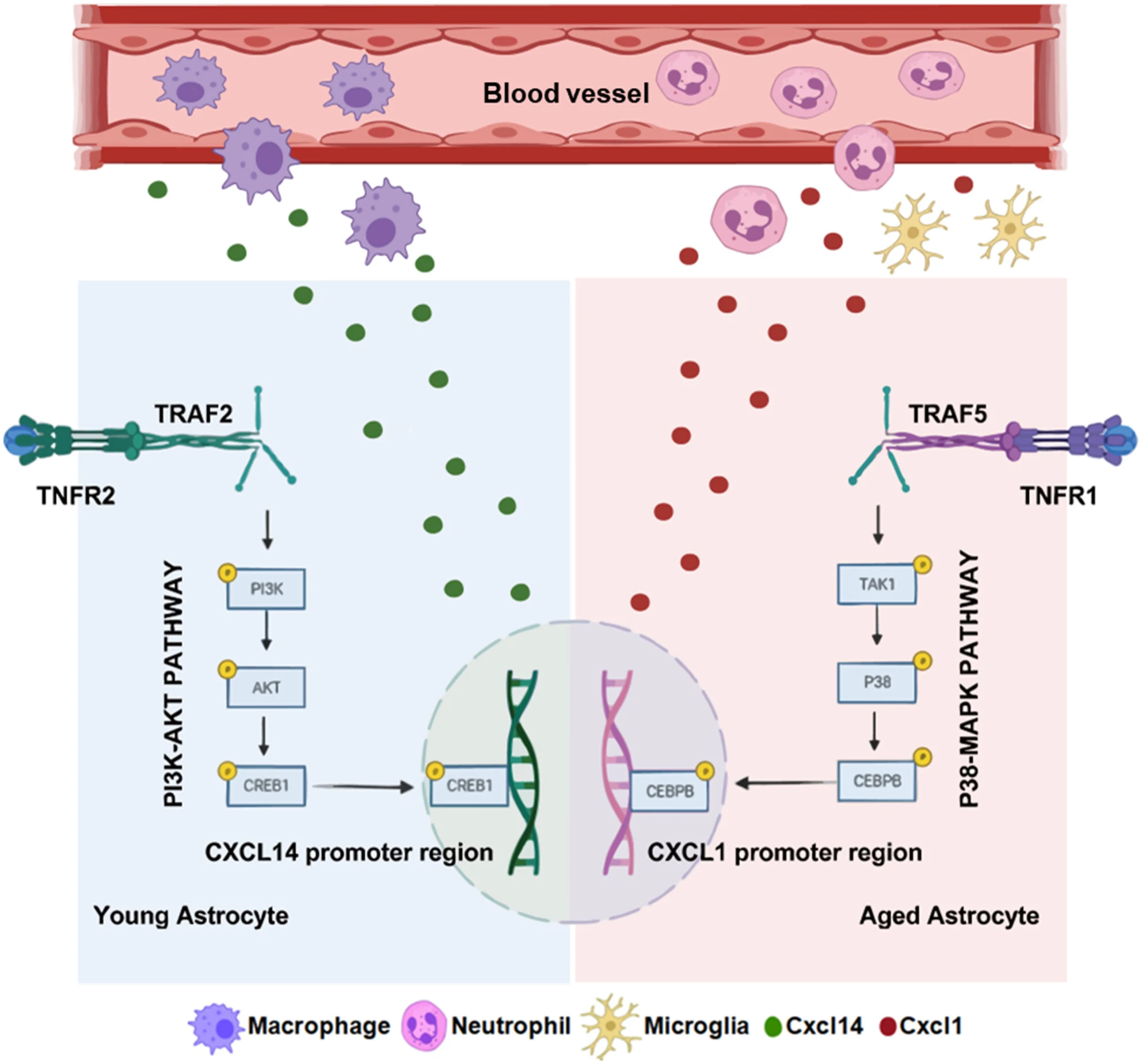
Male Sprague–Dawley rats aged 6 and 24 months underwent controlled brain impacts in an animal experiment examining responses to traumatic brain injury. Researchers measured inflammation-related receptors, proteins that receive signals, in astrocytes, cells that support nerve cells.
Older injured rats had more tumor necrosis factor receptor 1, while younger injured rats had relatively more tumor necrosis factor receptor 2. Signals from younger rats’ astrocytes promoted an anti-inflammatory environment. An antibody blocking receptor 1, injected into a brain cavity daily for three days after injury, reduced excessive brain inflammation in older rats and improved neurological recovery in both age groups. Separately, brain tissue from 10 people undergoing surgery for moderate to severe traumatic brain injury showed the same age-associated receptor pattern in astrocytes.
Why it matters
Older people have poorer outcomes after traumatic brain injury. The findings suggest that blocking one inflammation receptor may offer a strategy for improving recovery.
Caveats
The recovery benefit came from brain injections in male rats, leaving open whether blocking the receptor would help people with traumatic brain injury.
- Anti-tnfr1 monoclonal antibody
- Inflammation
- TNFRSF1A
- Traumatic brain injury
- Astrocytic TNFR1/TNFR2 expression
- Rats
The paper
Affiliated Hospital of Nantong University Medical School of Nantong University Nantong Jiangsu China
CNS Neuroscience & Therapeutics, Nov 26, 2026, Open access, CC BY
Comments
Be the first to comment.