Drug use linked to more surgery for shoulder arthritis
Shoulder replacements occurred in 2.25% of glucagon-like peptide-1 receptor agonist users versus 1.77% of non-users in a matched database study.
Our read
Populations- Studied:
- Cohort study of patients with primary shoulder osteoarthritis, against GLP-1RA non-users
- The catch:
- Arthritis severity and decisions about surgery could differ between groups despite matching
- In the record:
- The 462nd paper on GLP-1 receptor agonists with results in people; 4,947 on record in all. Its result on C-reactive protein agrees with all 8 other findings on record.
Editor of record: Boris Djordjevic · AgingResearch.News
Patients with primary shoulder osteoarthritis, a disease that damages the joint, were compared in a retrospective database study with 24,669 people in each matched group. One group had prescriptions for glucagon-like peptide-1 receptor agonists—drugs that activate a hormone receptor—before diagnosis; the other did not. The researchers matched the groups to balance other medical conditions.
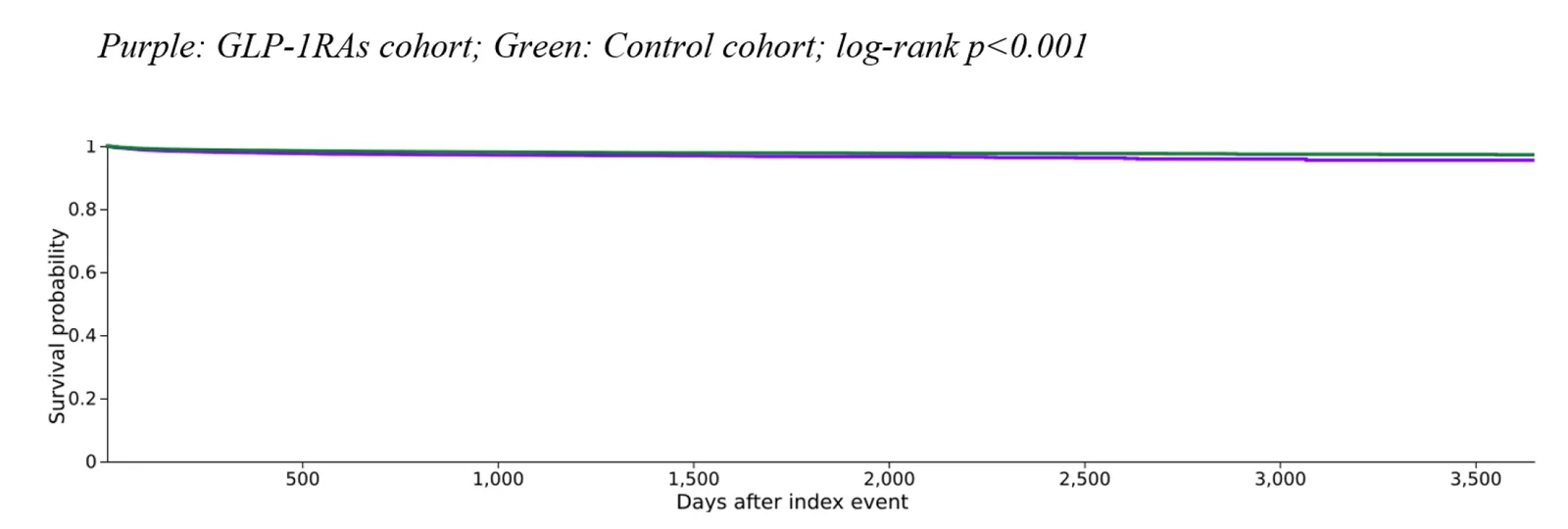
Shoulder replacement occurred in 2.25% of users and 1.77% of non-users, over average follow-ups of 731 and 1,220 days, respectively. The authors concluded that use of these drugs was not associated with protection against progression to shoulder replacement.
Why it matters
Degenerative joint disease can lead to joint replacement. The authors suggested that differences between joints may help account for why the shoulder findings differed from reports for hips and knees.
Caveats
Matching medical conditions could not rule out differences in arthritis severity or decisions about surgery. The analysis excluded people with other shoulder conditions.
Where the evidence stands
GLP-1 receptor agonists
- 1,008 independent labs in 89 countries
- 740 findings against
- 1,243 trials, 310 with no results posted
- Funders: Eli Lilly and Company and others
- 1,735 of 7,161 findings with company ties
- 758 of 1,243 trials sponsored by its developers
Inflammation
- 1,054 independent labs in 77 countries
- 207 findings against
- Funders: National Natural Science Foundation of China and others
- 392 of 4,664 findings with company ties
- GLP-1 receptor agonists
- Inflammation
- Primary glenohumeral osteoarthritis
- C-reactive protein
- Cortisol
- Humans
The paper
Cleveland Clinic Foundation; Rothman Orthopaedic Institute
The Archives of Bone and Joint Surgery, 2026

Comments
Be the first to comment.