Weight history linked to blood pressure patterns with age
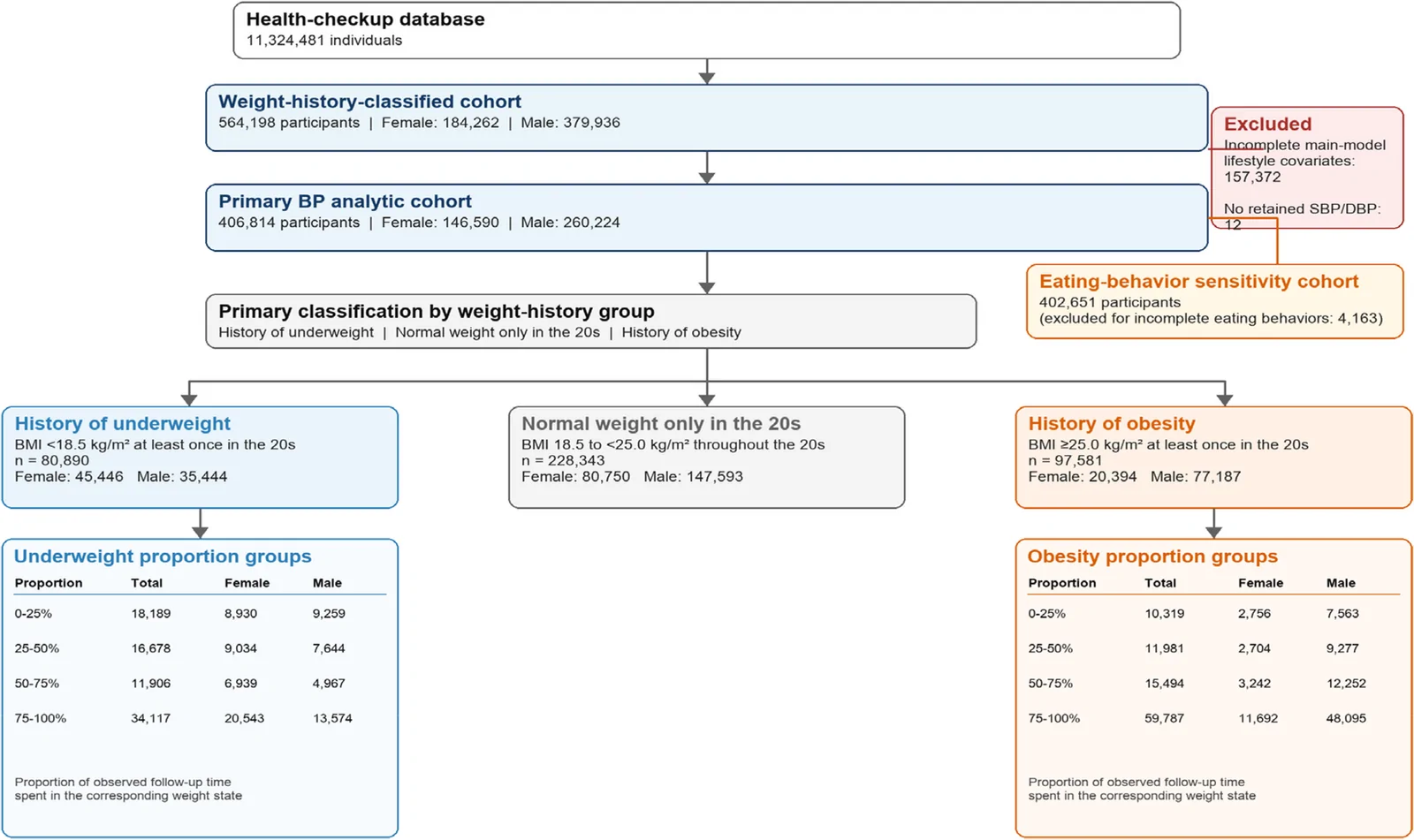
A retrospective longitudinal study of 406,814 Japanese insurance beneficiaries linked obesity history to higher readings and underweight history to lower readings.
Our read
Populations- Studied:
- Cohort study of 406,814 Japanese employees and their dependents, median 6 years
- What changed:
- At 45 years, obesity-history participants had higher systolic blood pressure than normal-weight-only participants: 15.0 mmHg in women, 8.8 mmHg in men
- The catch:
- Smoking and alcohol consumption were omitted from adjustment, leaving potential confounding
Editor of record: Boris Djordjevic · AgingResearch.News
Among 406,814 women and men in a Japanese employment-based health-check cohort, weight history in the 20s was linked to later blood pressure patterns. The retrospective longitudinal study included people whose health checks began at ages 20–29. Their records spanned a median of six years.
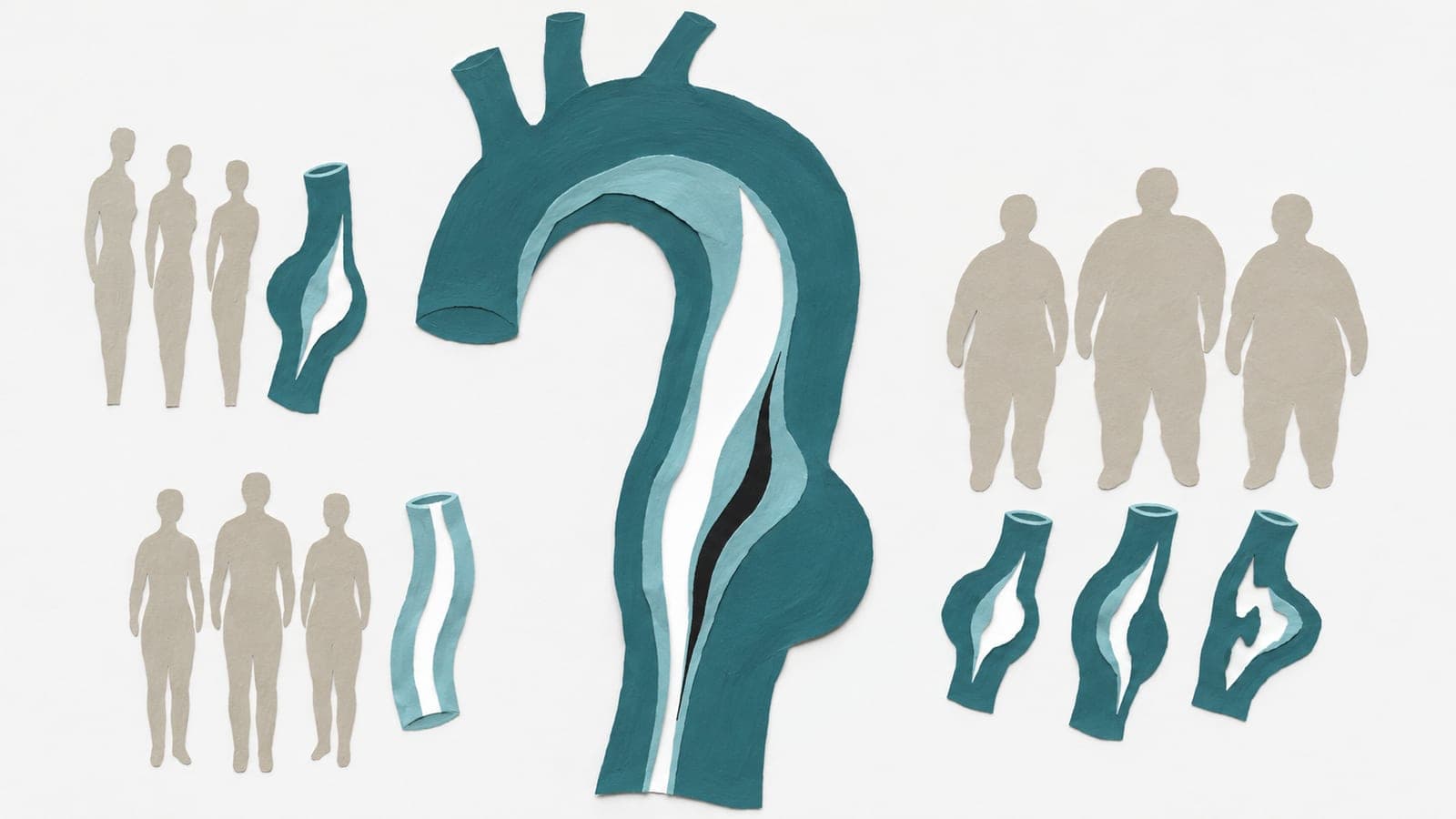
People with an obesity history had higher blood pressure than those who stayed at normal weight throughout their 20s, and the gap widened with age. Those with an underweight history had lower readings. Both numbers in blood pressure readings followed these patterns in women and men. The models accounted for sleep, exercise, physical activity and walking speed. Further adjustment for eating behaviors changed the associations little.
Why it matters
Long-term weight history may be more informative than a single weight measurement for assessing blood pressure as people age, the authors suggest.
Caveats
The authors note that smoking, alcohol use and social and economic circumstances could have influenced the links because the analysis did not account for them. They also caution that the findings may not apply to older adults or people without regular health checks.
From the paper
- Participants
The primary analytic cohort included 80,890 participants with a history of underweight during their 20s (45,446 women and 35,444 men), 228,343 who maintained normal weight throughout their 20s (80,750 women and 147,593 men) …
- Limitation
First, this observational study was based on routine health-check data from beneficiaries of an employment-based health insurance system, including employees and their dependents.
Quoted word for word from the full text on link.springer.com.
The paper
Fujita Health University
BMC Public Health, Aug 19, 2026, Open access

Comments
Be the first to comment.