Game strategy improved multitasking test scores in older adults
In a 12-session pilot randomized trial of 38 older adults, shifting attention during an online game brought greater gains than giving tasks equal priority.
Our read
Interventions- Studied:
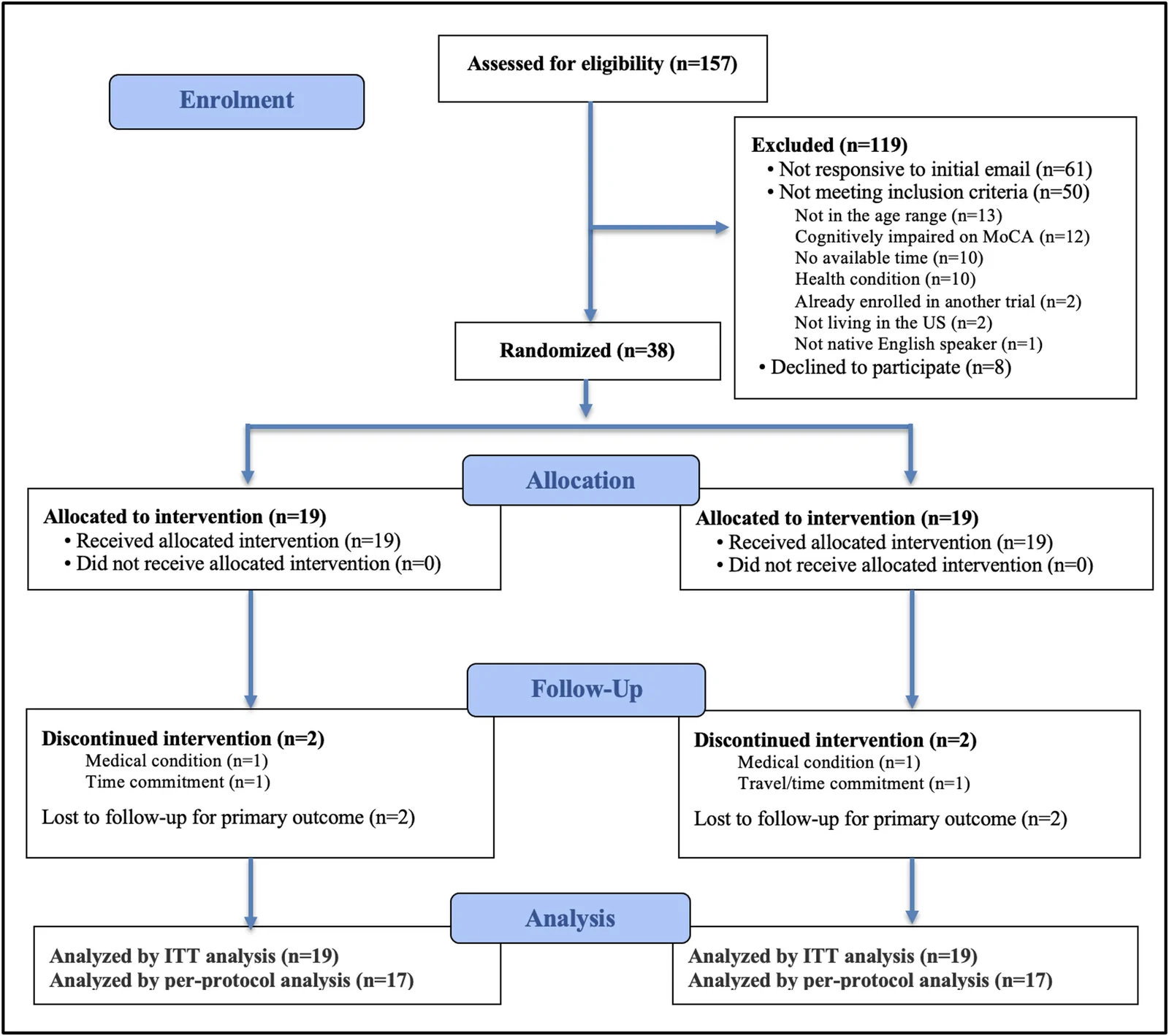
- Randomized trial in 38 cognitively unimpaired older adults, 12 intervention sessions (Blinded, sample size calculated)
- What changed:
- Multitasking test scores improved more with attention-shifting instructions than with the game alone
- The catch:
- Remote test scores could vary with uncontrolled environmental noise and screen sizes
Editor of record: Boris Djordjevic · AgingResearch.News
Thirty-eight adults aged 60–74 without cognitive impairment, including 31 women, took part in an online pilot randomized controlled trial. They played the Breakfast Game, preparing virtual food while setting tables. The program included 12 sessions, scheduled three times weekly. One group practiced shifting attention between tasks; the other treated all tasks as equally important.
Both groups improved at the game. The shifting-attention group made greater gains in game performance and on separate tests of multitasking and attention control. The strategy brought no greater gains in mood, confidence in personal abilities or cognitive activities in daily life. One participant in the shifting-attention group stopped after nine sessions because a health event required hospitalization.
Why it matters
Cognitive training aims to support thinking skills as people age. Whether benefits extend beyond the practiced task matters when judging its usefulness.
Caveats
The 38-person pilot assessed skills before and after training, leaving long-term benefits open. Participants were highly educated, mostly White and mostly women; the findings may not extend to people with cognitive impairment or different backgrounds.
From the paper
- Participants
The sample included 38 participants, who were randomly assigned to the experimental group (N = 19) and the control group (N = 19) (details in Table 1).
Quoted word for word from the full text on nature.com.
The paper
Fordham University; Rutgers, The State University of New Jersey
Scientific Reports, Sep 28, 2026, Open access
Comments
Be the first to comment.