Heart disease risk was higher in many immigrant groups in Sweden
A nationwide cohort followed over 8.5 million people aged 35–85 from 1993 to mid-2023; longer residence was generally linked to lower risk.
Our read
Populations- Studied:
- Study in people
- Why it’s aging research:
- It bears on staying healthy in midlife and later life.
Editor of record: Boris Djordjevic · AgingResearch.News
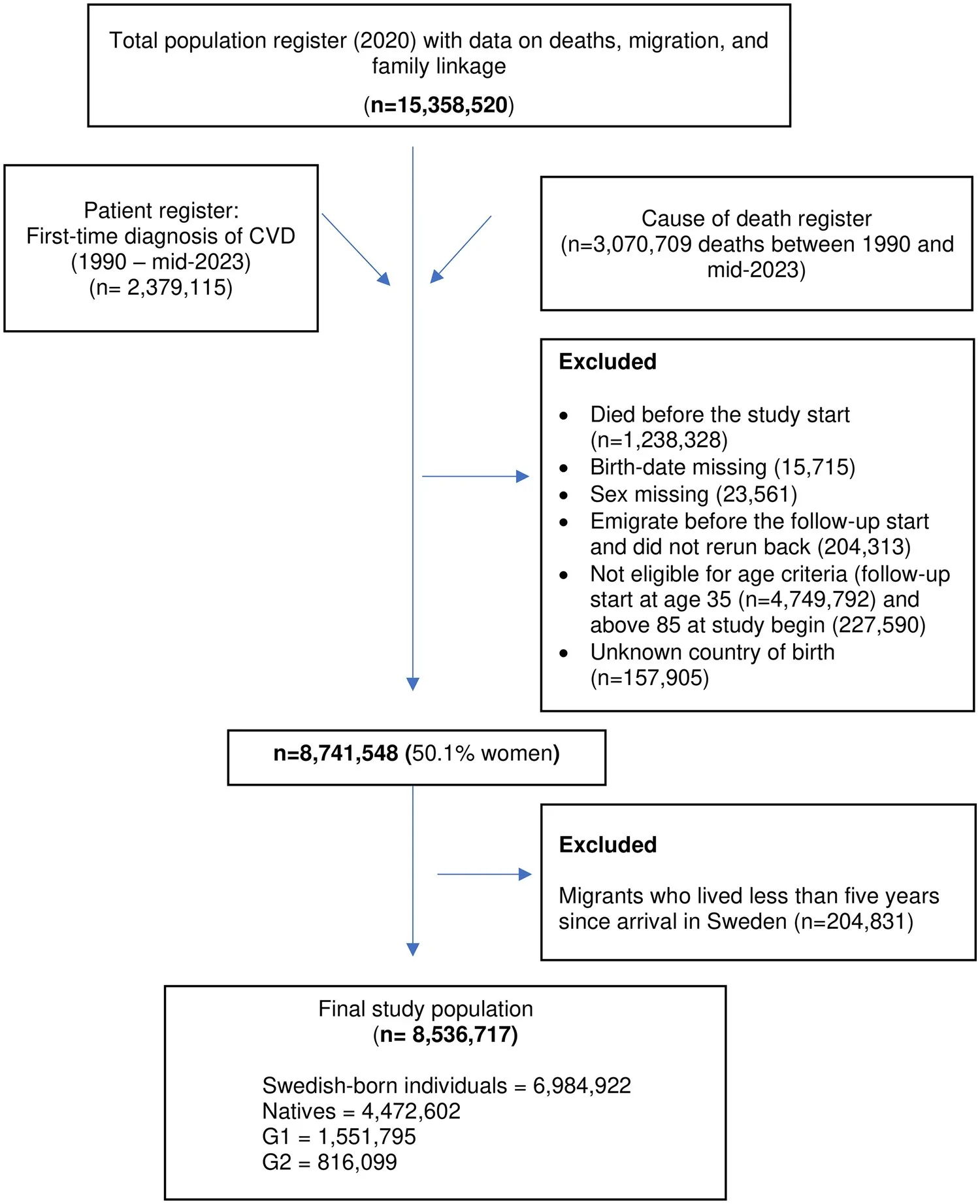
Over 8.5 million people aged 35–85 in Sweden, 50.1% of them women, were followed from 1993 to mid-2023 in a nationwide, registry-based observational cohort. Researchers recorded 703,212 first-time events of ischemic heart disease, in which the heart muscle receives too little blood.
Compared with Swedish-born people, first-generation immigrants from Nordic countries, the Middle East, Afghanistan, Pakistan, India and Sri Lanka had higher risk. So did second-generation immigrants with Finnish parental origin. Risk was highest among recent immigrants from the Middle East and immigrants with the shortest residence. Longer residence was generally linked to lower risk, which fell below the Swedish-born comparison group in many immigrant groups. Rates adjusted for age declined over three decades, most slowly among Asian immigrants.
Why it matters
Heart disease prevention is part of protecting health in later life. The authors called for prevention strategies tailored to immigrants in Sweden.
Caveats
Recent and long-established immigrants may have differed in heart disease risk before arrival, so the residence-duration pattern need not reflect an effect of living longer in Sweden. The cohort covered ages 35–85, not younger or older people.
The paper
Stockholm University
European Journal of Public Health, Oct 9, 2026




Comments
Be the first to comment.