Moderate tea drinking linked to lower death risk in MASLD
In people with MASLD, drinking 1 to 2 cups of tea daily was linked to an all-cause mortality hazard ratio of 0.85 versus none.
Dose-response
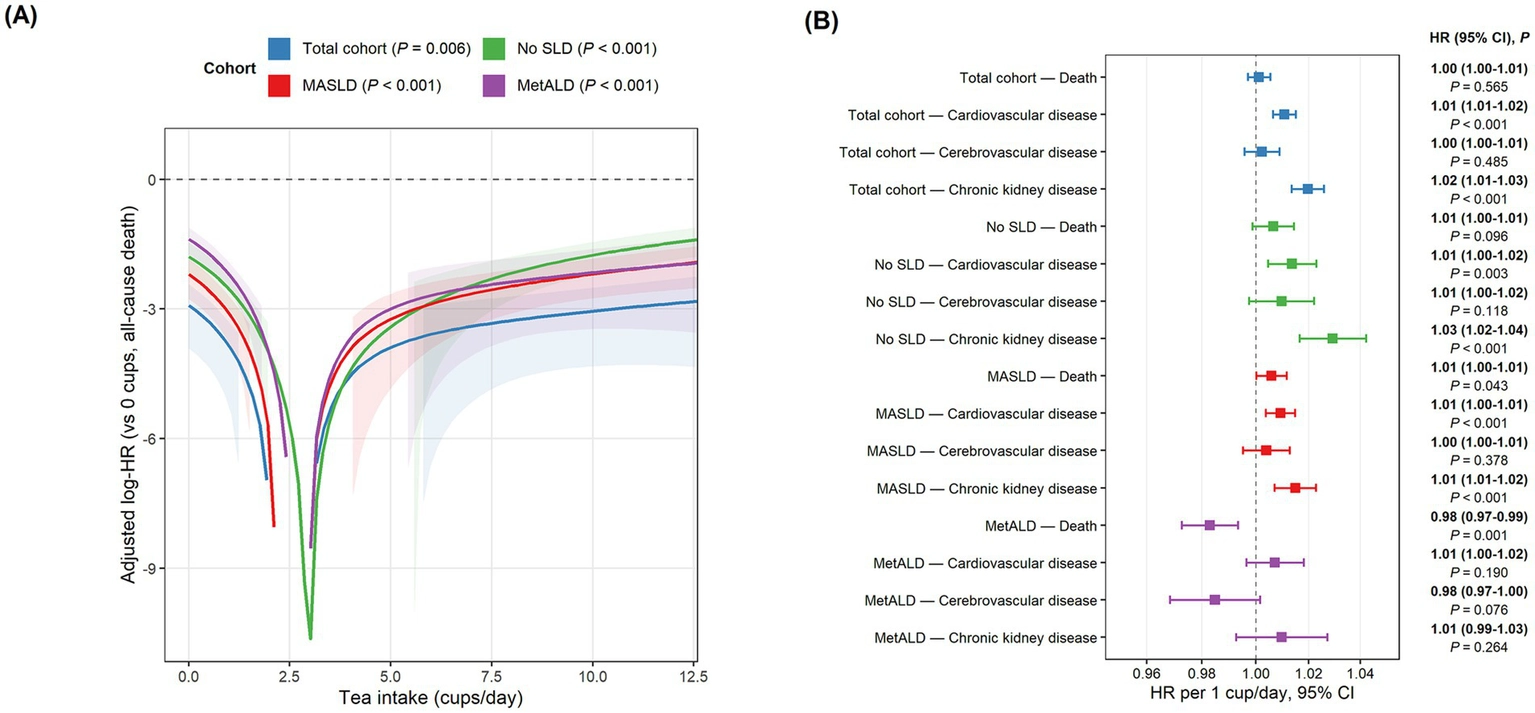
In an observational prospective cohort study, researchers analysed 360,548 UK Biobank participants. The cohort included 169,241 individuals with metabolic dysfunction-associated steatotic liver disease (MASLD), 146,559 with no steatotic liver disease, and 44,748 with MASLD and increased alcohol intake. Researchers grouped daily tea consumption into categories ranging from none up to seven or more cups.
Among participants with MASLD, tea consumption showed a non-linear link with mortality and cardiometabolic outcomes. The lowest estimated risks appeared between 1.6 and 2.5 cups daily. Drinking 1 to 2 cups daily was associated with lower all-cause mortality, with a hazard ratio of 0.85, and a lower risk of cerebrovascular disease, with a hazard ratio of 0.83. Drinking seven or more cups daily was associated with an increased risk of cardiovascular disease, with a hazard ratio of 1.09.
Why it matters
Metabolic dysfunction-associated steatotic liver disease and vascular disorders become more prevalent with age and contribute substantially to mortality. Understanding how daily dietary habits relate to these conditions bears on strategies to support cardiovascular and metabolic health across the lifespan.
Caveats
Because this was an observational study, it cannot show whether tea consumption directly alters health outcomes. In addition, the researchers identified hepatic steatosis using a calculated fatty liver index score rather than direct assessment.
- Tea
- Metabolic dysfunction-associated steatotic liver disease
- Cerebrovascular disease
- Cardiovascular disease
- Chronic kidney disease
- Humans
The paper
Soonchunhyang University; Catholic University of Korea
Frontiers in Nutrition, 24 Sep 2026