High-dose flu vaccine may help more as frailty risk rises
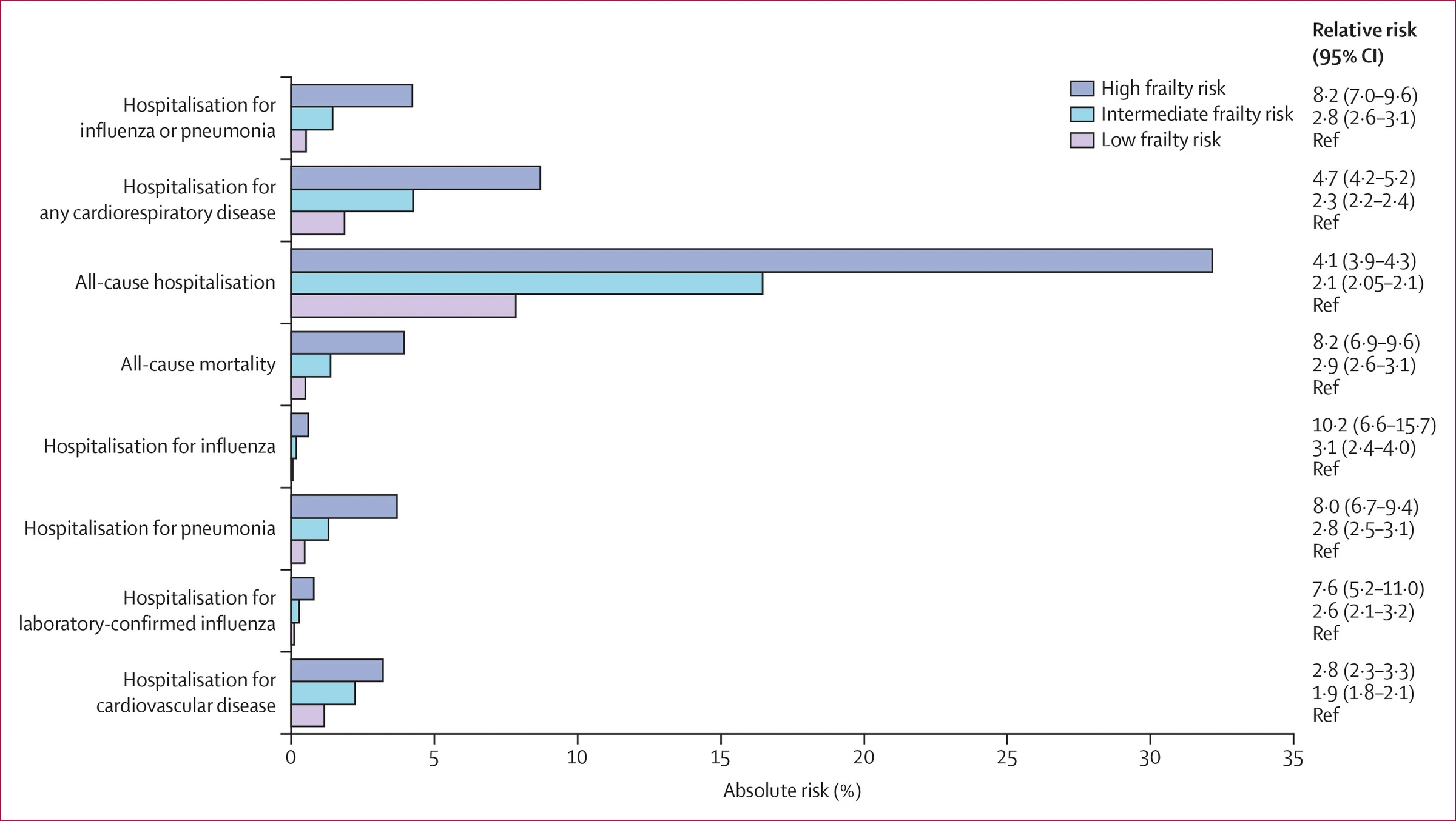
Against standard-dose vaccine, estimated relative effectiveness against flu or pneumonia hospitalization was 0.2%, 13.1% and 19.9% at low, intermediate and high frailty risk.
Our read
Interventions- Studied:
- Randomized trial in 332,438 adults aged 65 or older
- What changed:
- Estimated reductions in flu or pneumonia hospitalization with high-dose versus standard-dose vaccine rose from 0.2% to 19.9% across increasing frailty risk
- The catch:
- Sanofi funded the trial
- Stake:
- Three authors work for Sanofi.
- In the record:
- One of 6 papers on high-dose inactivated influenza vaccine on record: 6 with results in people.
Editor of record: Boris Djordjevic · AgingResearch.News
Adults aged 65 or older in Denmark—332,438 people, averaging 73.7 years old, including 161,538 women—received high-dose or standard-dose flu vaccines in a randomized trial across three seasons, from 2022–23 through 2024–25. Participants and researchers knew the vaccine assignments. This prespecified analysis assessed frailty risk using hospital diagnosis codes from the preceding 10 years.
Estimates of high-dose vaccine’s relative benefit against hospitalization for flu or pneumonia increased as frailty scores rose. However, comparing the three predefined frailty groups did not show clear differences in vaccine effects. Within every group, the range of likely effects included no difference between vaccines. Serious adverse events affected 4.8% of participants at low frailty risk, 10.5% at intermediate risk and 20.2% at high risk. These proportions were similar between vaccine groups within each frailty group.
Why it matters
Older adults with frailty face greater risk of flu complications. The findings might support considering high-dose flu vaccines for frail older adults.
Caveats
The frailty-group estimates were imprecise, and the authors considered the findings exploratory. The results concern Danish adults aged 65 or older, not younger adults.
- High-dose inactivated influenza vaccine
- Immune response
- Pneumonia
- Influenza
- Hospital Frailty Risk score
- Humans
The paper
University of Copenhagen
The Lancet Healthy Longevity, Sep 17, 2026, Open access
Comments
Be the first to comment.