Age-related immune patterns linked to silent heart artery disease
A cross-sectional study recruiting 1,078 adults aged 50–64 linked immune cell patterns to symptom-free plaque buildup in the heart’s arteries.
Our read
Mechanisms- Studied:
- Cross-sectional study of 972 participants aged 50-64, against those without atherosclerosis (Multicenter)
- What changed:
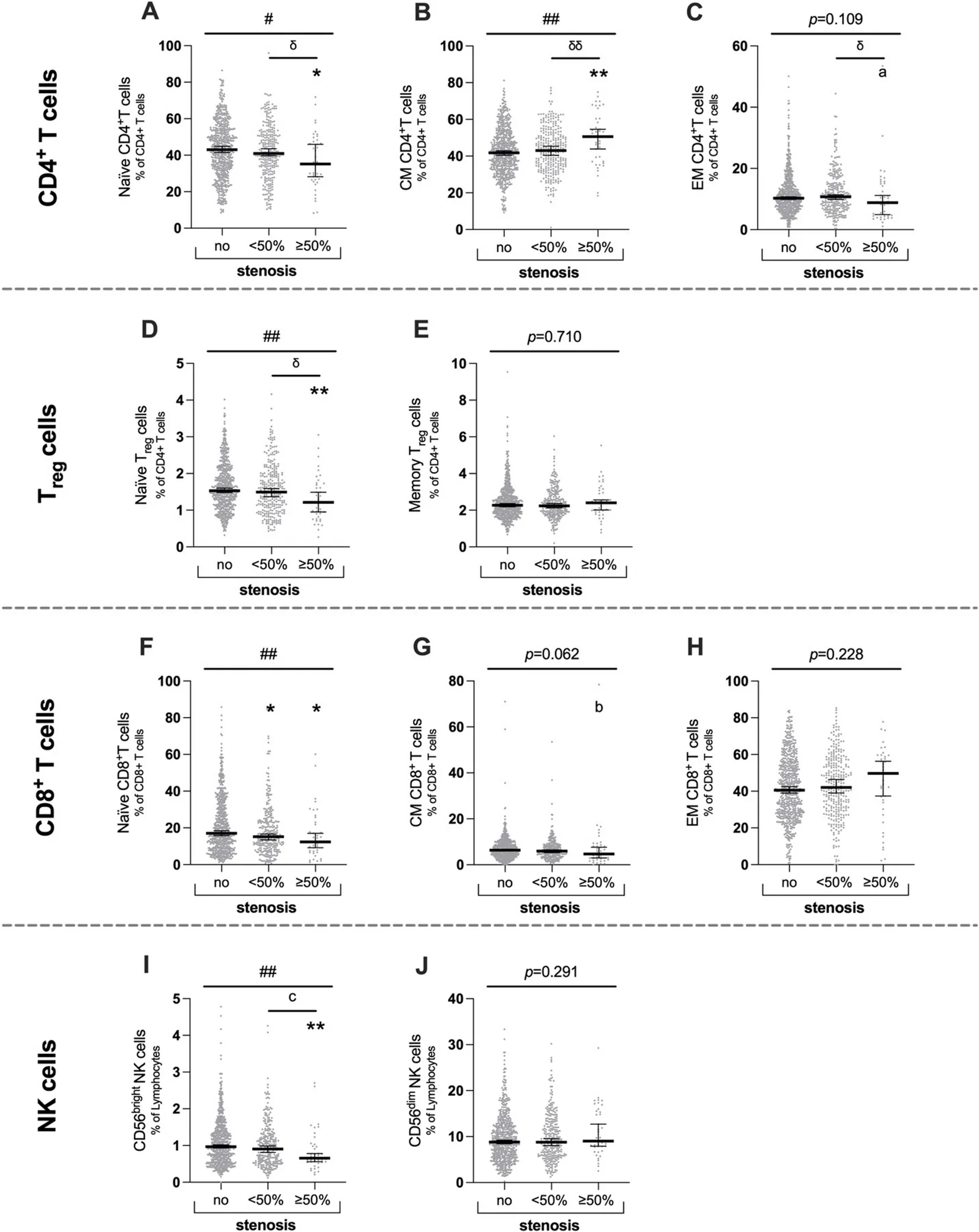
- Individuals with coronary atherosclerosis had higher central memory CD4+ T cells and lower naive Treg cells than those without atherosclerosis
- The catch:
- Only 40 participants had significant stenosis of 50% or more, limiting statistical power
- In the record:
- The 3rd paper on central memory CD4+ T cells with results in people; 12 on record in all.
Editor of record: Boris Djordjevic · AgingResearch.News
In a cross-sectional study, researchers recruited 1,078 adults in Sweden aged 50–64, 49% female, and compared blood immune cells with scans of the heart’s arteries. After exclusions, 327 participants had plaque buildup and 640 did not.
Those with plaque had higher proportions of central memory helper T cells, which remember past immune encounters. They also had lower proportions of naïve regulatory T cells, cells that help restrain immune responses but have not yet encountered their target. These patterns remained associated with artery narrowing of at least 50% after exploratory adjustment for other factors and correction for multiple statistical comparisons. No immune cell subset was associated with scores measuring calcium deposits in the arteries.
Why it matters
The authors suggest that aging-related T cell patterns may play a role in the development of coronary artery disease, even before symptoms appear.
Caveats
The cross-sectional design could not establish whether immune differences preceded artery disease or resulted from it. Participants were aged 50–64, people with prior coronary artery disease or active inflammation were excluded, and only 40 had artery narrowing of at least 50%.
From the paper
- Participants
The current study analyzed data from a subcohort of SCAPIS (“SCAPIS Leukocyte”) which consisted of 1 078 participants.
- Limitation
First, the study population may be considered relatively healthy with the majority (66%) showing no coronary atherosclerosis.
Quoted word for word from the full text on PubMed Central.
- Immune response
- Naïve regulatory T cells
- Coronary atherosclerosis
- Subclinical coronary atherosclerosis
- CD56bright NK cells
- Humans
The paper
Linköping University
Immunity & Ageing, Sep 15, 2026, Open access


Comments
Be the first to comment.