Kidney function linked to Alzheimer’s blood marker in older adults
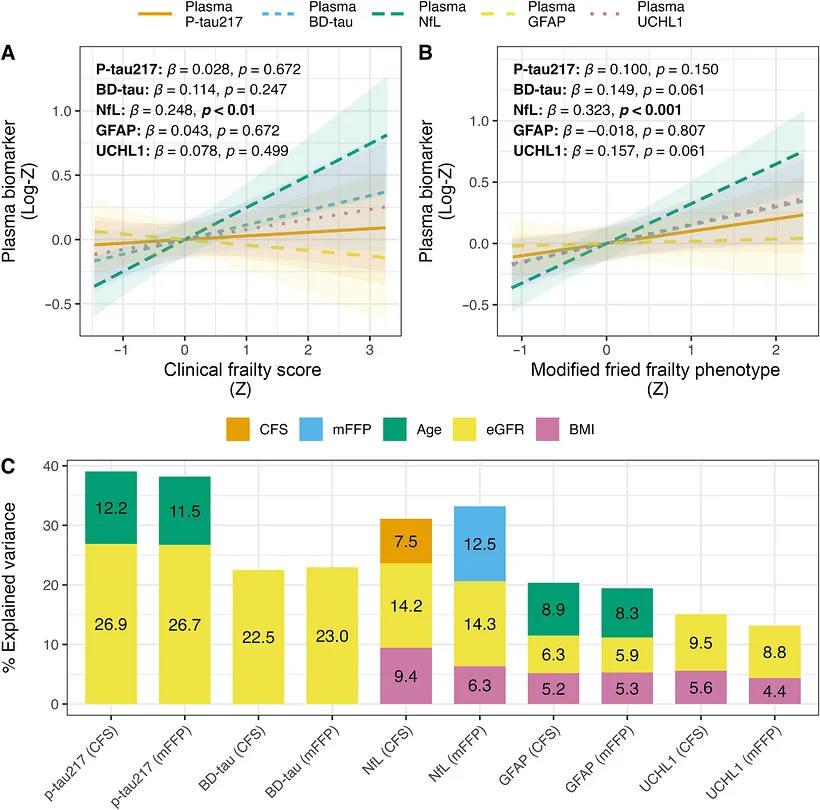
Among 178 acutely hospitalized older adults, estimated kidney function explained 27% of variation in an Alzheimer’s-related blood marker.
Our read
Biomarkers- Studied:
- Cross-sectional study of 178 acutely hospitalized older adults
- What changed:
- Estimated kidney function explained 27% of variation in an Alzheimer’s-related blood marker; lower function was linked to higher levels
- The catch:
- Estimated glomerular filtration rate is a proxy for kidney function, not a direct measurement
- Stake:
- An author holds shares in CERimmune Therapeutics.
- In the record:
- The 95th paper on eGFR with results in people; 390 on record in all.
- Why it’s aging research:
- It measures an outcome that worsens with age.
Editor of record: Boris Djordjevic · AgingResearch.News
In an observational study, researchers assessed 178 adults aged 65 to 95 admitted acutely to a Norwegian hospital. They assessed frailty, a state of reduced resilience to illness and stress, and collected blood within 24 hours of admission.
Phosphorylated tau-217, a modified form of the protein tau linked to Alzheimer’s disease, showed no significant association with frailty. A measure of how well the kidneys filter blood explained 27% of variation in this marker’s levels. Lower estimated kidney function was associated with higher levels. Of the five blood markers tested, only neurofilament light chain, a marker of nerve fiber injury, was significantly associated with frailty. The authors said clinicians need to consider kidney function when interpreting phosphorylated tau-217.
Why it matters
Older adults living with frailty are prone to adverse events during acute hospitalization. The study addresses the search for blood markers that could aid early identification of frailty.
Caveats
Measurements taken at admission cannot establish cause and effect. These findings in acutely hospitalized adults aged 65 to 95 may not extend to younger people or older adults outside hospital.
The paper
Interpreting p-tau217 on the ward: frailty and plasma biomarkers in acutely admitted older adults
University Hospital of North Norway
Alzheimer's & Dementia, Aug 2026, Open access

Comments
Be the first to comment.