Kidney test mismatch linked to death risk in older adults
Low versus preserved kidney function on a second test was linked to higher death risk, with hazard ratios of 1.44 and 1.62.
Our read
Biomarkers- Studied:
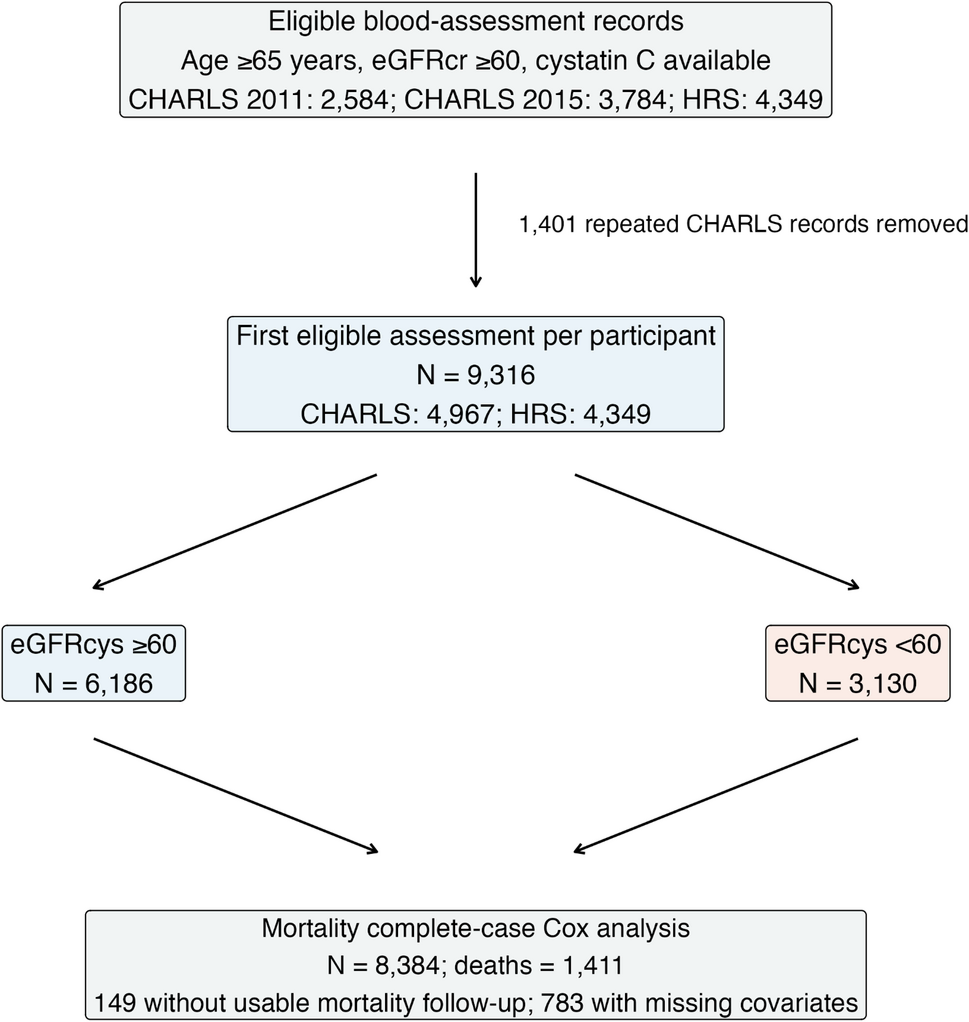
- Cohort study of 9,316 people
Editor of record: Boris Djordjevic · AgingResearch.News
The 9,316 adults aged 65 or older in this two-cohort study had preserved kidney function estimated from creatinine, a blood waste product. Researchers compared that estimate with one based on cystatin C, a blood protein used to assess kidney function. The second estimate was low in 3,130 participants, or 33.6%.
Among 8,384 people with complete data, 1,411 died. Low cystatin C-based kidney function was associated with higher mortality in both cohorts. The hazard ratios, measures of relative death risk, were 1.44 and 1.62 compared with preserved function. The associations weakened but remained after accounting for baseline physical function. Low cystatin C-based function was also linked to later difficulty with daily activities and mortality from that state. Cardiovascular findings varied between cohorts.
Why it matters
For older adults, an important question is how kidney health relates to everyday functioning as well as survival.
Caveats
The cohort comparisons could not rule out underlying health differences contributing to both low kidney-function estimates and later deaths or daily difficulties. The findings do not cover younger adults or people whose creatinine-based kidney function was already low.
Comments
Be the first to comment.