Multiple traumas linked to depression after cardiovascular disease
After cardiovascular disease, multiple childhood traumas were linked to a higher rate of depression than no trauma exposure, with a hazard ratio of 2.260.
Our read
Populations- Studied:
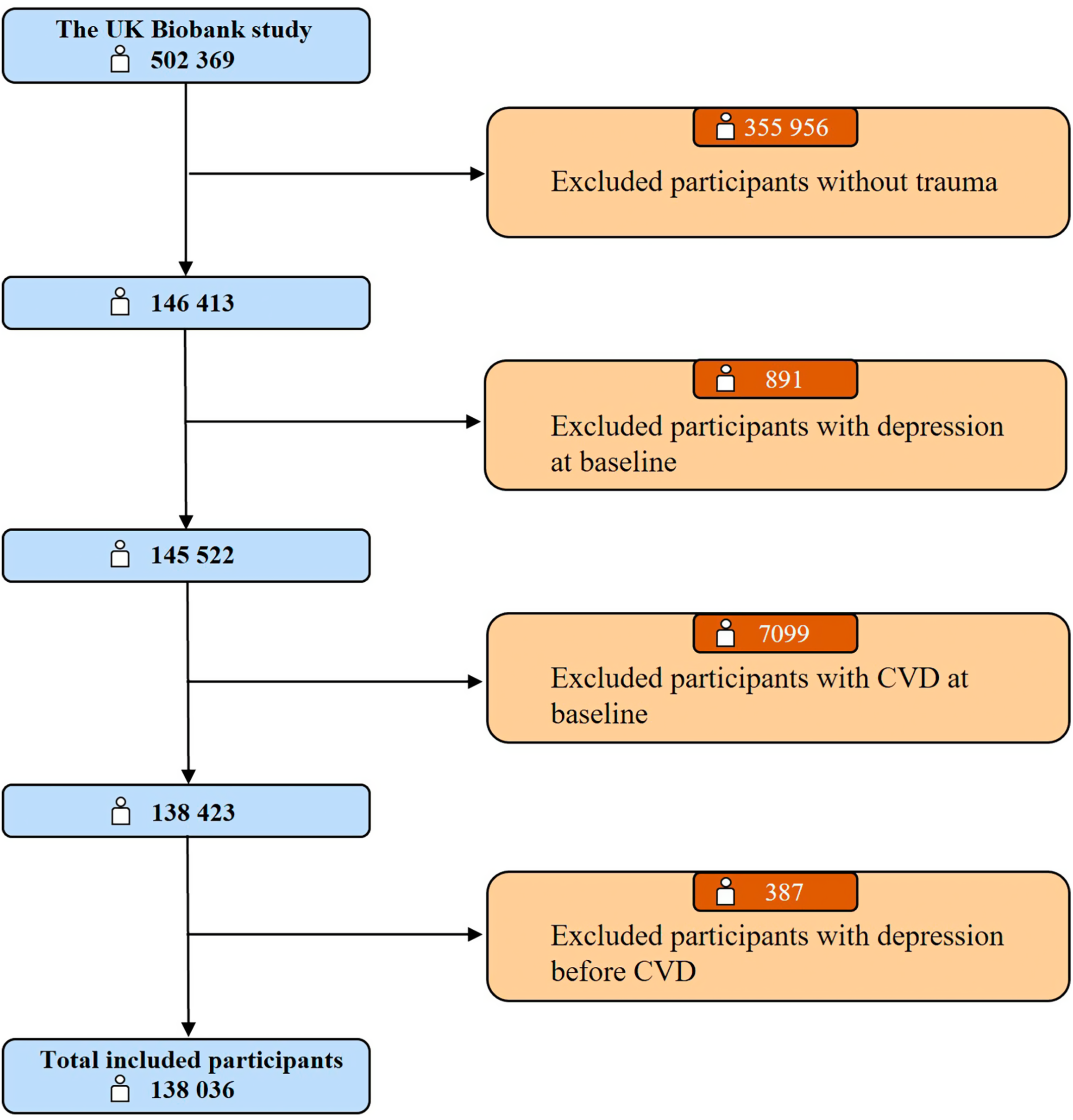
- Cohort study of 138,036 UK Biobank participants, against people with no trauma exposure
- What changed:
- Depression after cardiovascular disease was more frequent with multiple childhood traumas than no trauma exposure (hazard ratio 2.260)
- The catch:
- Other life circumstances linked to trauma histories could account for depression after cardiovascular disease
Editor of record: Boris Djordjevic · AgingResearch.News
The 138,036 UK Biobank participants were part of a cohort study that used multistate models to examine transitions between health, cardiovascular disease, depression and death. Cardiovascular disease affects the heart and blood vessels. Over a median follow-up of 13.65 years, 14,278 participants developed cardiovascular disease, and 679 subsequently developed depression.
Compared with no trauma exposure, multiple childhood, adult and lifetime traumas were linked to higher rates of depression after cardiovascular disease. The hazard ratios were 2.260, 1.950 and 1.608, respectively. A hazard ratio compares the rate at which an event occurs during follow-up between groups. Multiple traumas in each category were also linked to developing cardiovascular disease in the first place.
Why it matters
Cardiovascular disease is a concern in later life. The authors called for clinical and public health efforts targeting multiple traumas to reduce progression through cardiovascular disease and depression.
Caveats
The cohort analysis left open whether other life circumstances associated with trauma histories helped account for depression after cardiovascular disease.
Where the evidence stands
Childhood trauma
- 16 independent labs in 12 countries
- Funders: GGZ Drenthe and others
- 4 of 27 findings with company ties
Lifetime trauma
- 4 independent labs in 3 countries
- 1 finding against
- Funders: National Institutes of Health and 3 more
The paper
Xi’an Jiaotong University
Journal of the American Heart Association, Nov 12, 2026

Comments
Be the first to comment.