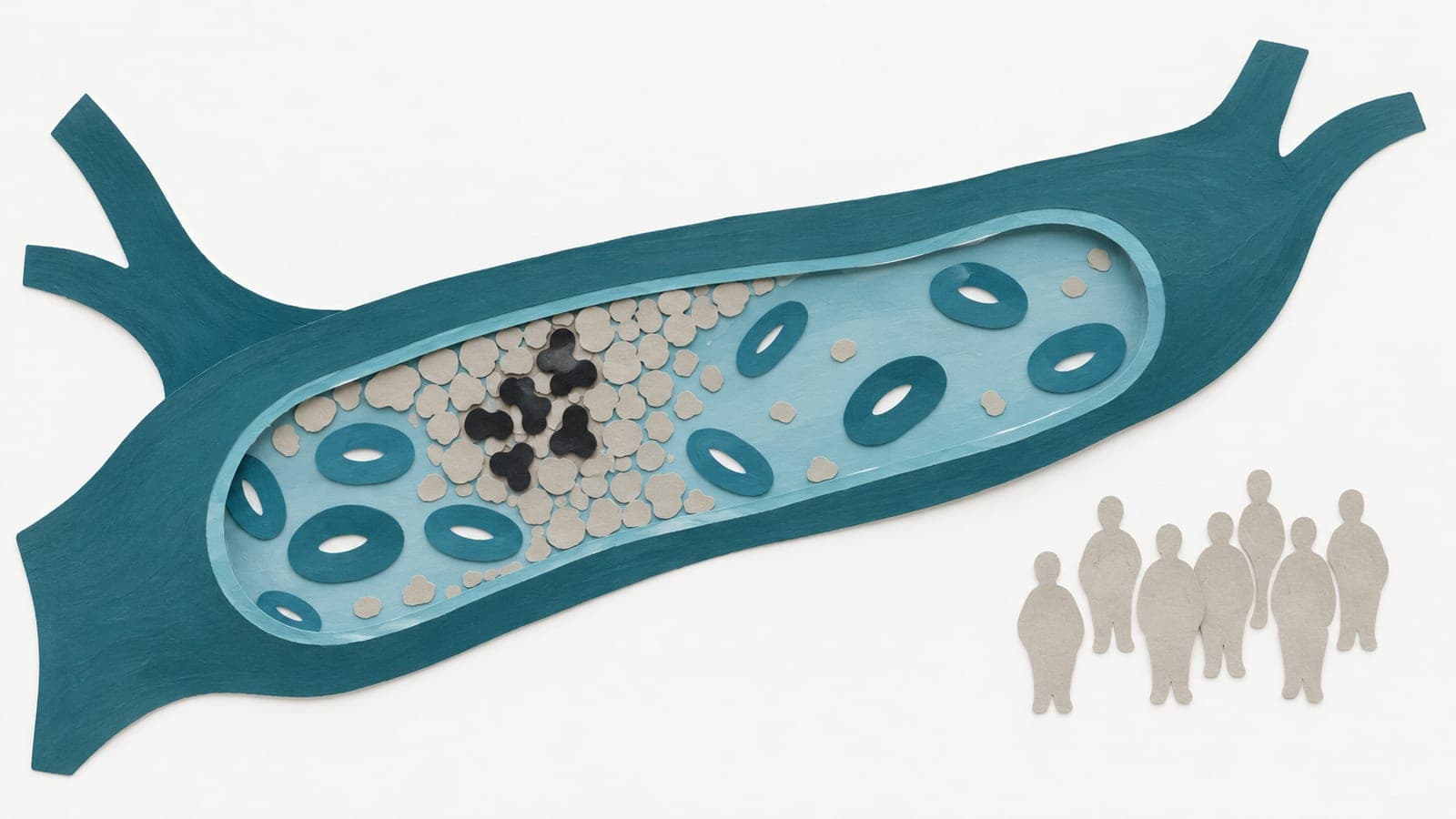
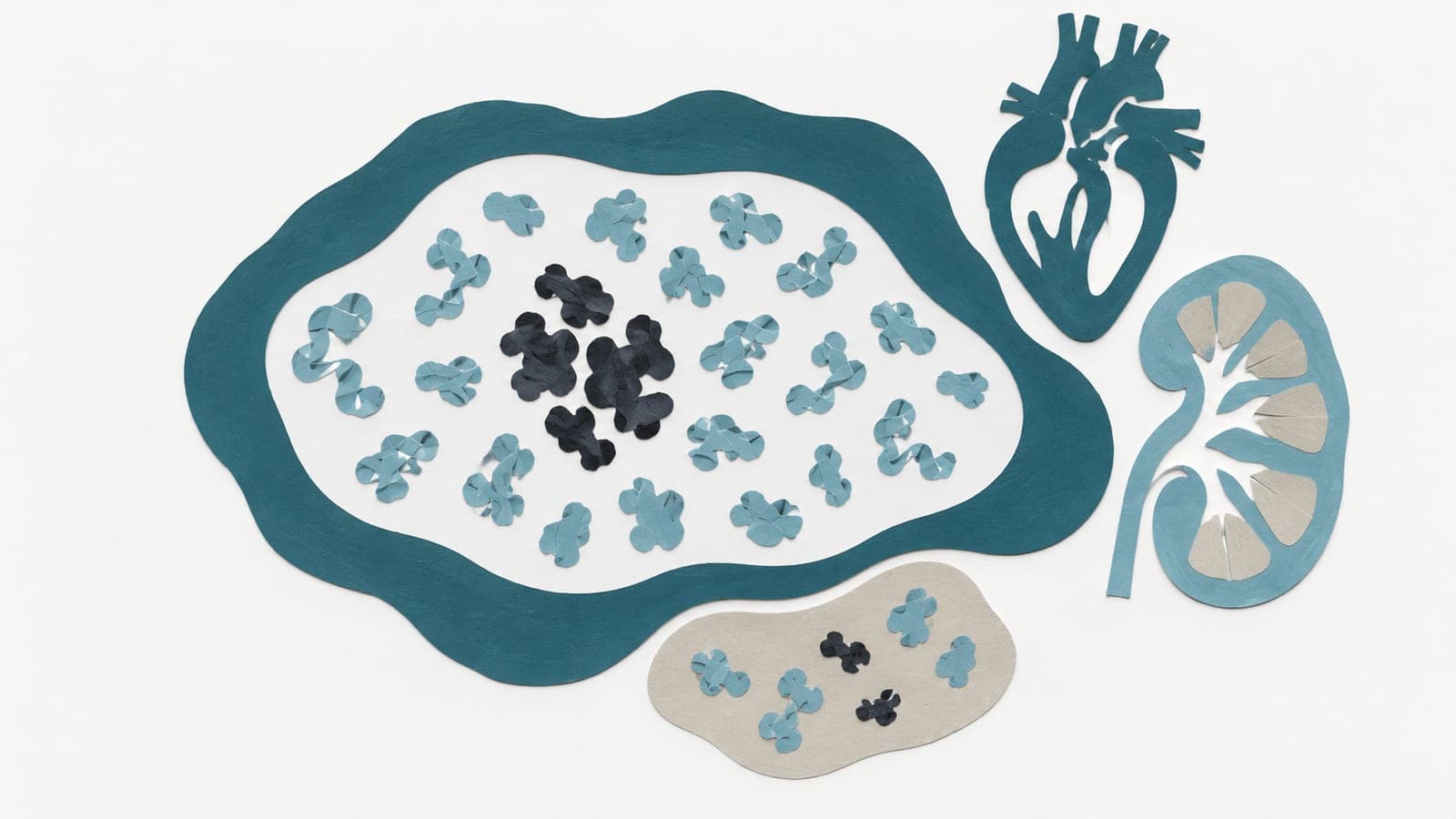
Deep abdominal fat is linked to advanced cardiometabolic disease
People with high visceral fat had an odds ratio of 2.4 for advanced disease, whereas body mass index showed a weaker association in 526 participants.
Edited by Boris Djordjevic · AgingResearch.News
Researchers evaluated 526 participants in an observational study to test whether visceral fat, which surrounds internal abdominal organs, tracks advanced cardiometabolic disease better than body mass index. Computed tomography scans measured visceral fat. Stage 4 cardiovascular-kidney metabolic disease, an advanced condition marked by organ damage and high heart disease risk, occurred in 119 participants.
High visceral fat was independently associated with stage 4 disease with an odds ratio of 2.4, whereas body mass index showed a weaker link. Participants with low body mass index but high visceral fat had about a two-fold higher risk than those with high body mass index and low visceral fat. A model using blood metabolites, small molecules in circulation, predicted stage 4 disease with an area under the curve of 0.80, compared with 0.62 for body mass index alone. High visceral fat was also linked to increased activity in inflammatory pathways.
Why it matters
Advanced cardiovascular, kidney, and metabolic diseases become more common with age as organ damage accumulates. Identifying blood markers of deep abdominal fat and inflammation may help detect individuals at high risk for late-stage cardiometabolic decline earlier than standard weight measures allow.
Caveats
The findings come from an observational, cross-sectional conference abstract of 526 participants, which cannot establish whether visceral fat causes advanced disease. In addition, the group with high body mass index but low visceral fat included only 14 people.
The paper
Linkou Chang Gung Memorial Hospital; Chang Gung University College of Medicine
ESC Congress 2026 Abstract, Oct 26, 2026
Presented at ESC Congress 2026