Lower blood-pressure target did not cut cardiovascular events
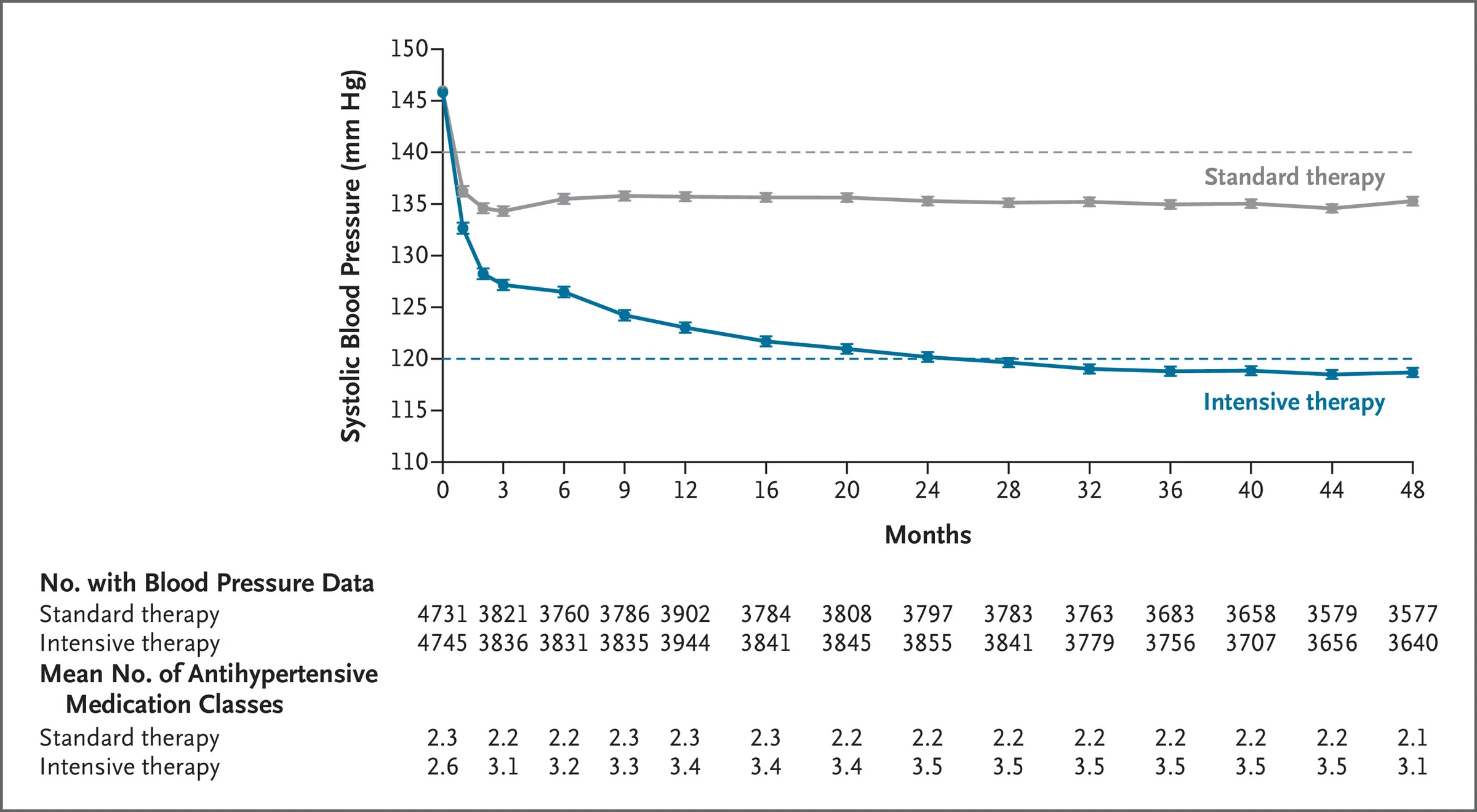
Major cardiovascular events occurred in 6.0% with intensive therapy versus 6.7% with standard therapy over a median 4.0 years in patients with type 2 diabetes.
Our read
Interventions- Studied:
- Randomized trial in 9,476 patients with diabetes and high cardiovascular risk, median 4.0 years (Multicenter, registered NCT04040634)
- What changed:
- Major cardiovascular events did not differ: 6.0% with intensive therapy versus 6.7% with standard therapy
- The catch:
- Patients and clinicians knew treatment targets, potentially influencing decisions to hospitalize patients
- In the record:
- The 21st paper on intensive blood pressure lowering with results in people; 28 on record in all.
- Why it’s aging research:
- It bears on staying healthy in midlife and later life.
Editor of record: Boris Djordjevic · AgingResearch.News
In Brazil, 9,476 ethnically diverse patients with type 2 diabetes, elevated blood pressure and high cardiovascular risk took part in an open-label, randomized trial. Their average age was 64.7 years, and 62.0% were women. Treatment targeted systolic pressure—the upper blood-pressure reading—below 120 mm Hg or below 140 mm Hg.
Over a median 4.0 years, the lower target did not reduce the combined outcome of cardiovascular death, nonfatal heart attack or stroke, or hospitalization for unstable angina (new or worsening heart-related chest pain) or heart failure (when the heart cannot pump blood well). Serious medical events occurred in 706 patients (14.9%) receiving intensive therapy and 693 (14.6%) receiving standard therapy.
Why it matters
For older adults with type 2 diabetes and high cardiovascular risk, the trial addressed how low to aim when managing blood pressure.
Caveats
Patients and clinicians knew the assigned targets, and the range of likely effects included no difference. The findings concern people with type 2 diabetes and high cardiovascular risk, not necessarily people without diabetes or at lower risk.
Where the evidence stands
Intensive blood pressure lowering
- 9 independent labs in 4 countries
- 3 findings against
- Funders: National Heart, Lung, and Blood Institute and others
- 5 of 31 findings with company ties
The paper
Intensive Blood-Pressure Lowering in Patients with Type 2 Diabetes
Hospital Israelita Albert Einstein; George Institute for Global Health UK
The New England Journal of Medicine, Nov 7, 2026
Comments
Be the first to comment.