No clear antipsychotic–death link in schizophrenia with dementia
The adjusted hazard ratio—a relative measure of death risk—was 0.976 for early prescriptions versus none recorded, with no statistically significant difference.
Our read
Populations- Studied:
- Cohort study of 28,506 people
- In the record:
- One of 7 papers on second-generation antipsychotics on record: 2 with results in people.
- Why it’s aging research:
- It measures an outcome that worsens with age.
Editor of record: Boris Djordjevic · AgingResearch.News
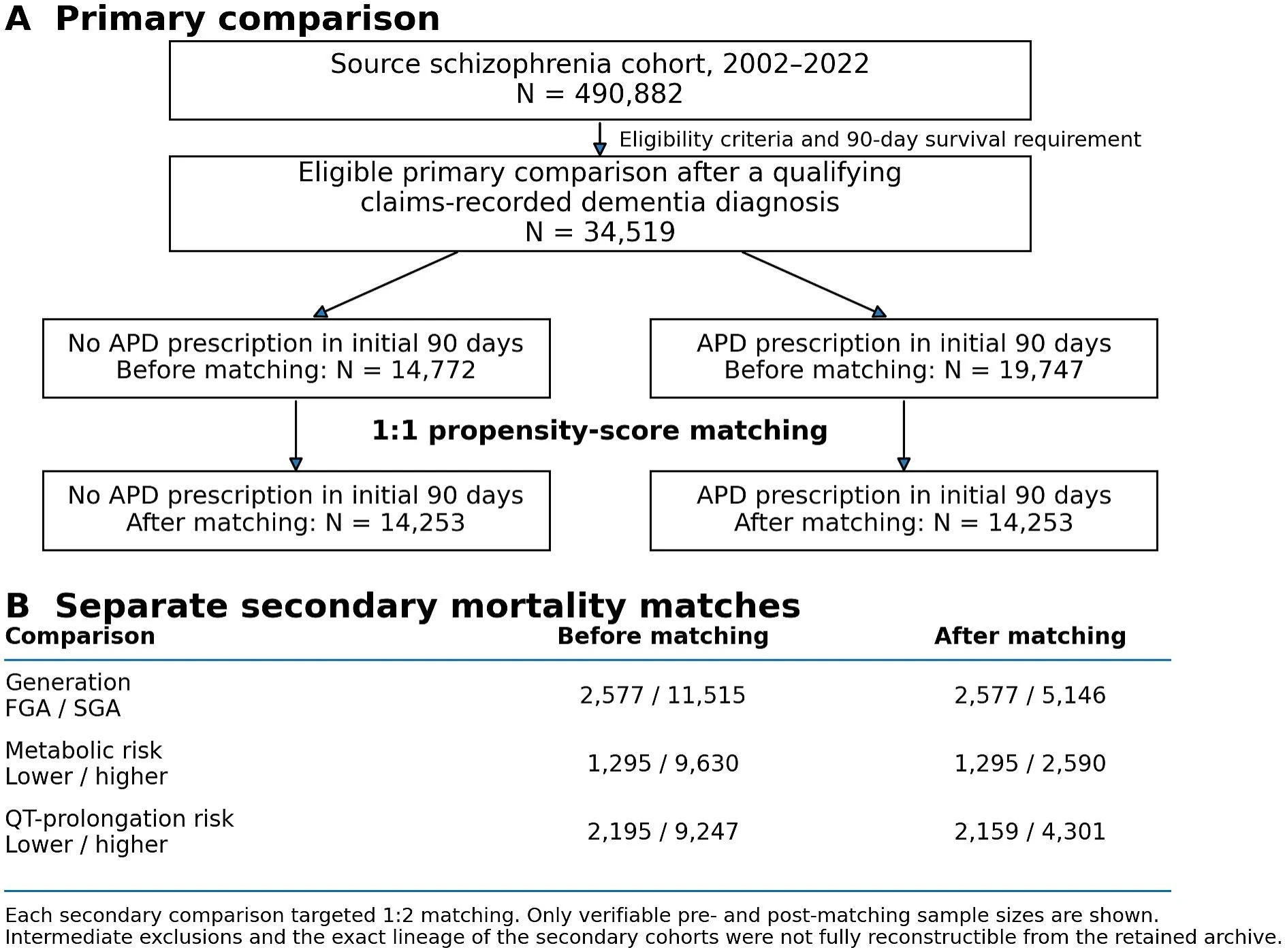
In South Korea, 28,506 patients with schizophrenia and a dementia diagnosis recorded in insurance claims were studied in a retrospective observational cohort. All survived the first 90 days after diagnosis. Researchers used national insurance records from 2002–2022 and matched 14,253 pairs by recorded characteristics. They compared patients prescribed antipsychotic drugs during those 90 days with patients without a recorded prescription.
Mortality did not differ significantly between these groups. Separate matched comparisons found no significant mortality difference between first- and second-generation drugs. Among second-generation drug users, higher study-defined risks of metabolic problems or prolonged electrical recovery between heartbeats were linked to higher mortality. The adjusted hazard ratios were 1.238 and 1.109, respectively.
Why it matters
Dementia care raises questions about how psychiatric drug choices relate to survival in people who also have schizophrenia.
Caveats
Patients with and without prescriptions may have differed in health factors not captured by insurance claims. The findings apply to people who survived the initial 90 days, and prescription records did not establish sustained use or non-use afterward.
Where the evidence stands
Antipsychotics
- 50 independent labs in 23 countries
- 11 findings against
- 6 trials, 3 with no results posted
- Funders: National Institute on Aging and others
- 10 of 66 findings with company ties
Second-generation antipsychotics
- 2 independent labs in 1 country
- 1 finding against
- 1 trial
The paper
Progress in Neuro-psychopharmacology & Biological Psychiatry, Nov 2026
Comments
Be the first to comment.