Stopping some diabetes drugs linked to heart events and deaths
The combined rate of heart attack, stroke or death was 2.01 times as high among people who stopped treatment as among those who continued.
Our read
Populations- Studied:
- Cohort study of people with diabetes and no cardiovascular disease, against continuing users
- What changed:
- The combined rate of heart attack, stroke or death was 2.01 times as high among people stopping versus continuing treatment
- The catch:
- Health differences missed by matching could explain the higher event rate among people who stopped
Editor of record: Boris Djordjevic · AgingResearch.News
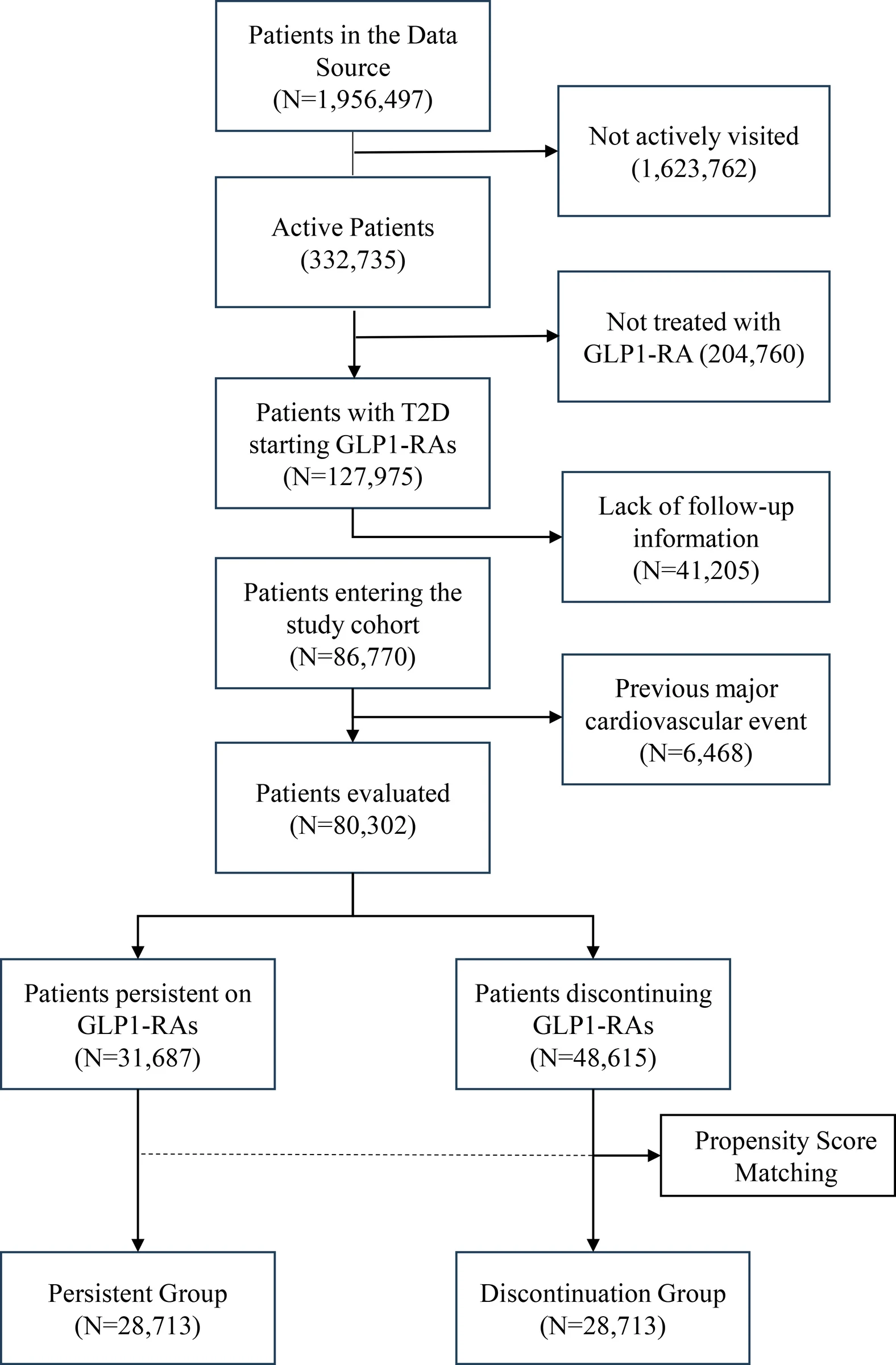
People with type 2 diabetes and no cardiovascular disease—80,302 people attending 301 Italian diabetes clinics—were included in a retrospective cohort study using data collected between 2004 and 2024. All had started glucagon-like peptide-1 receptor agonists, a class of diabetes drugs.
The researchers matched 28,713 people who stopped treatment with 28,713 continuing users to balance the groups. Across the full cohort, average follow-up was 4.25 years for those who stopped and 3.65 years for continuing users. Stopping was associated with a higher combined rate of heart attack, stroke or death from any cause. The rate of death alone was 4.67 times as high among those who stopped as among continuing users.
Why it matters
Heart attacks and strokes are important concerns as people age. The findings bear on how medication continuity relates to these outcomes and survival in people with type 2 diabetes.
Caveats
People who stopped may have had health differences that matching did not account for. The results do not establish the same association in people with existing cardiovascular disease or those taking these drugs without diabetes.
The paper
The Lancet Regional Health Europe, Nov 2026, CC BY


Comments
Be the first to comment.