Four risk profiles linked to differing death risks in US adults
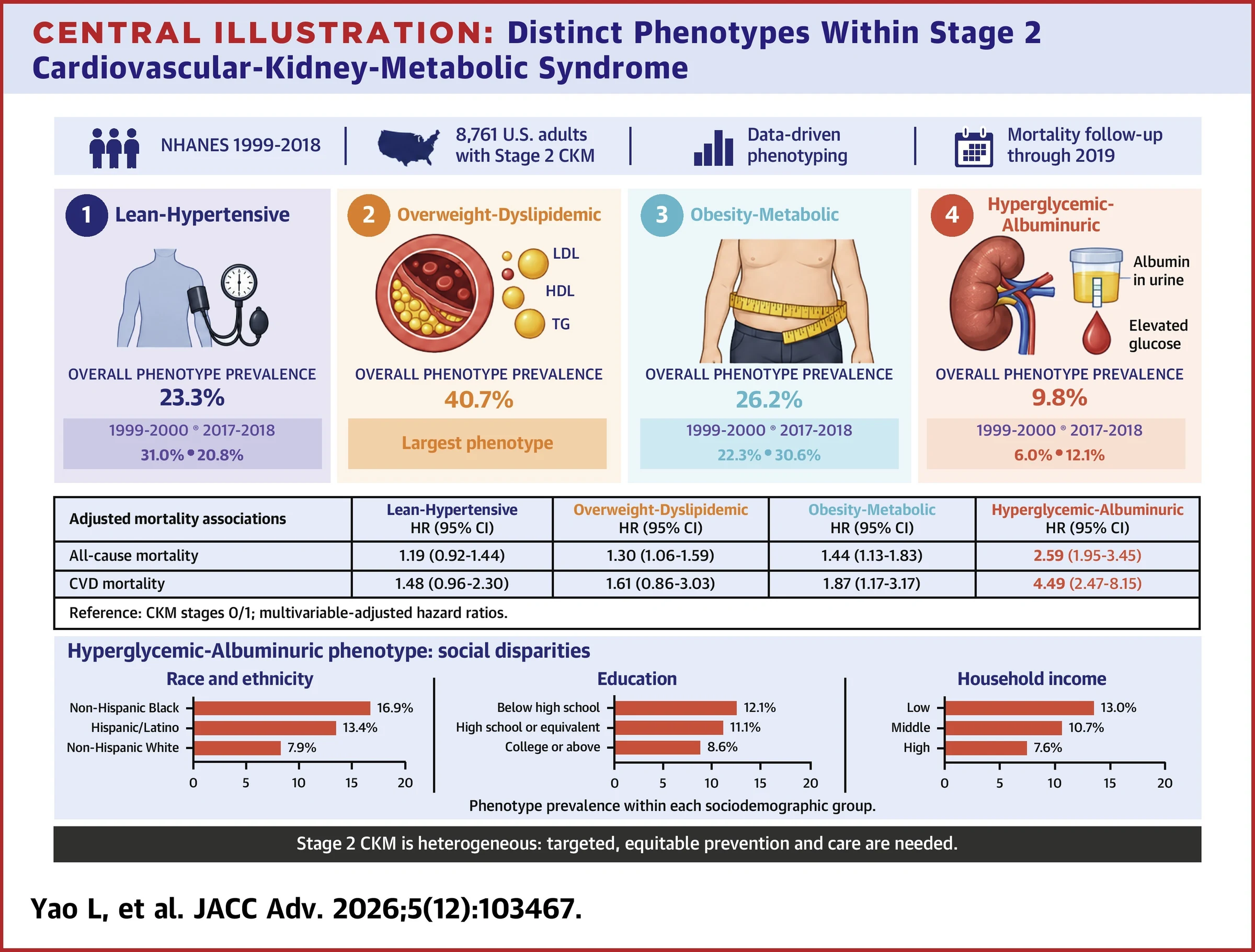
The high-blood-sugar and urine-protein group was linked to the highest risk of death over time, estimated at 2.59 times that of adults at stages 0 or 1.
Our read
Populations- Studied:
- Cohort study of 8,761 US adults with stage 2 CKM syndrome, against adults at CKM stages 0/1 (Dose-response)
- What changed:
- Death risk was highest in the high-blood-sugar and urine-protein group: 2.59 times that of adults at stages 0 or 1
- The catch:
- Income and education differences could partly explain mortality differences between profiles
Editor of record: Boris Djordjevic · AgingResearch.News
Among 8,761 US adults aged 20 or older with stage 2 cardiovascular-kidney-metabolic syndrome, an observational analysis identified four profiles of heart, kidney and metabolic risk. Researchers grouped participants from the 1999–2018 National Health and Nutrition Examination Survey using nine health measurements. The profiles featured leanness with high blood pressure, excess weight with abnormal blood fats, obesity with metabolic problems, or high blood sugar with albumin, a protein, in urine.
Over a median 10-year follow-up, 484 participants died, including 117 from cardiovascular disease. The high-blood-sugar and urine-protein profile had the highest mortality risks. Compared with adults at stages 0 or 1, its hazard ratios—measures comparing death risk over time—were 2.59 for all deaths and 4.49 for cardiovascular deaths. This profile also became more common, rising from 6.0% in 1999–2000 to 12.1% in 2017–2018.
Why it matters
Preventing heart, kidney and metabolic disease is important as people age. The authors called for prevention and management tailored to these different profiles and delivered equitably.
Caveats
Adults in these profiles may have differed in other health or social factors that also affected mortality. The findings concern US adults aged 20 or older with stage 2 syndrome.


Comments
Be the first to comment.