Walking measures linked to different care needs in older adults
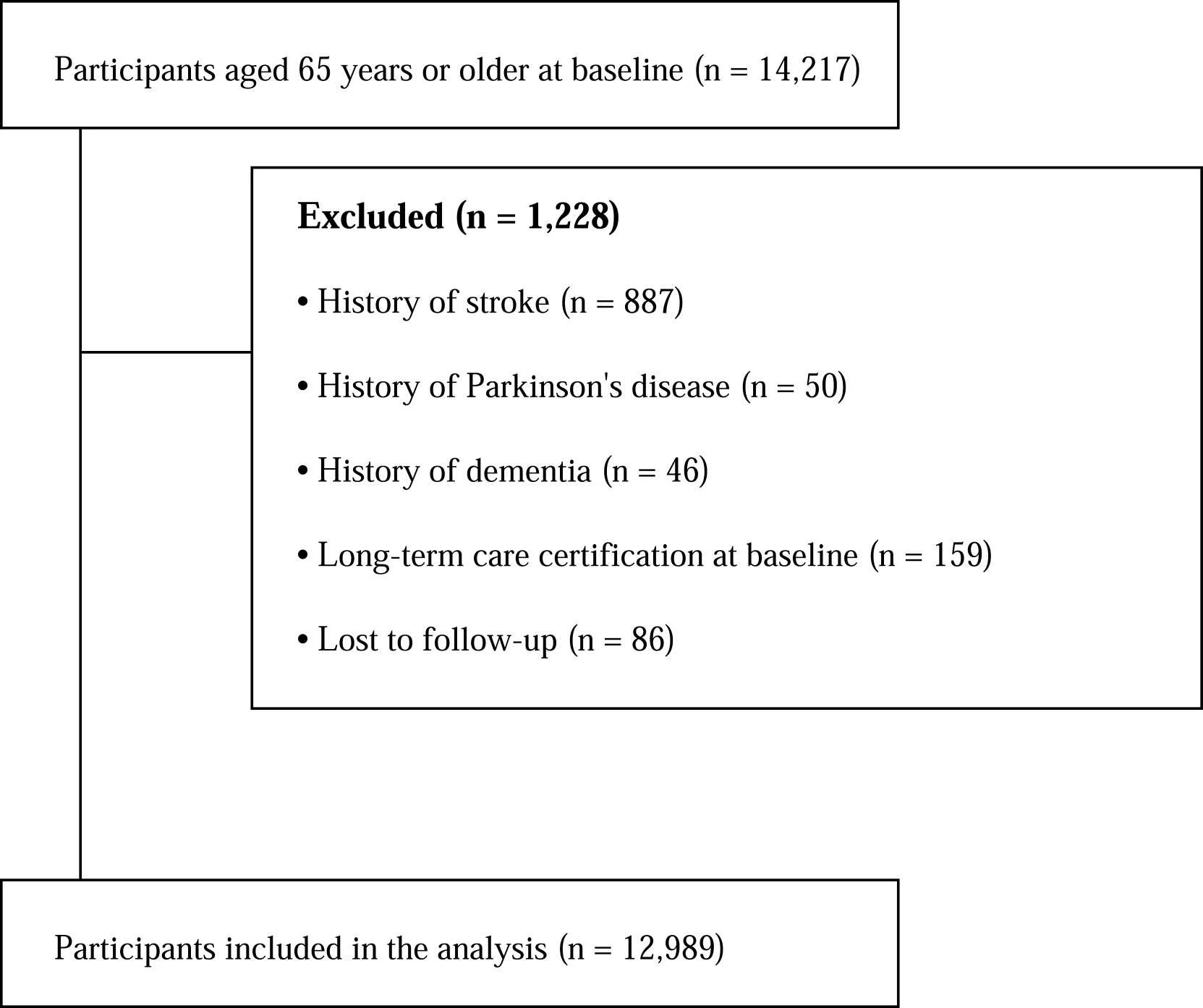
Over 60 months, 2,186 of 12,989 older adults developed care needs, with step length and walking speed linked to different severity levels.
Our read
Populations- Studied:
- Cohort study of 12,989 community-dwelling older adults, 60 months
- What changed:
- Slower walking was linked to future severe-care needs; the reported subdistribution hazard ratio was 0.24
- The catch:
- Underlying health differences could contribute to both slower walking and later care needs
- In the record:
- The 326th paper on gait speed with results in people; 3,972 on record in all.
- Why it’s aging research:
- It measures an outcome that worsens with age.
Editor of record: Boris Djordjevic · AgingResearch.News
Among 12,989 community-dwelling older adults from three Japanese municipalities, shorter steps and slower walking were associated with different levels of future care needs in a prospective cohort study. Participants averaged 74.8 years old, and 45.2% were men. Researchers followed them for 60 months.
The analysis considered step length and walking speed together and accounted for death and other care-need categories as competing outcomes. Shorter steps were associated with subsequent support needs. Slower walking was associated with subsequent mild- and severe-care needs. The authors suggested that the two walking measures may provide complementary information about future long-term care needs. The findings did not establish a sequence in which walking abilities declined.
Why it matters
Long-term care needs concern independence in later life. The work addressed whether assessments of mobility may help distinguish future levels of need rather than treating all care needs as one outcome.
Caveats
Underlying health differences could have contributed to both walking measurements and later care needs. Participants lived in the community in three Japanese municipalities; the findings may not apply to older adults already living in care facilities.

Comments
Be the first to comment.