Four blood proteins linked to health and longevity in families
A cohort study followed 852 older siblings and 2,282 offspring and partners for up to 22 years, linking four blood proteins to longer survival.
Our read
Biomarkers- Studied:
- Cohort study of long-lived siblings, their offspring and partners, up to 22 years
- What changed:
- Blood protein levels were associated with longer survival, better cardiometabolic health, and familial longevity
- The catch:
- Protein levels could reflect existing health differences rather than factors that help people stay healthy
Editor of record: Boris Djordjevic · AgingResearch.News
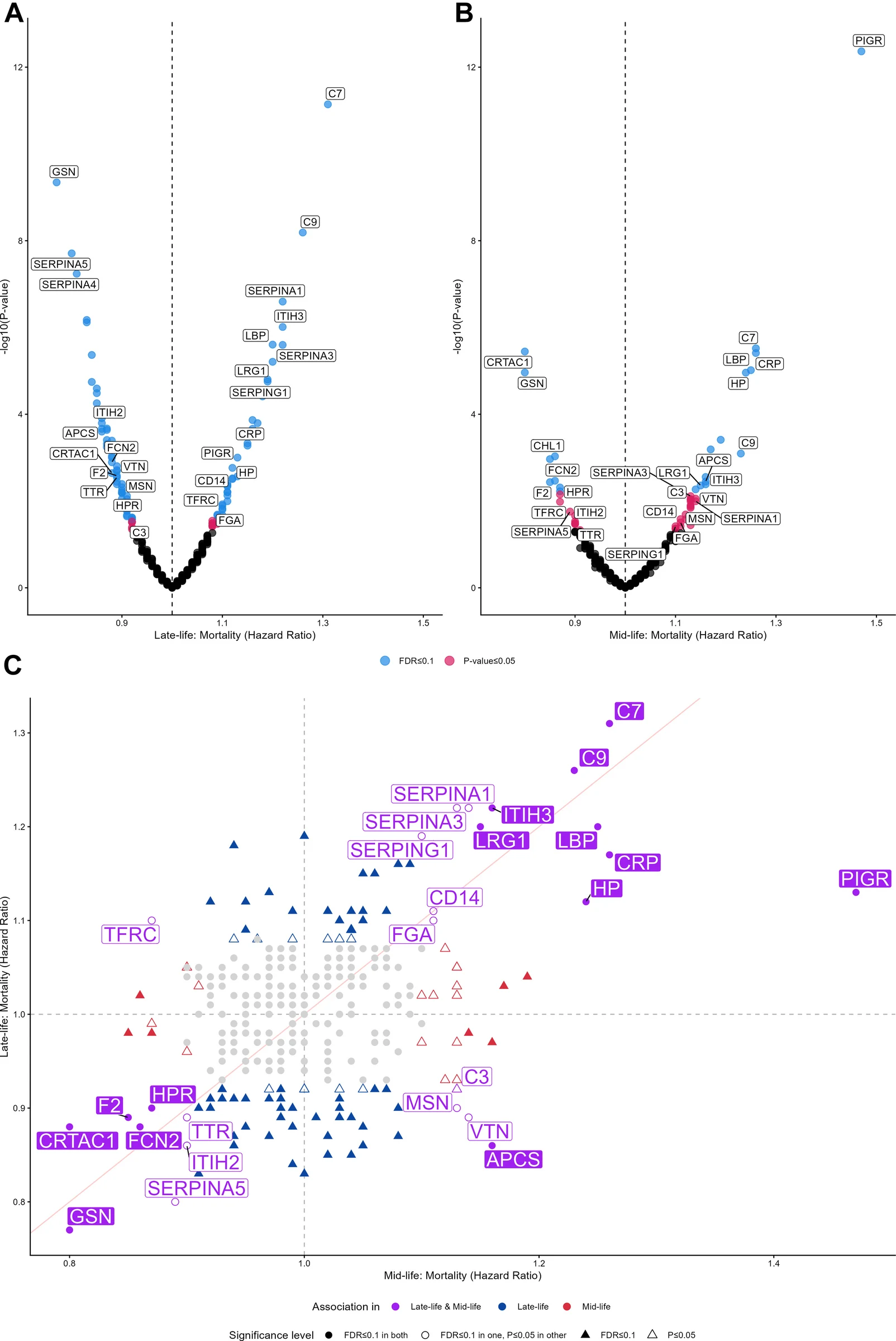
The Leiden Longevity Study included 852 siblings aged 89 or older and 2,282 offspring and partners aged 30–80 in a two-generation cohort study. Researchers measured 326 proteins in blood plasma, the liquid part of blood. They tested links with survival over up to 22 years. They also examined years of healthy heart and metabolic function—the body's processing of energy—over up to 16 years.
Four proteins were consistently associated with longer survival in both generations, more years of cardiometabolic health and familial longevity. Gelsolin and prothrombin were two of these proteins. The others were cartilage acidic protein 1 and haptoglobin. To assess familial longevity, the researchers compared offspring of the long-lived siblings with their partners. The authors identified the four proteins as promising candidate indicators of healthy aging and resilience.
Why it matters
People of the same age can differ widely in how long they remain healthy. Blood markers of resilience may help researchers study this variation into very old age.
Caveats
Protein levels measured at the start may have reflected health differences already present, rather than factors that helped people stay healthy. The cohort comprised long-lived siblings, their offspring and the offspring's partners.

Comments
Be the first to comment.