Recovery after stroke clot removal was possible at 80 and older
At 90 days, 14.7% of patients aged 80 and older met a disability-adjusted recovery measure, compared with 18.9% of younger patients.
Our read
Populations- Studied:
- Cohort study of 377 people (90 days)
- Why it’s aging research:
- It looks at how biology varies with age or lifespan.
Editor of record: Boris Djordjevic · AgingResearch.News
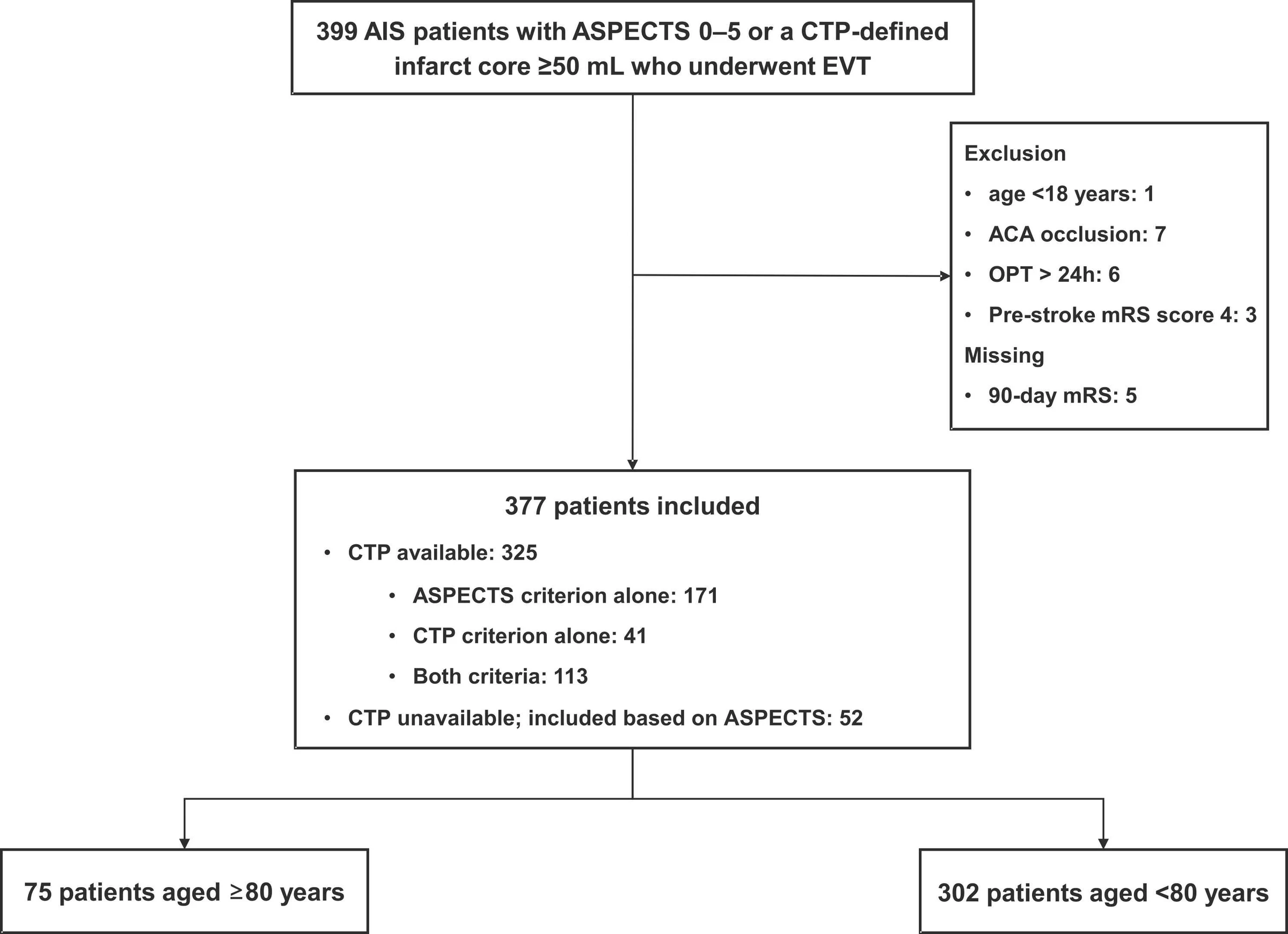
Among 377 people with strokes involving large areas of brain damage from blocked arteries, 75 were aged 80 or older. All underwent catheter-based clot removal in a retrospective observational study.
The researchers defined recovery as disability at 90 days no more than one point worse than before the stroke on a standard scale. After adjustment, recovery did not differ significantly between the two age groups. However, patients aged 80 or older had poorer conventional functional outcomes and 1.79 times the odds of death after adjustment. When the researchers analyzed age continuously rather than dividing patients into two groups, each additional 10 years was associated with lower odds of recovery. Successful restoration of blood flow and bleeding outcomes did not differ significantly between groups.
Why it matters
Older stroke patients may already have disabilities that affect how recovery is judged. The authors supported individualized assessments of likely outcomes after clot removal rather than reliance on chronological age alone.
Caveats
The retrospective comparison included selected patients who all received clot removal, so it did not measure the procedure’s benefit compared with care without it. The recovery estimate comparing age groups was imprecise, with likely values spanning both lower and higher odds.


Comments
Be the first to comment.