Blood protein may flag brain disease risk in sleep disorder
A prospective cohort enrolled 47 people with a dream-enacting sleep disorder and monitored Parkinson’s and Lewy body dementia diagnoses for up to four years.
Our read
Biomarkers- Studied:
- Cohort study of 46 patients with isolated REM sleep behavior disorder, mean 2.1 years (Independent replication)
- What changed:
- Elevated NT-proBNP was associated with higher Lewy body disease risk: adjusted hazard ratio 2.67 (95% CI 0.69–10.35)
- The catch:
- Systemic inflammation could explain the link between NT-proBNP and disease progression
- In the record:
- The 2nd paper on Ddc with results in people; 13 on record in all.
Editor of record: Boris Djordjevic · AgingResearch.News
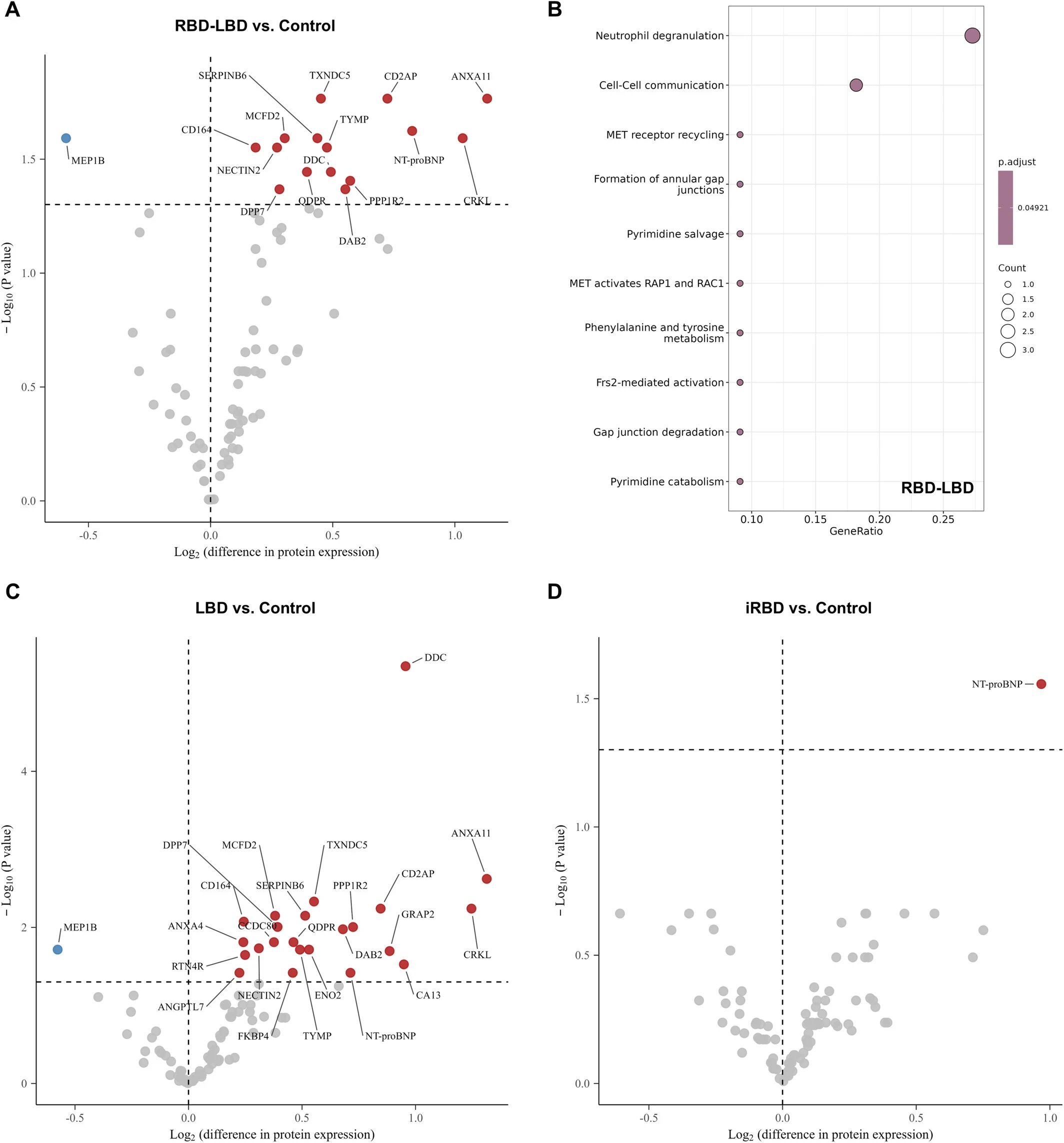
Forty-seven people with sleep-study-confirmed isolated rapid eye movement sleep behavior disorder—acting out dreams—were followed for up to four years in a prospective cohort. They belonged to a group of 116 patients averaging 71.3 years old, including 66 men; 45 had Parkinson’s disease and 24 had dementia with Lewy bodies. Researchers also enrolled 30 age-matched healthy controls and measured 92 blood proteins.
Sixteen proteins differed from controls overall, mainly in patients with diagnosed brain disease. Only N-terminal pro-B-type natriuretic peptide, a marker of heart strain, was elevated in the isolated sleep-disorder group. Higher levels were linked to disease-related brain scan patterns and earlier Parkinson’s or Lewy body dementia diagnoses. Among 46 followed patients, 10 developed these conditions over an average 2.1 years. After adjustment for other factors, however, the range of likely values for the risk association included no difference.
Why it matters
The work addresses whether blood measures of metabolism can help track the period before age-related brain disease becomes clinically apparent.
Caveats
The authors note that the 24-person Lewy body dementia group was too small to determine whether protein changes were shared with Parkinson’s disease or specific to either condition. The findings do not address risk screening in the general population.
From the paper
- Participants
A total of 116 patients across the RBD–LBD continuum, comprising 47 with iRBD (all vPSG-confirmed), 45 with PDRBD (12 vPSG-confirmed), and 24 with DLBRBD (6 vPSG-confirmed), and 30 healthy controls, were included for this study.
- Follow-up
During a mean follow-up of 2.1 years, 10 participants converted to motor-first (n = 8) or dementia-first (n = 2) phenotypes, and no patients developed multiple system atrophy.
Results, Predictive Value of DDC and NT-proBNP for Phenoconversion in iRBD
- Result
After adjustment for covariates, the hazard ratio for phenoconversion to LBD associated with increased NT-proBNP levels was 2.67 (95% CI 0.69–10.35).
Results, Predictive Value of DDC and NT-proBNP for Phenoconversion in iRBD
- Limitation
First, although the SCOPA-AUT is a well-validated instrument for evaluating autonomic dysfunction in LBDs, it remains a self-reported questionnaire and thus may be subject to recall and social desirability biases.
Quoted word for word from the full text on onlinelibrary.wiley.com.
- Levodopa
- Parkinson's disease
- Dementia with Lewy bodies
- Isolated REM sleep behavior disorder
- Lewy body disease
- Humans
The paper
Seoul Metropolitan Government
Annals of Neurology, Nov 24, 2026, Open access, CC BY-NC-ND


Comments
Be the first to comment.