Blood protein patterns linked to later macular degeneration
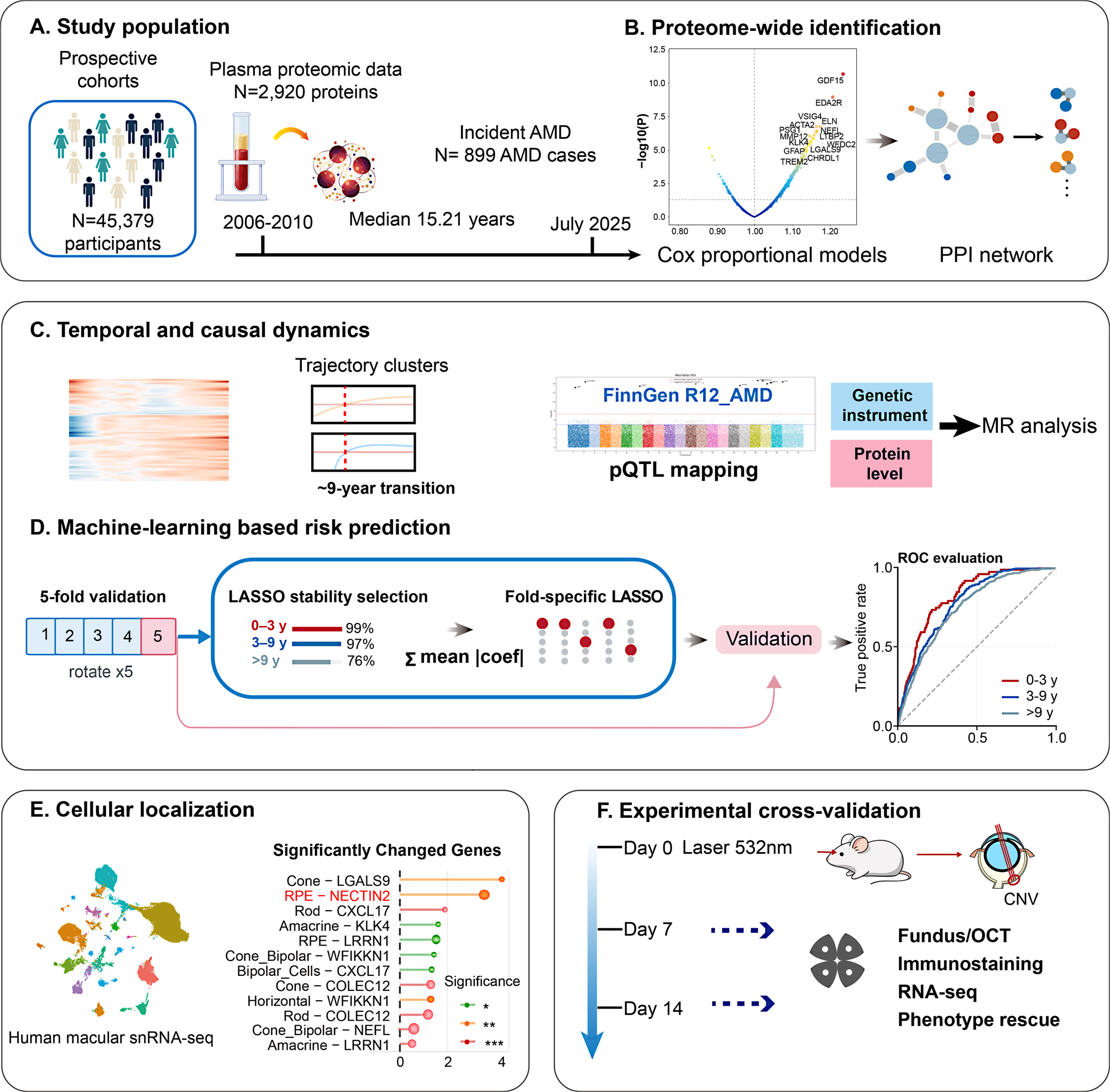
Blood protein patterns in 45,379 people varied with time to diagnosis, with one protein group’s average pattern changing approximately nine years before diagnosis.
Our read
Biomarkers- Studied:
- Cohort study of 45,379 UK Biobank participants without age-related macular degeneration
- What changed:
- Blood levels of 92 proteins were linked to later macular degeneration diagnosis
- The catch:
- Protein patterns describe population averages rather than changes tracked within individuals
- In the record:
- One of 17 papers on NECTIN2 on record: 2 with results in people, 1 in animals.
Editor of record: Boris Djordjevic · AgingResearch.News
Blood proteins from 45,379 UK Biobank participants without age-related macular degeneration were analyzed in a prospective cohort study with a median follow-up of 15.2 years. This eye disease affects central vision. Researchers linked 92 proteins to later diagnosis. A separate analysis grouped 98 proteins into three population-level patterns based on time to diagnosis.
NECTIN2, a protein, emerged as a candidate for further study. Higher blood levels correlated with thinner layers in the retina, the eye’s light-sensing tissue. In a mouse experiment involving laser-induced abnormal blood vessel growth in the eye, reducing activity of the gene for NECTIN2 before or immediately after laser injury reduced lesion size and blood vessel leakage.
Why it matters
Understanding the years before diagnosis may help clarify how this age-related eye disease develops and which proteins deserve further investigation.
Caveats
The patterns describe population averages, not a demonstrated sequence of protein changes within individuals. NECTIN2 silencing was tested in mice with laser-induced eye injury, not in people with age-related macular degeneration.
- Machine learning
- NECTIN2
- Angiogenesis
- Age-related macular degeneration
- Age-related macular degeneration diagnosis within 3 years
- Humans
The paper
Journal of Translational Medicine, Nov 12, 2026, Open access, CC BY
Comments
Be the first to comment.