Age patterns persisted in kidney failure death rates
An analysis of US adults receiving dialysis or kidney transplants found coordinated shifts in age-related death rates through pandemic disruption and partial recovery.
Our read
Populations- Studied:
- Cohort study of US adults with kidney failure receiving replacement therapy
- What changed:
- Death rates rose exponentially with age across treatment groups, and age-related patterns persisted through pandemic disruption and partial recovery
- The catch:
- Other changes in patient groups could explain mortality shifts linked to the pandemic
- In the record:
- The 252nd paper on COVID-19 pandemic with results in people; 355 on record in all.
Editor of record: Boris Djordjevic · AgingResearch.News
US adults with kidney failure receiving maintenance dialysis or a kidney transplant were studied in an observational analysis of US Renal Data System records. Researchers grouped patients by treatment and transplant waiting-list status.
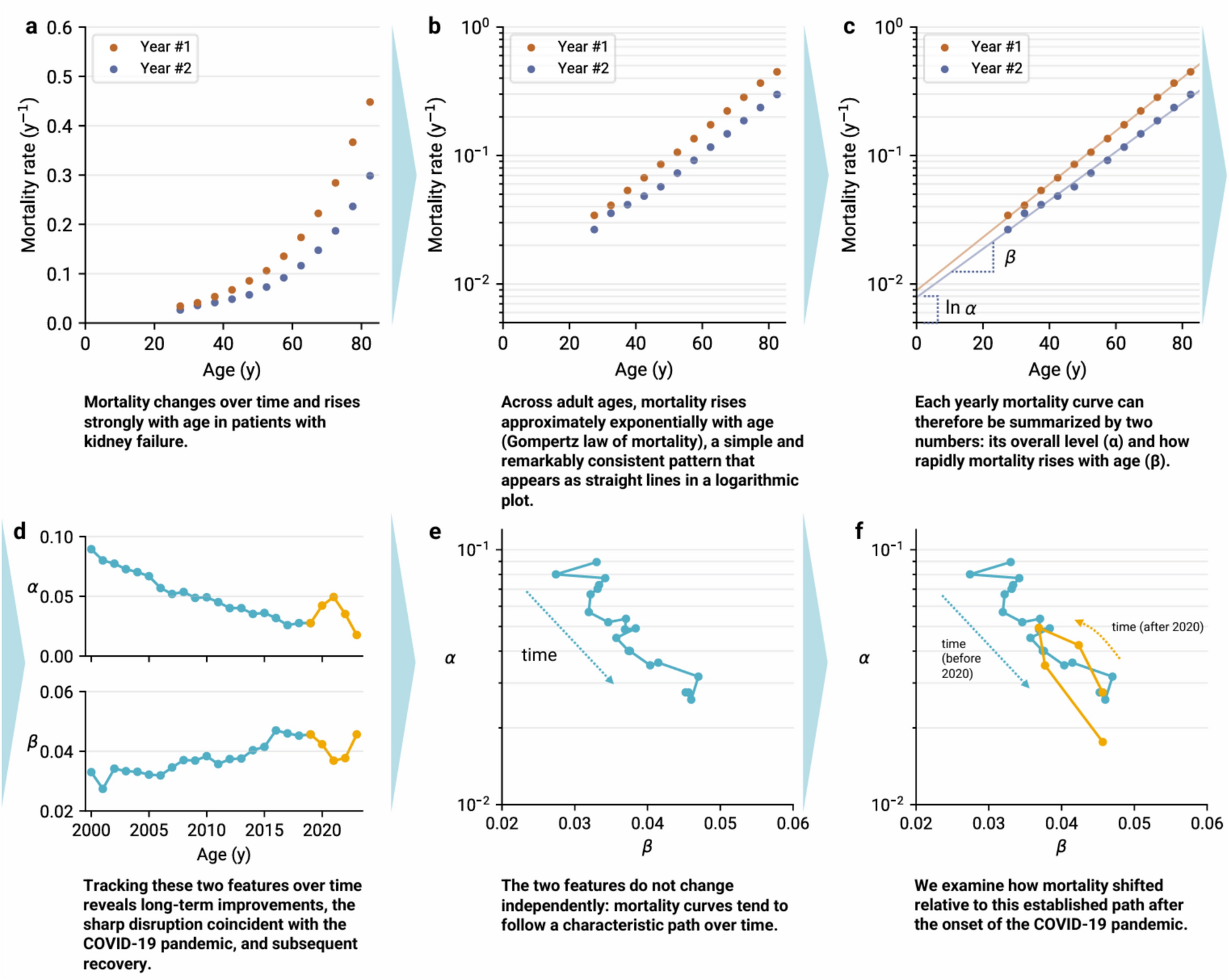
In every group, death rates rose by a multiplying factor as age increased, although the patterns differed between groups. As life expectancy increased, death rates rose more steeply with age. This relationship was clearest among transplant recipients and appeared during parts of the observation period among dialysis patients. The pandemic’s onset coincided with abrupt shifts in the measures describing these patterns. In 2020 and 2021, those measures moved back along or parallel to their pre-2020 paths. These changes partly reversed in 2022 and 2023, suggesting that mortality patterns followed a constrained path despite the disruption.
Why it matters
Kidney failure carries markedly higher mortality than the general population. These regularities may help researchers model how death rates change with age during future public health disruptions.
Caveats
The analysis could not separate the pandemic’s effects from other changes occurring in these patient groups. The findings concern US adults receiving dialysis or kidney transplants, rather than children or the general population.
Where the evidence stands
Kidney transplantation
- 46 independent labs in 22 countries
- 7 findings against
- 7 trials, 1 with no results posted
- Funders: National Institute of Diabetes and Digestive and Kidney Diseases and others
- 5 of 94 findings with company ties


Comments
Be the first to comment.